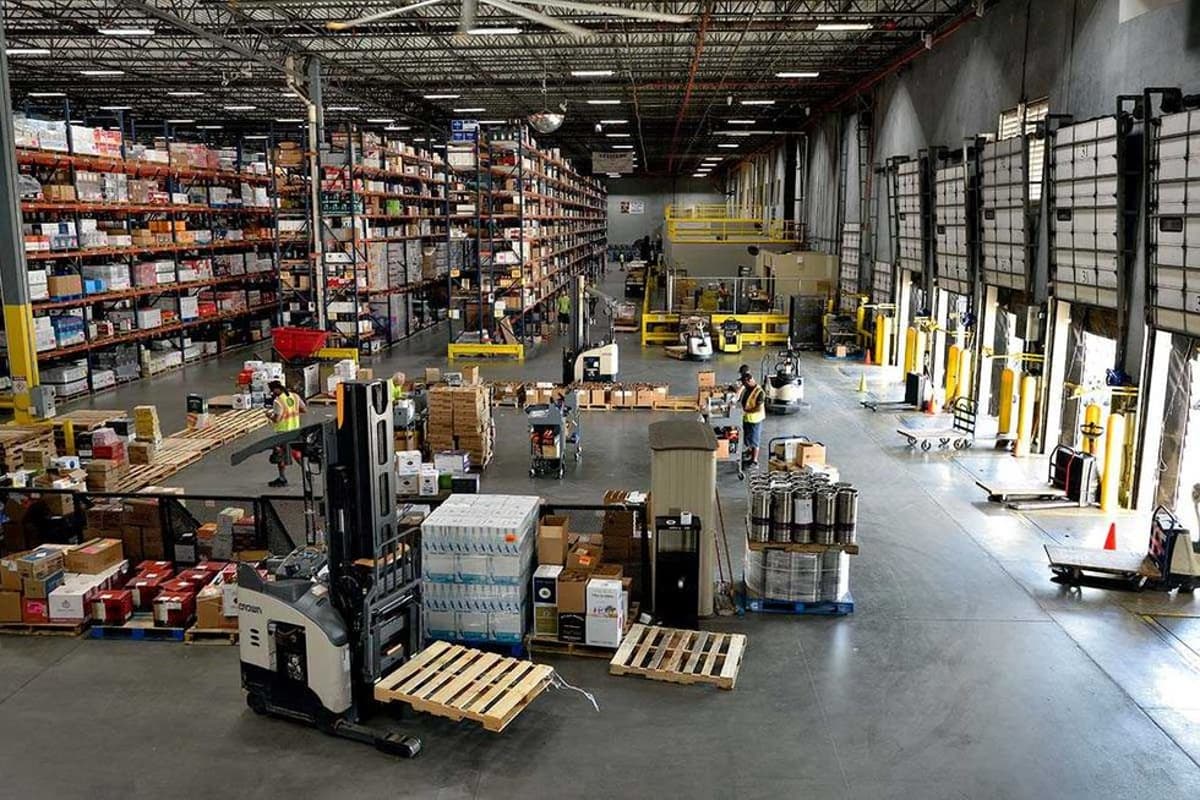
Focusing on Human-Centered Innovation: An Interview with Karli Sage
Why It Matters
Human‑first tech adoption boosts operational efficiency and employee engagement, while closing the gender leadership gap strengthens innovation across the supply‑chain sector.
Key Takeaways
- •Sage drives automation while prioritizing employee experience.
- •Decision‑intelligence software reduces manual monitoring in warehouses.
- •Quantum computing could revolutionize logistics optimization.
- •Women comprise 41% of supply‑chain staff but under 30% of executives.
- •Early high‑impact projects boost women’s confidence and leadership prospects.
Pulse Analysis
Karli Sage, vice‑president of supply‑chain management, technology and engineering at Southern Glazer’s Wine & Spirits, champions a human‑centered approach to innovation. Rather than deploying robots or drones solely to showcase cutting‑edge capability, she insists that technology must first solve real pain points for the people on the floor. By involving operators in the design process, Sage turns what could be a disruptive rollout into a seamless evolution, boosting adoption rates and preserving morale. This philosophy reflects a broader industry shift toward employee‑first digital transformation, where productivity gains are measured against workforce impact.
Under Sage’s leadership, the company has piloted decision‑intelligence platforms that continuously scan warehouse data and automatically adjust workflows, eliminating the need for constant human monitoring. The systems use machine‑learning models to predict bottlenecks, re‑route inventory and optimize labor allocation in real time, delivering measurable cost reductions. Looking further ahead, Sage is tracking quantum‑computing research that promises to solve complex optimization problems—such as network design and inventory placement—orders of magnitude faster than classical computers, a capability that could redefine logistics efficiency once the technology matures.
Sage also highlights the gender gap in supply‑chain leadership: women represent roughly 41 % of the workforce but hold fewer than 30 % of executive roles. She argues that early exposure to high‑impact projects, coupled with active mentorship and sponsorship, builds the confidence and credibility needed for advancement. Companies that institutionalize these practices not only diversify their talent pipeline but also benefit from the proven performance gains of inclusive teams. As more firms adopt such strategies, the industry can expect a more balanced leadership landscape and accelerated innovation.
Focusing on human-centered innovation: An interview with Karli Sage
Comments
Want to join the conversation?
Loading comments...