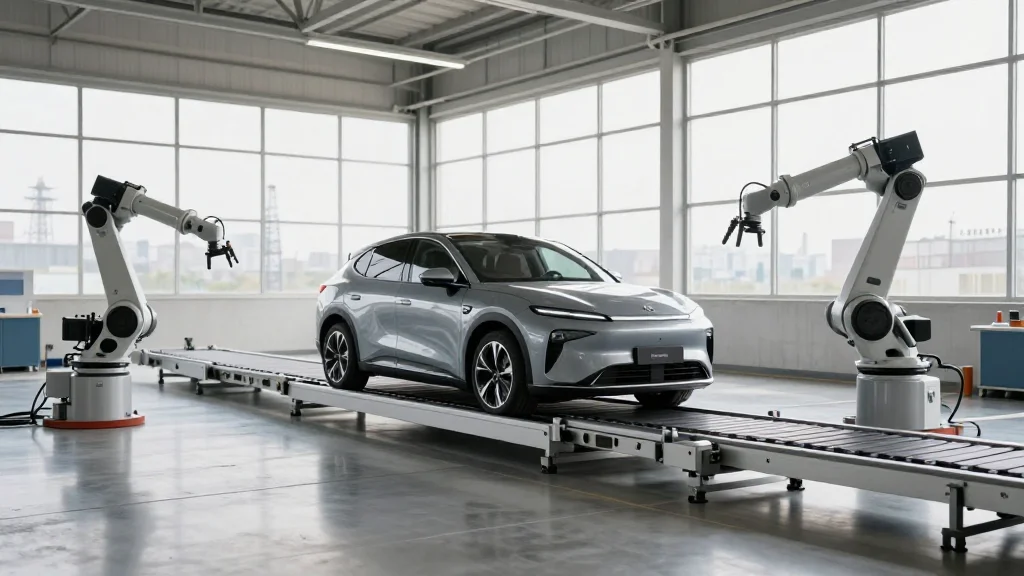
Ford Nears Sale of Valencia Plant Space to Geely for European EV Production

Companies Mentioned
Why It Matters
The sale of Ford’s Valencia space to Geely marks a tangible shift in how legacy automakers are reallocating assets in response to the EV transition. By converting idle capacity into a Chinese EV production hub, the deal illustrates the growing interdependence between Western manufacturing infrastructure and Chinese technology and supply chains. This could accelerate the penetration of affordable electric models in Europe, pressuring local OEMs to either form similar partnerships or risk losing market share. Moreover, the transaction highlights policy implications. European regulators have been urging domestic EV production to meet climate targets and reduce reliance on imports. Allowing a Chinese firm to operate within an existing European plant may satisfy those goals while also raising questions about technology transfer, labor standards, and competitive fairness. The outcome will likely influence future cross‑border manufacturing agreements across the automotive sector.
Key Takeaways
- •Ford plans to sell the Body 3 hall at its Valencia plant to Geely, freeing up unused capacity.
- •Geely will start with the Galaxy EX2 compact electric crossover, built on the GEA platform.
- •The Valencia facility can produce up to 300,000 vehicles annually but currently only builds the Kuga.
- •UBS forecasts Chinese EV brands could hold 35% of global market share by 2030.
- •Analysts note the deal helps Geely avoid EU import tariffs and meet local content requirements.
Pulse Analysis
Ford’s partial divestiture of Valencia is a pragmatic response to the twin pressures of overcapacity and the accelerating EV shift. Historically, automakers have struggled to repurpose large assembly lines once they become misaligned with market demand. By monetizing idle space, Ford not only improves its balance sheet but also sidesteps the costly retrofitting required to convert the hall for its own EV models. This mirrors a broader industry pattern where legacy firms monetize assets while outsourcing the heavy lifting of EV production to more agile partners.
Geely’s strategy leverages a low‑cost, high‑volume manufacturing base already embedded in Europe, sidestepping the lead times and political friction of greenfield builds. The move also gives Geely a platform to tailor its vehicles to European regulations and consumer preferences, potentially narrowing the price gap with local rivals. However, the partnership could expose Geely to heightened scrutiny over labor practices and supply‑chain transparency, issues that have tripped up other Chinese entrants like BYD in Brazil.
For the European auto ecosystem, the deal could act as a catalyst for further asset reallocation. If Geely’s Valencia operation proves profitable, other Chinese OEMs may pursue similar acquisitions, prompting a wave of consolidation that reshapes the continent’s manufacturing map. European policymakers will need to balance the benefits of increased EV output against concerns about strategic dependence on foreign manufacturers, a tension that will shape regulatory frameworks in the years ahead.
Ford Nears Sale of Valencia Plant Space to Geely for European EV Production
Comments
Want to join the conversation?
Loading comments...