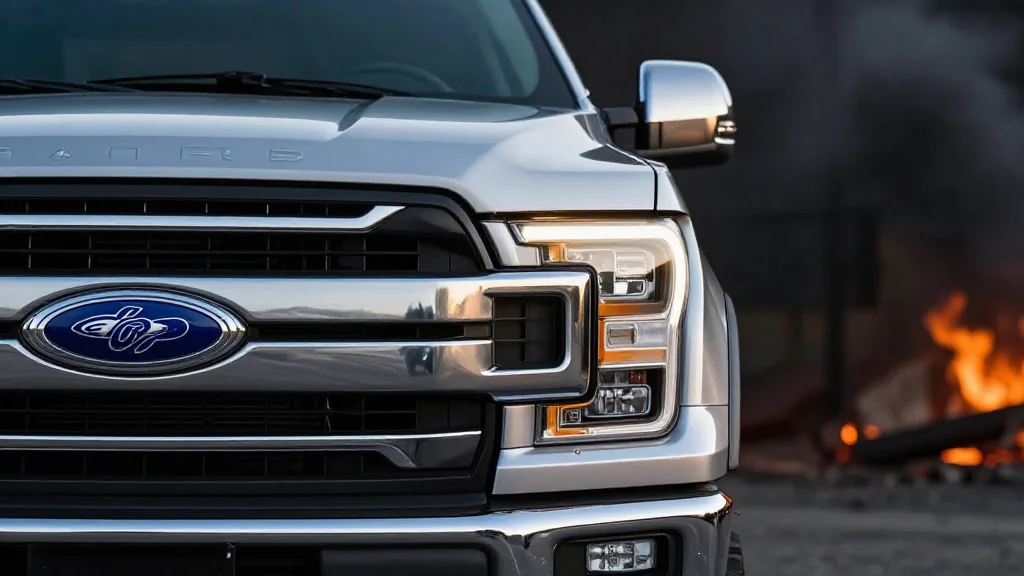
Ford’s F-Series Production Lag Triggers New Truck War with GM and Ram

Companies Mentioned
Why It Matters
Ford’s F‑Series is a bellwether for U.S. manufacturing health; its production volumes drive employment at dozens of plants and sustain a network of suppliers ranging from steel mills to electronics vendors. A prolonged shortfall would not only dent Ford’s revenue—estimated at $150 billion annually—but also ripple through the broader supply chain, affecting thousands of jobs. The emerging three‑way truck war could reshape competitive dynamics in the most profitable vehicle segment. If GM or Stellantis capture even a modest share of Ford’s displaced buyers, they stand to add billions in revenue and improve their own profit margins, while also pressuring Ford to accelerate its shift toward electric trucks—a strategic pivot already underway.
Key Takeaways
- •Ford plans to add >50,000 F‑Series pickups in 2026 to close a 5‑day inventory gap
- •Novelis fire disrupted aluminum supply, cutting Ford’s inventory to 55‑day supply
- •GM will boost Silverado and Sierra output at Flint Assembly starting June 2026
- •Stellantis’ Ram brand is developing new ‘muscle trucks’ aimed at Ford customers
- •Ford will skip summer shutdown at all U.S. F‑Series plants and start Canadian Super Duty production later 2026
Pulse Analysis
The pickup segment has long been a low‑volatility, high‑margin arena where brand loyalty trumps price sensitivity. Ford’s dominance rests on a combination of legacy reputation, dealer depth and a supply chain tuned for high‑volume aluminum‑body production. The Novelis incident exposed a single point of failure that rivals are now exploiting. GM’s decision to increase output at Flint—a plant already operating near capacity—signals a willingness to absorb higher marginal costs to capture market share, betting that any price premium from scarcity will offset the expense.
Stellantis’ strategy is more nuanced. By introducing sportier, smaller Ram models, the company is targeting a niche of younger, performance‑oriented buyers who might otherwise gravitate toward Ford’s F‑150 Lobo. This diversification could broaden Ram’s appeal beyond traditional work‑truck customers and create a new revenue stream that is less dependent on heavy‑duty aluminum supply.
For Ford, the operational response—adding shifts, hiring, and forgoing the summer lull—will strain labor and logistics but may be necessary to preserve its market‑share moat. The company’s ability to synchronize these changes with the rollout of its electric F‑150 Lightning will be a litmus test for its broader manufacturing agility. In the short term, the truck war will likely tighten inventories, push up dealer‑list prices and test the elasticity of demand. Over the longer horizon, the episode could accelerate a shift toward more resilient, multi‑material supply chains and hasten the industry’s transition to electrified pickups.
Ford’s F-Series Production Lag Triggers New Truck War with GM and Ram
Comments
Want to join the conversation?
Loading comments...