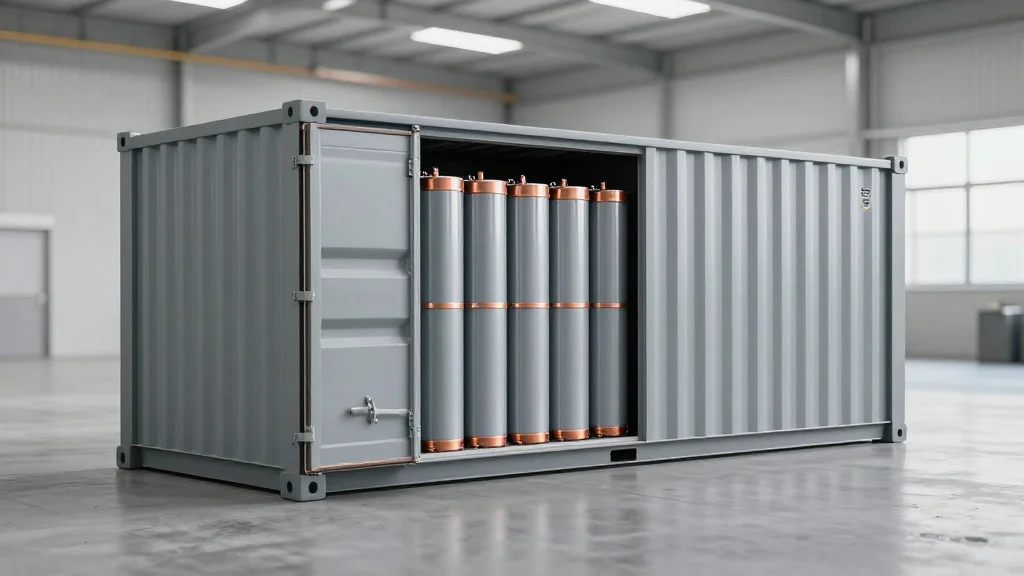
Ford’s New Battery Container Is Here To Take On The Tesla Megapack
Companies Mentioned
Why It Matters
Ford’s entry into stationary storage taps a fast‑growing, high‑margin market and challenges Tesla’s dominance, giving the automaker a new growth engine beyond passenger EVs.
Key Takeaways
- •Ford Energy launches DC block, 5.45 MWh per 20‑ft container.
- •Uses prismatic LFP cells, liquid‑cooled, 20‑year design life.
- •Kentucky plant repurposed for stationary packs; annual capacity 20 GWh.
- •Tesla’s Megapack leads with 80 GWh capacity, 47 GWh deployed.
- •First Ford deliveries slated for early 2027, targeting utility market.
Pulse Analysis
The stationary energy‑storage sector is expanding rapidly as utilities replace aging diesel generators and seek grid‑balancing solutions. After the U.S. federal EV tax credit of $7,500 lapsed, automakers are looking for alternative revenue streams, and Ford has turned its attention to this high‑margin market. By launching Ford Energy, the Detroit‑based group leverages its existing battery expertise while diversifying away from under‑performing EV models such as the discontinued F‑150 Lightning. The move aligns with a broader industry shift toward modular, containerized storage that can be deployed quickly.
Ford’s flagship offering, the DC block, packs 5.45 MWh of energy into a standard 20‑foot container using prismatic lithium‑iron‑phosphate cells. The system operates between 1,040 and 1,500 V, offers two‑hour and four‑hour discharge options, and includes liquid‑cooled thermal management plus a three‑level battery‑management system. Compared with Tesla’s Megapack, which delivers up to 3 MWh per unit and benefits from an 80 GWh annual production capacity, Ford’s unit size is larger but its projected plant output tops out at 20 GWh. The Kentucky facility, formerly dedicated to high‑nickel packs for the F‑150 Lightning, has been retooled to produce the entire battery stack in‑house.
Ford’s entry raises the competitive stakes for Tesla, whose energy‑storage division generated $1.1 billion in fourth‑quarter gross profit. With a planned rollout beginning in early 2027, Ford aims to capture utility contracts that value long‑life, fire‑protected containers capable of operating from –31 °F to 131 °F. If the 20 GWh capacity target is met, the company could secure a meaningful share of a market projected to exceed 200 GWh annually by 2030. Success will depend on pricing, reliability, and the ability to scale production faster than rivals, potentially reshaping the stationary‑storage landscape.
Ford’s New Battery Container Is Here To Take On The Tesla Megapack
Comments
Want to join the conversation?
Loading comments...