From 15 Hours to One Minute: How AI/ML Is Speeding up GM's Development
Why It Matters
Cutting simulation time from hours to minutes slashes development costs, speeds innovation, and gives GM a decisive competitive edge in vehicle performance and safety.
Key Takeaways
- •GM reduced FEA simulation from 15 hours to one minute using AI
- •Virtual twins now test hardware, software, and controls simultaneously
- •Faster iterations enable broader design space exploration across vehicles
- •Motorsports collaborations accelerate technology transfer to production lines
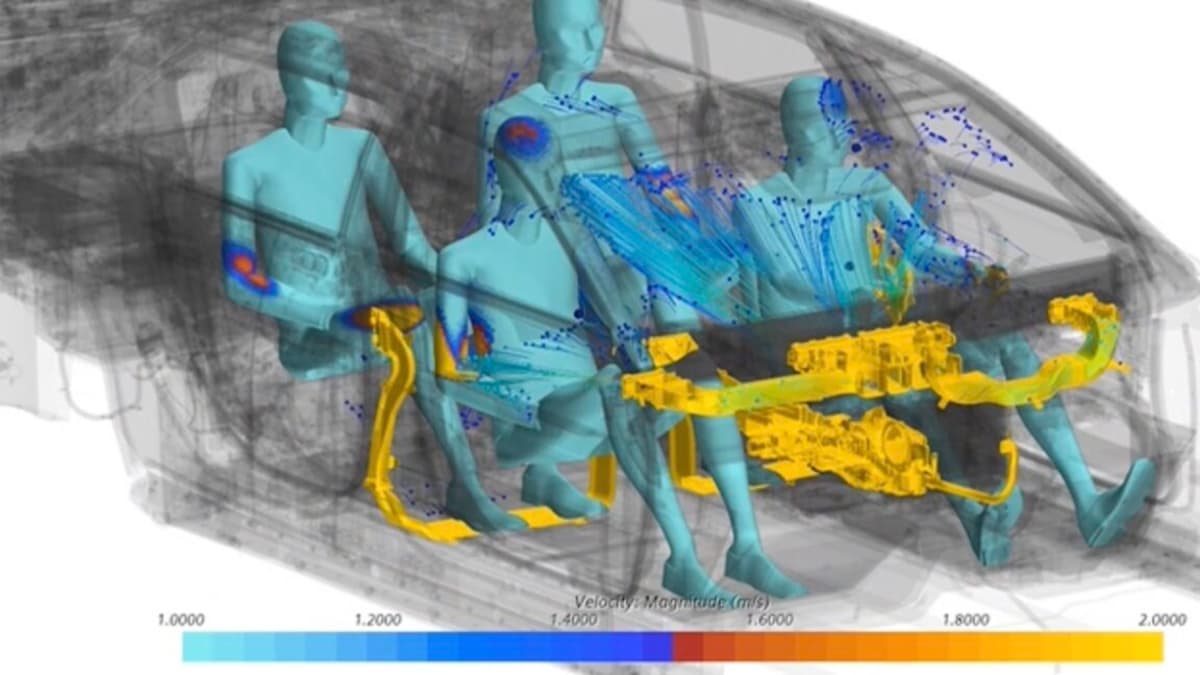
- •AI‑driven simulations improve crash safety and HVAC optimization
Pulse Analysis
The automotive industry is entering what GM’s chief product officer calls its "third epoch" of engineering, where artificial intelligence and machine learning replace the sequential hand‑off of traditional virtual tools. Earlier generations relied on isolated CFD or FEA analyses that still required lengthy compute cycles and manual integration. Today, AI models learn to approximate those physics‑heavy simulations, allowing a single probabilistic engine to generate results in minutes. This shift mirrors broader digital‑twin trends, but GM’s scale—spanning passenger cars, electric‑battery packs, and even lunar‑vehicle concepts—makes its implementation uniquely comprehensive.
The operational payoff is dramatic. A finite‑element analysis that once monopolized a high‑performance cluster for 15 hours now finishes in about 60 seconds, freeing engineers to run thousands of design‑of‑experiments across handling, crash, and HVAC scenarios. By embedding sensor models, ECUs and control algorithms into the same virtual environment, GM can validate vehicle behavior before any physical prototype exists. The result is faster convergence on optimal designs, reduced material waste, and earlier safety insights—critical advantages in a market where time‑to‑market and regulatory compliance are paramount.
Strategically, GM’s AI‑augmented simulation pipeline creates a feedback loop between its motorsports divisions and mass‑production lines. Innovations proven on a Formula One chassis can be transferred monthly to factory floor planning, accelerating technology diffusion. Competitors watching this rapid iteration model may feel pressure to adopt similar AI frameworks, potentially reshaping the industry’s R&D economics. While data quality and compute costs remain challenges, GM’s early success suggests that AI‑powered digital twins will become a cornerstone of next‑generation automotive engineering.
From 15 hours to one minute: How AI/ML is speeding up GM's development
Comments
Want to join the conversation?
Loading comments...