From Edge AI to Physical AI in Smart Factories: A Shift in How Machines Perceive and Act
Companies Mentioned
Why It Matters
Embedding AI at the edge transforms factories into adaptive, autonomous systems, reducing downtime, improving quality, and protecting sensitive data, which accelerates the Industry 4.0 agenda.
Key Takeaways
- •Edge AI moves inference from cloud to factory floor for real‑time decisions
- •Latency, data volume, and security drive shift to on‑device AI
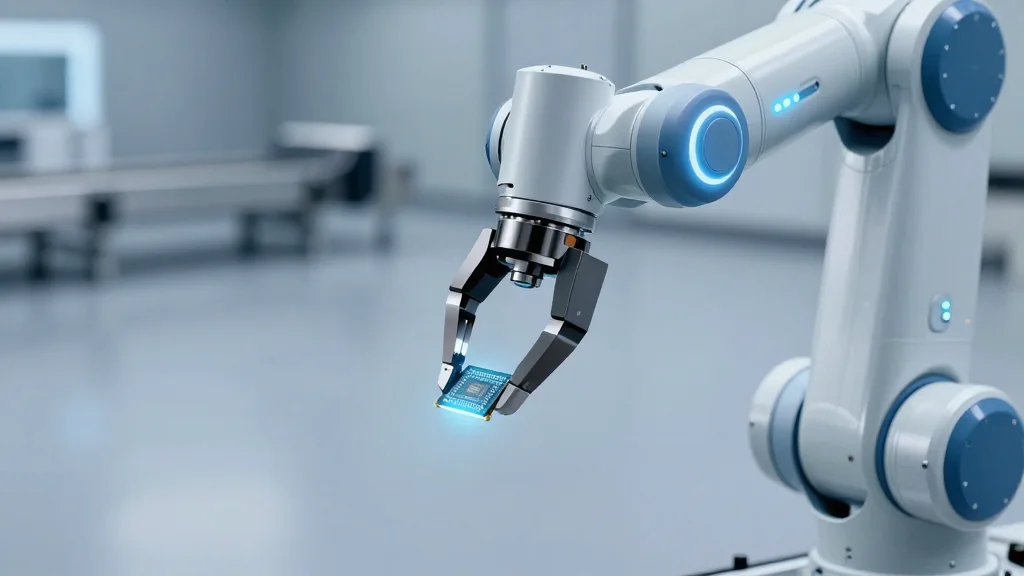
- •Physical AI adds perception, adaptation, and actuation capabilities to machines
- •Heterogeneous compute and integrated Wi‑Fi 7 enable scalable, low‑latency edge workloads
- •Ongoing model drift requires continuous monitoring and local recalibration
Pulse Analysis
The migration from centralized analytics to edge AI reflects a broader market push for real‑time decision making on the shop floor. As manufacturers grapple with sub‑second latency requirements, the cost of streaming high‑resolution video, audio, and vibration data to the cloud becomes prohibitive. Edge processors equipped with neural processing units (NPUs) can filter and act on anomalies locally, preserving bandwidth and enhancing data sovereignty. This shift aligns with the growing industrial IoT ecosystem, where devices must operate autonomously under variable network conditions.
Technical challenges accompany this transition. Power‑constrained environments demand heterogeneous architectures that balance CPUs, GPUs, and dedicated AI accelerators to handle diverse multimodal workloads efficiently. Integrated Wi‑Fi 7 offers multi‑link operation, wider channels, and higher spectral efficiency, delivering the low‑latency, high‑throughput links essential for synchronized robotics and machine‑vision tasks. Moreover, factories require long‑term reliability; silicon longevity, stable software stacks, and robust update mechanisms are critical to prevent costly downtime and to manage model drift as lighting, materials, and equipment evolve.
For businesses, the convergence of edge and physical AI promises measurable gains. Real‑time defect detection reduces scrap rates, predictive maintenance curtails unplanned outages, and adaptive robotics enhance flexibility in product lines. Companies that adopt integrated compute‑connectivity platforms can streamline design cycles, lower power consumption, and achieve economies of scale across deployments. As standards like Wi‑Fi 7 mature and AI‑native silicon becomes more accessible, the smart factory will evolve from a static automation hub into a perceptive, self‑optimizing ecosystem, delivering sustained competitive advantage.
From edge AI to physical AI in smart factories: A shift in how machines perceive and act
Comments
Want to join the conversation?
Loading comments...