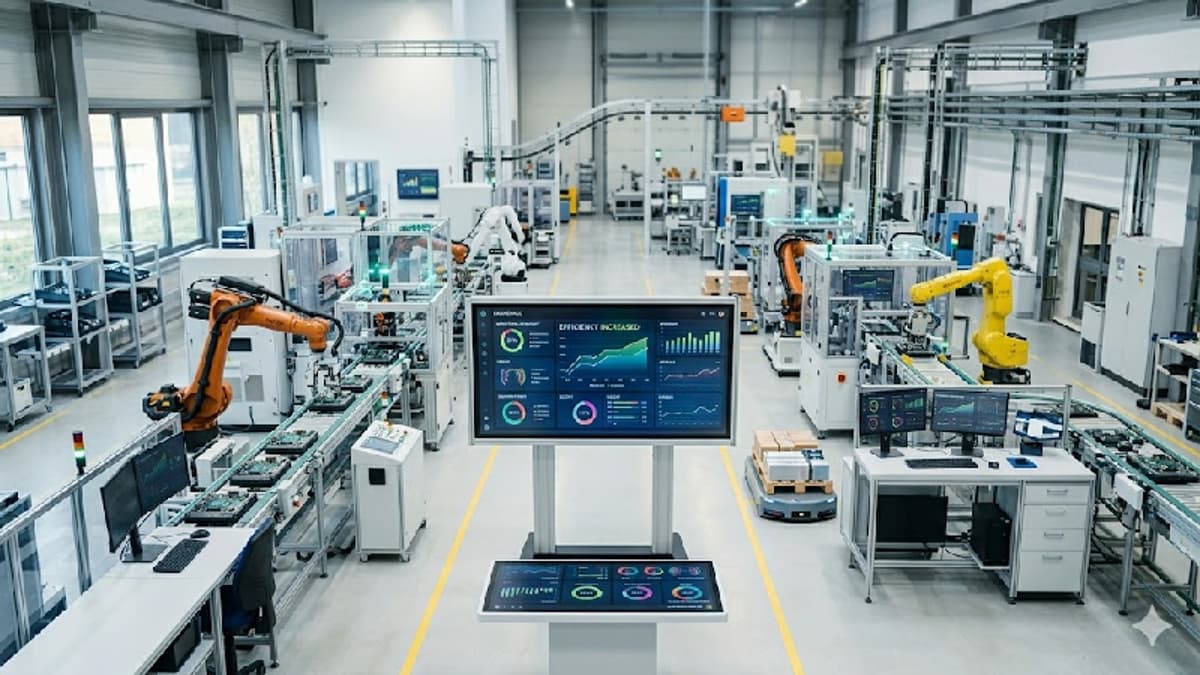
From Measurement Silos to Smart Manufacturing Intelligence
Why It Matters
A centralized metrology data lake unlocks enterprise‑wide quality visibility, fuels AI‑driven defect prediction and reduces latency in process adjustments, giving manufacturers a decisive efficiency and compliance advantage.
Key Takeaways
- •Metrology data lakes centralize diverse inspection data.
- •Cloud platforms enable real‑time quality visibility across sites.
- •AI models need unified, large‑scale measurement datasets.
- •Integrated data drives predictive defect detection and process control.
- •Hybrid edge‑cloud architectures address latency and security concerns.
Pulse Analysis
The manufacturing sector is shedding the legacy of isolated metrology systems in favor of data‑lake architectures that aggregate measurements from CMMs, laser scanners, vision cells and SPC tools into a single, cloud‑native repository. This consolidation eliminates the manual stitching of point‑cloud files, ERP logs and calibration records, delivering a unified view of quality across the entire production line. By storing both raw and processed data without rigid schemas, manufacturers can preserve the fidelity needed for downstream analytics, while scaling storage costs linearly with the terabytes generated each day.
With a centralized lake, AI and machine‑learning pipelines gain instant access to historic dimensional trends, tool‑wear signatures and environmental variables, enabling predictive defect detection and automated root‑cause analysis. The data can be fed into digital‑twin models to simulate how a dimensional drift will affect downstream assembly, allowing engineers to adjust tolerances before physical production. Real‑time streaming from inline gauges further closes the loop, letting CNC offsets or robotic paths be corrected on the fly. For global OEMs in automotive, aerospace and semiconductor markets, cloud‑based visibility translates into consistent quality standards across dispersed plants and suppliers.
Adopting a metrology data lake is not without hurdles. Legacy equipment often speaks proprietary formats, requiring custom ingestion pipelines and robust data‑governance policies to protect intellectual property. Latency‑sensitive applications may need a hybrid edge‑cloud approach, where initial filtering occurs on‑premise and aggregated insights are pushed to the cloud for large‑scale analytics. Nevertheless, the emerging intelligent quality ecosystem—where AI‑native platforms orchestrate autonomous inspection, continuously update digital twins, and feed prescriptive recommendations to production control—promises a new competitive edge. Companies that master this integration will achieve higher yields, faster time‑to‑market, and resilient, self‑optimizing factories.
From Measurement Silos to Smart Manufacturing Intelligence
Comments
Want to join the conversation?
Loading comments...