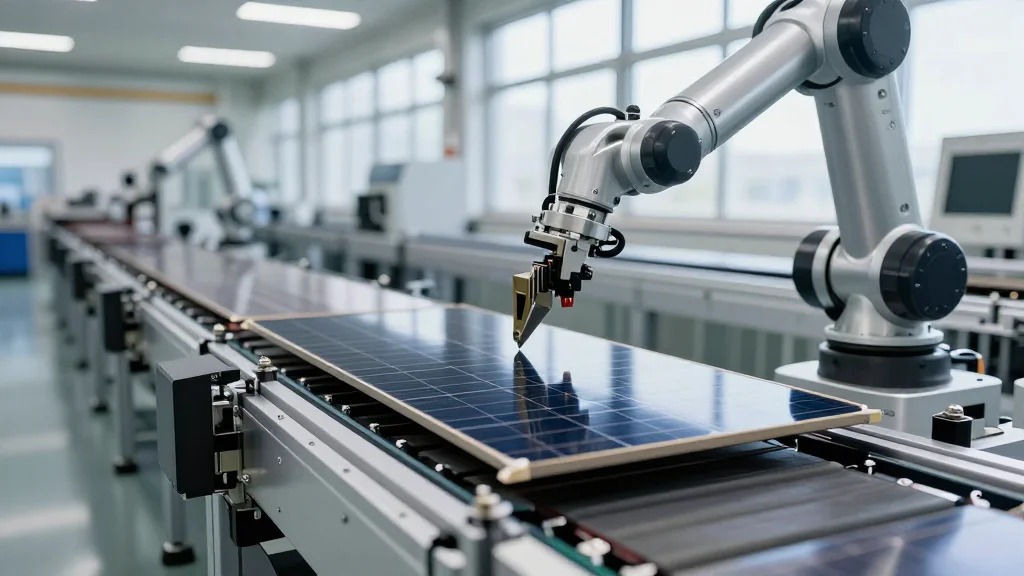
Fujiyama Power to Set up 1.2 GW TOPCon Solar Cell Manufacturing Facility in India
Why It Matters
The new plant strengthens domestic manufacturing capacity, positioning Fujiyama to meet India’s ALMM‑II‑driven demand for DCR‑compliant rooftop solar panels while improving cost control and profitability.
Key Takeaways
- •1.2 GW TOPCon plant adds to Fujiyama’s 1 GW PERC capacity.
- •Project cost INR 350 crore (~$36.5 M) funded by debt and accruals.
- •Production slated for FY 2028 Q1, targeting DCR‑compliant cells.
- •Supports India’s ALMM‑II rules and rooftop solar growth.
- •Enhances backward integration, cost control, and profit margins.
Pulse Analysis
India’s solar manufacturing landscape is rapidly evolving, with domestic players racing to adopt next‑generation cell technologies. Fujiyama’s decision to layer a 1.2 GW TOPCon line onto its existing 1 GW mono‑PERC capacity reflects a broader industry shift toward higher‑efficiency, lower‑loss cells. TOPCon (Tunnel Oxide Passivated Contact) offers superior conversion rates and better temperature coefficients, making it attractive for on‑grid rooftop installations where space and performance are premium. By expanding in Madhya Pradesh, Fujiyama taps a strategic logistics hub, reducing transportation costs and diversifying its geographic footprint.
The timing aligns with India’s ALMM‑II (Accelerated Market Development Mechanism) framework, which mandates DCR‑compliant (Domestic Content Requirement) solar cells for certain subsidy schemes. As the ALMM‑II rules take effect on June 1, 2026, manufacturers that can guarantee local content will enjoy preferential access to lucrative government‑backed projects, such as the Pradhan Mantri Surya Ghar Muft Bijli Yojana. Fujiyama’s inclusion on the Ministry of New and Renewable Energy’s approved list positions it to capture a growing share of rooftop demand, where DCR compliance is becoming a decisive procurement factor.
Financially, the INR 350 crore investment—approximately $36.5 million—represents a modest capital outlay relative to the capacity added, thanks to a mix of debt financing and internal accruals. This cost‑effective expansion is expected to smooth supply‑chain volatility, lock in margins, and reduce reliance on imported cell modules. In a market where profitability hinges on cost control and regulatory alignment, Fujiyama’s backward‑integration strategy could set a benchmark for peers, reinforcing India’s ambition to become a global solar manufacturing hub.
Fujiyama Power to set up 1.2 GW TOPCon solar cell manufacturing facility in India
Comments
Want to join the conversation?
Loading comments...