Why It Matters
The plant reduces Ghana’s reliance on costly pasta imports, preserving foreign‑exchange reserves and fostering local job creation. It also demonstrates the viability of large‑scale agro‑industrial projects, encouraging further investment in the country’s manufacturing ecosystem.
Key Takeaways
- •$40m Olam pasta plant launches in Kpone.
- •Capacity meets up to 40% of Ghana’s pasta demand.
- •Project creates 300 direct, ~1,000 indirect jobs.
- •Aims to replace $140m in pasta imports.
- •Supports Ghana’s hub strategy and future food exports.
Pulse Analysis
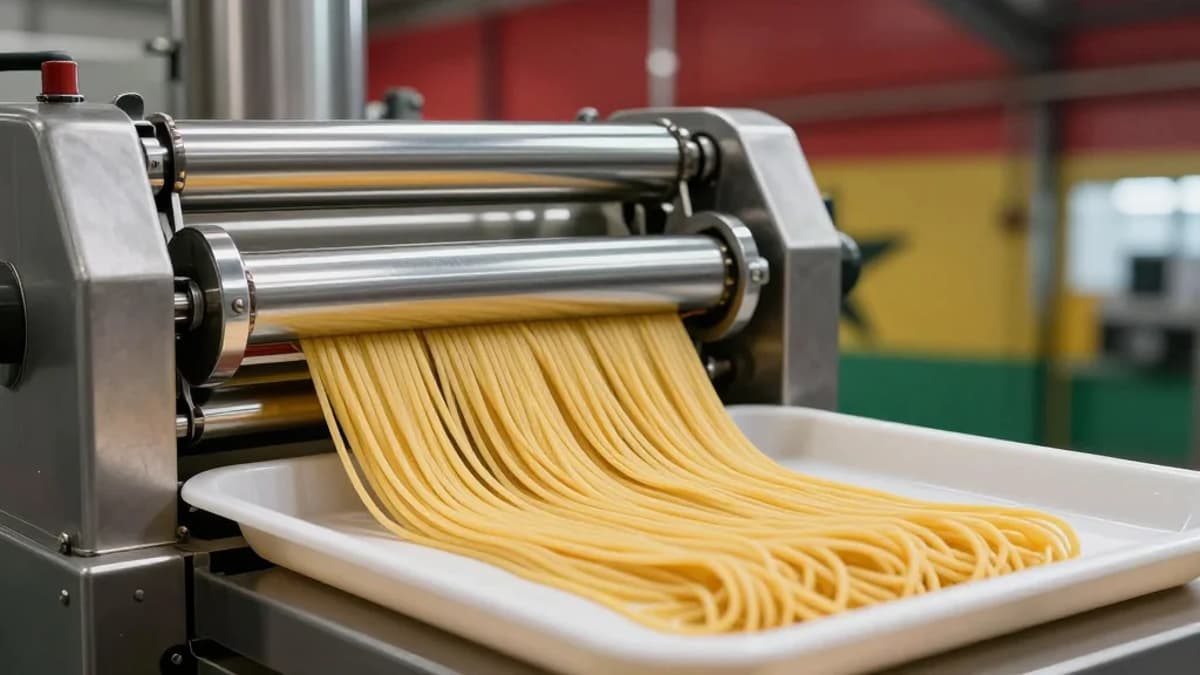
Ghana’s ambition to transform into a West African manufacturing hub gained a tangible boost with the commissioning of Olam Agri’s $40 million pasta plant in Kpone, near Tema. The facility, equipped with advanced processing lines, can produce 60,000 tonnes annually—enough to satisfy roughly 40 % of the nation’s pasta consumption, which has historically been met entirely by imports. By localising production, the plant not only curtails a $140 million import bill projected for 2021‑2024 but also signals confidence in Ghana’s policy environment that encourages value‑added agro‑industry.
The project generated 300 direct jobs and close to 1,000 indirect positions, reinforcing the government’s 24‑hour economy agenda that seeks continuous industrial activity. Beyond employment, the plant’s fortified pasta range adds nutritional value and creates a platform for future collaboration with Ghanaian research institutes to develop locally adapted wheat varieties, aligning with the Feed the Industry programme. Reducing reliance on foreign pasta also preserves foreign‑exchange reserves, a critical buffer for a country that has faced balance‑of‑payments pressures. Moreover, the plant’s modern technology lowers energy intensity compared with older facilities.
Olam’s investment joins a wave of large‑scale projects, including a $250 million float‑glass plant and a $110 million low‑carbon cement factory, underscoring a broader strategic shift from trading to manufacturing. These developments position Ghana to become a regional exporter of processed foods, leveraging its stable political climate and improving logistics infrastructure. The emphasis on sustainability—evident in Olam’s commitment to biodiversity and low‑emission processes—mirrors global consumer expectations and may attract further foreign capital. As the sector matures, Ghana could set a benchmark for industrialisation in West Africa.
Ghana gets new $40m pasta factory
0
Comments
Want to join the conversation?
Loading comments...