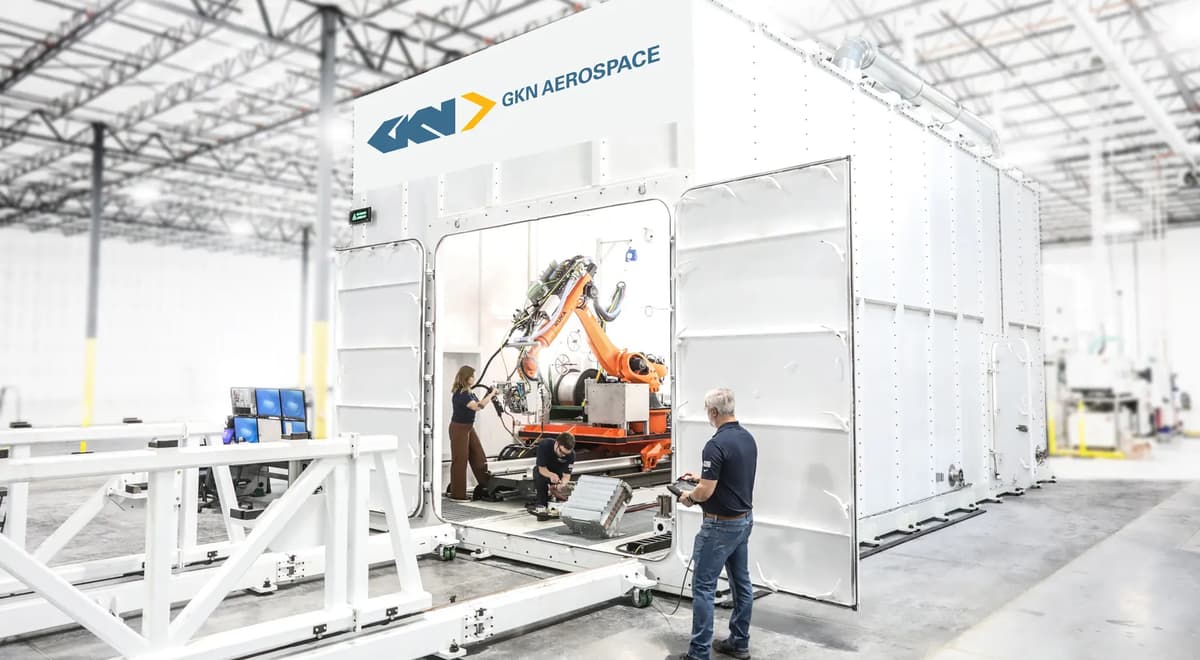
GKN Aerospace and AFRL Launch $8.4M TITAN-AM Titanium Programme
Companies Mentioned
Why It Matters
TITAN‑AM targets the high‑cost, waste‑intensive titanium supply chain, promising faster, cheaper, and more flexible manufacturing for critical aerospace parts. Its success would accelerate the shift from lab‑scale 3D printing to serial production, giving U.S. defense and commercial aircraft programs a competitive edge.
Key Takeaways
- •$8.4 M TITAN‑AM program launched by GKN and AFRL.
- •Focus on scaling wire‑based laser deposition for large titanium parts.
- •Builds material databases, simulation tools, and inspection methods.
- •Demonstrations will use real aerospace components at Fort Worth center.
- •Aims to cut titanium waste and lower buy‑to‑fly ratios.
Pulse Analysis
Additive manufacturing has moved from a curiosity to a strategic lever for aerospace, especially when dealing with titanium—an alloy prized for strength‑to‑weight ratio but notorious for costly, wasteful machining. Wire‑based laser metal deposition (LMD‑w) offers near‑net‑shape fabrication, dramatically reducing the buy‑to‑fly ratio by depositing material only where needed. Industry leaders such as Airbus and Turkish Aerospace Industries have already proven the technology on multi‑meter components, signaling that the technology is ready for scale‑up. The shift promises not only material savings but also design freedom, enabling complex geometries that traditional forging cannot achieve.
The TITAN‑AM programme, funded with $8.4 million, formalizes this momentum through a five‑pillar framework. First, it scales LMD‑w processes to handle oversized structural parts, a prerequisite for commercial aircraft. Second, it creates comprehensive material performance databases, ensuring that every printed part meets stringent aerospace standards. Third, advanced computational tools will integrate design and process simulation, reducing trial‑and‑error cycles. Fourth, the initiative refines non‑destructive inspection methods tailored to additive builds, addressing certification hurdles. Finally, hands‑on validation using real components at GKN’s Fort Worth centre will provide the hard data needed for series production.
If successful, TITAN‑AM could rewrite the economics of titanium aircraft structures. Lower material waste and shorter lead times translate directly into cost reductions for programs like Pratt & Whitney’s GTF engine mounts already in service on the Airbus A220 and Embraer E195‑E2. Moreover, a domestic, defense‑aligned supply chain reduces reliance on overseas forging capabilities, enhancing national security. The program’s outcomes are likely to cascade across the aerospace ecosystem, prompting OEMs and suppliers to re‑evaluate legacy manufacturing footprints and accelerate adoption of large‑format additive technologies.
GKN Aerospace and AFRL Launch $8.4M TITAN-AM Titanium Programme
Comments
Want to join the conversation?
Loading comments...