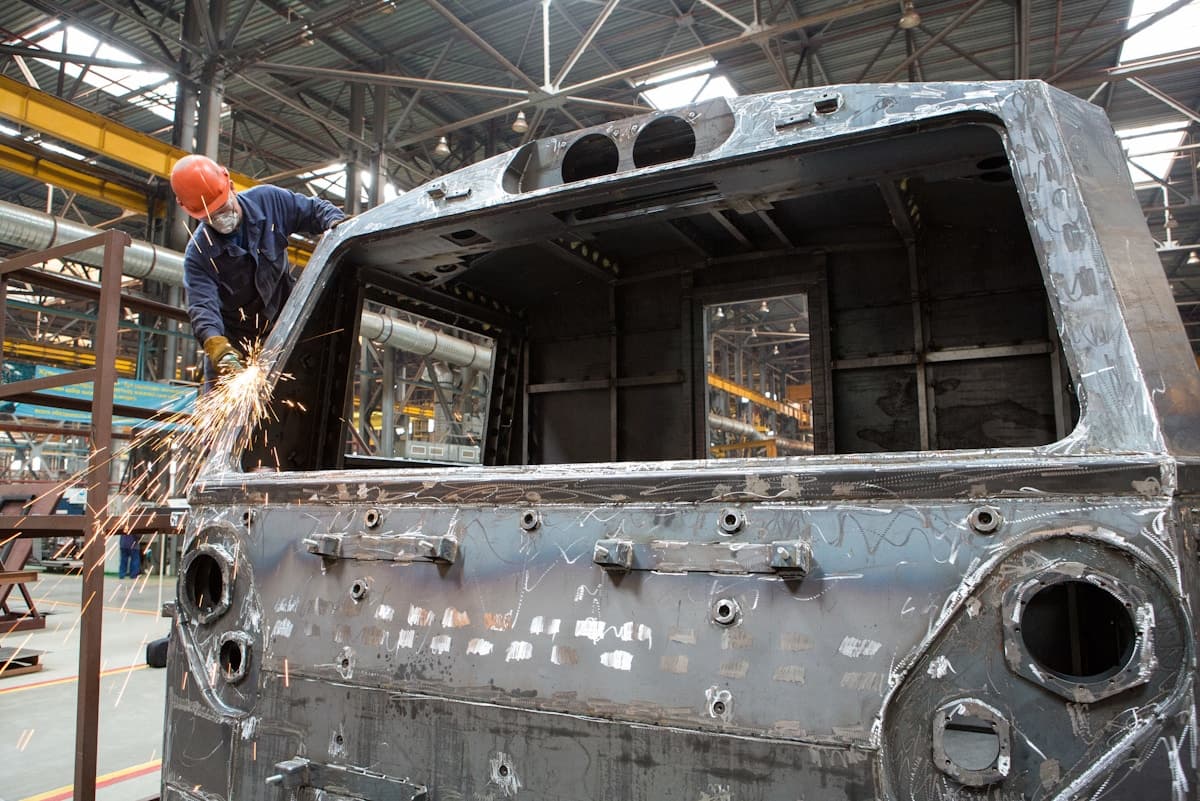
Global Steelmakers Can Do Much More to Green Their Processes
Why It Matters
The findings highlight that the steel industry’s climate pledges are far from reality, risking regulatory penalties, stranded assets, and loss of market competitiveness as carbon‑pricing mechanisms tighten globally.
Key Takeaways
- •No steelmaker scored above 50 out of 100 points.
- •SSAB leads with 46.2, driven by coal phase‑out plans.
- •Indian firms Tata and JSW rank mid‑table despite high emissions.
- •Coal‑dependent blast furnace retirements remain undefined for most firms.
- •EU carbon border tax pressures drive greener steel investments.
Pulse Analysis
The steel sector accounts for roughly 10% of global CO₂ emissions, a share driven largely by coal‑intensive blast furnaces. SteelWatch’s scorecard, the first systematic benchmark of climate readiness, reveals that 18 major producers across Asia, Europe and the Americas are collectively lagging, with average scores clustered between 20 and 30. This baseline shows that public net‑zero commitments are not matched by tangible investments in green hydrogen‑based direct‑reduction iron (DRI) or renewable power, leaving the industry vulnerable to tightening carbon regulations and investor scrutiny.
Regional disparities are evident. SSAB of Sweden‑Finland tops the ranking at 46.2 points, reflecting its aggressive timetable to retire coal‑based furnaces and its early green‑iron procurement strategy. Thyssenkrupp follows, yet both still need to operationalise green‑iron projects. In contrast, Indian giants Tata Steel and JSW Steel sit mid‑table, hampered by high emissions intensity and limited scrap usage, while Chinese firms like Baosteel show modest efficiency gains but lack clear coal‑phase‑out roadmaps. Policy levers such as the EU’s Carbon Border Adjustment Mechanism and China’s expanding emissions trading scheme are beginning to pressure laggards, incentivising pilots like Baosteel’s hydrogen pipeline and JSW’s green‑hydrogen plant.
For investors and downstream manufacturers, the scorecard signals a looming risk of stranded assets and competitive disadvantage for firms that fail to accelerate decarbonisation. Companies that can demonstrate transparent, funded transition plans—particularly those scaling green‑iron production and securing renewable energy contracts—will likely secure market access under emerging carbon‑pricing regimes. Stakeholders should monitor annual scorecard updates as a proxy for real‑world progress, using the data to differentiate leaders from laggards in the race toward a low‑carbon steel future.
Global steelmakers can do much more to green their processes
Comments
Want to join the conversation?
Loading comments...