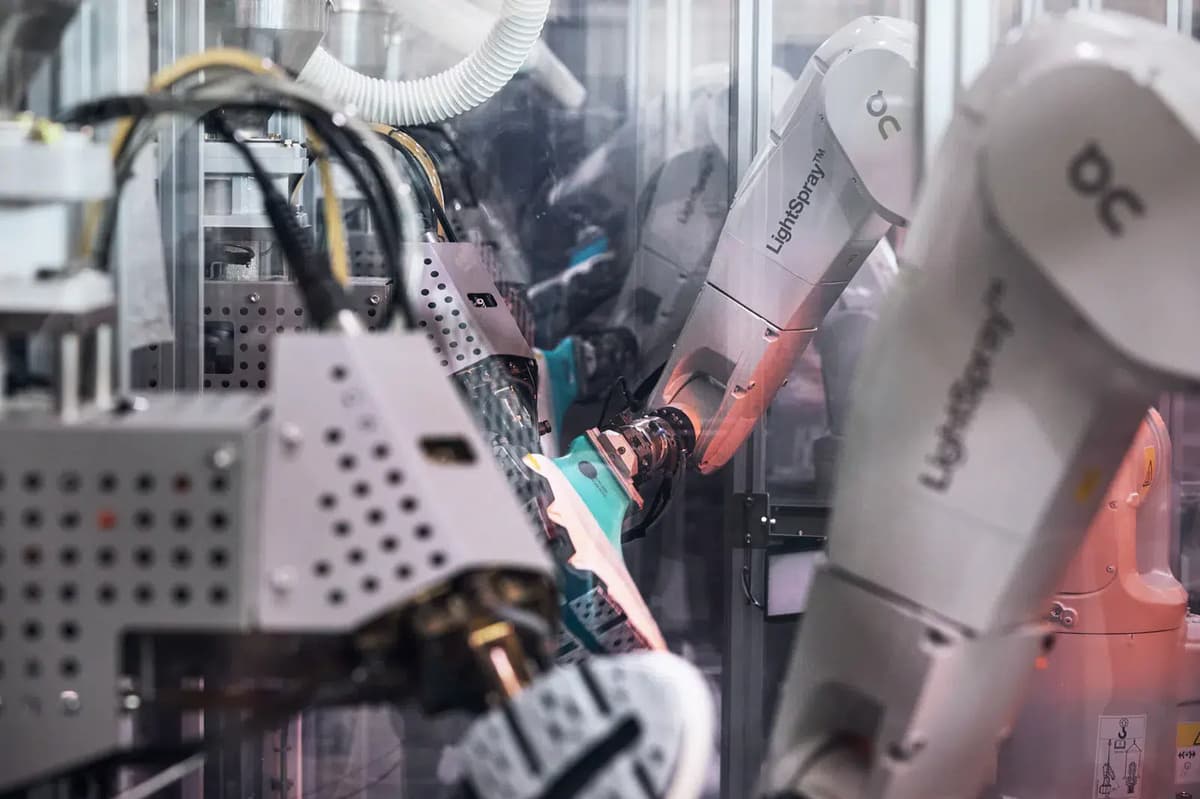
Global Supply Chain Volatility Pushes Sports Brand On to Open Robot-Centric South Korean Factory
•February 26, 2026
0
Why It Matters
The move gives On greater control over supply‑chain volatility, reducing tariff exposure and accelerating product delivery to key markets. It also signals a broader industry shift toward automated, regional manufacturing for premium footwear.
Key Takeaways
- •On opens 32‑robot factory near Busan, South Korea.
- •Capacity increase 30‑fold by 2026 across global sites.
- •Nearshoring reduces US tariff exposure and speeds time‑to‑market.
- •Automation enables identical programming across Zurich and Busan plants.
- •Blueprint aims to replicate factories in Americas and Europe.
Pulse Analysis
The footwear sector has been rattled by a perfect storm of rising U.S. import duties, geopolitical tensions and pandemic‑induced disruptions. Brands that once relied on low‑cost factories in Vietnam and Indonesia now face unpredictable cost structures and longer lead times. In response, Swiss‑based On has accelerated its nearshoring agenda by opening a 32‑robot facility in Busan, South Korea. By positioning production closer to its European and North American consumer bases, the company can sidestep tariff hikes, reduce ocean‑freight dependencies, and compress the time from design to shelf.
Automation lies at the heart of On’s strategy. The Busan plant, capable of churning out roughly 1,000 pairs per day, mirrors the programmable workflow first demonstrated in Zurich, where four robots assemble shoes with precision. Identical software code can be deployed across continents, ensuring consistent product quality while scaling output rapidly. Moreover, robotic manufacturing cuts energy consumption per unit and lowers waste, aligning with the brand’s sustainability narrative. The high‑density robot layout also mitigates the scarcity of cheap labor, a growing concern for premium sportswear makers.
If On’s blueprint proves successful, it could reshape the competitive landscape of performance footwear. Replicating robot‑centric factories in the United States and Europe would create a network of micro‑hubs that respond instantly to regional demand spikes, a clear advantage over rivals still dependent on distant, labor‑intensive plants. The model also offers a template for other premium brands seeking to balance cost, speed and environmental goals amid tightening trade policies. While capital investment is substantial, the long‑term payoff may be a more resilient, agile supply chain that redefines industry standards.
Global supply chain volatility pushes sports brand On to open robot-centric South Korean factory
0
Comments
Want to join the conversation?
Loading comments...