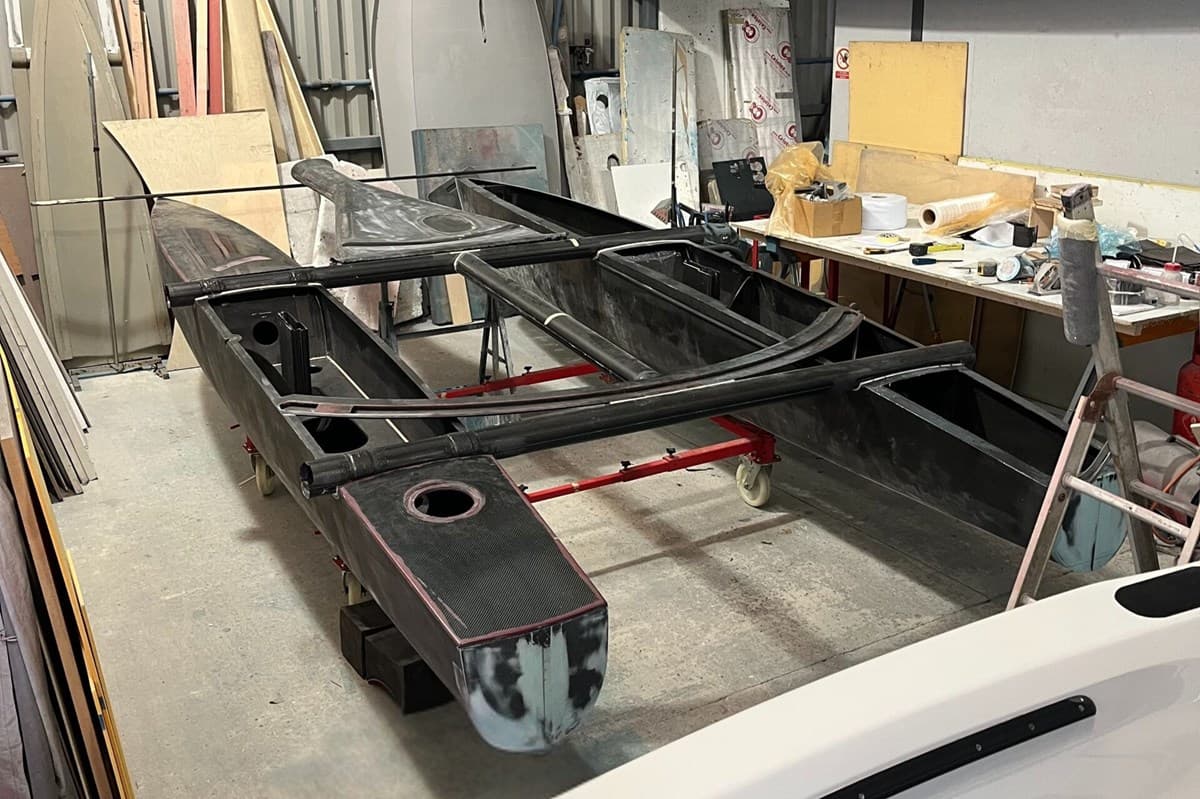
Gurit Composite Materials Play Central Role in Latest Shearwater Racing Catamaran Design
•March 9, 2026
0
Why It Matters
The partnership showcases how premium composite systems can unlock superior speed and reliability, reinforcing Gurit’s position in high‑performance marine markets.
Key Takeaways
- •Gurit provides epoxy, adhesive, foam for new Shearwater
- •Carbon‑fiber, foam‑cored hull delivers high stiffness‑to‑weight
- •Class evolved from timber to advanced composite construction
- •Builder Pete Jary relies on Gurit after 25 years
- •Materials ensure consistent processing and reliable race repairs
Pulse Analysis
The Shearwater catamaran, a staple of British multihull racing, has undergone a remarkable transformation from its mid‑1950s cold‑molded timber origins to today’s carbon‑fiber, foam‑cored construction. This evolution mirrors broader trends in marine engineering, where weight reduction and structural efficiency are paramount. By embracing a restricted development class format, designers have been free to experiment, leading to incremental hull refinements and the eventual adoption of high‑tech composites that dramatically improve acceleration, handling, and durability on the water.
Gurit’s contribution to the latest Shearwater centers on three core products: Ampreg epoxy resin systems, Spabond structural adhesives, and Corecell M foam core. Ampreg resins deliver a balance of high tensile strength and low viscosity, facilitating flawless lay‑up and rapid cure cycles—critical for both new builds and field repairs. Spabond’s user‑friendly bonding chemistry ensures consistent joint integrity across the hull’s critical stress points, while Corecell M’s closed‑cell architecture provides exceptional impact resistance without adding unnecessary mass. Together, these materials enable a stiffness‑to‑weight ratio that pushes the catamaran’s performance envelope while preserving the class’s distinctive character.
For the marine composites market, the Shearwater project serves as a high‑visibility case study of how specialized material systems can drive competitive advantage. Gurit’s proven track record, reinforced by builder Pete Jary’s 25‑year endorsement, signals confidence to other racing teams and commercial boatyards seeking reliable, repairable solutions. As sustainability pressures mount, the lightweight nature of foam‑cored carbon structures also contributes to lower fuel consumption for motor‑assisted vessels and reduced material waste. The success of this catamaran is likely to spur further investment in advanced epoxy formulations and engineered foam cores, cementing Gurit’s role as a catalyst for next‑generation marine innovation.
Gurit composite materials play central role in latest Shearwater racing catamaran design
0
Comments
Want to join the conversation?
Loading comments...