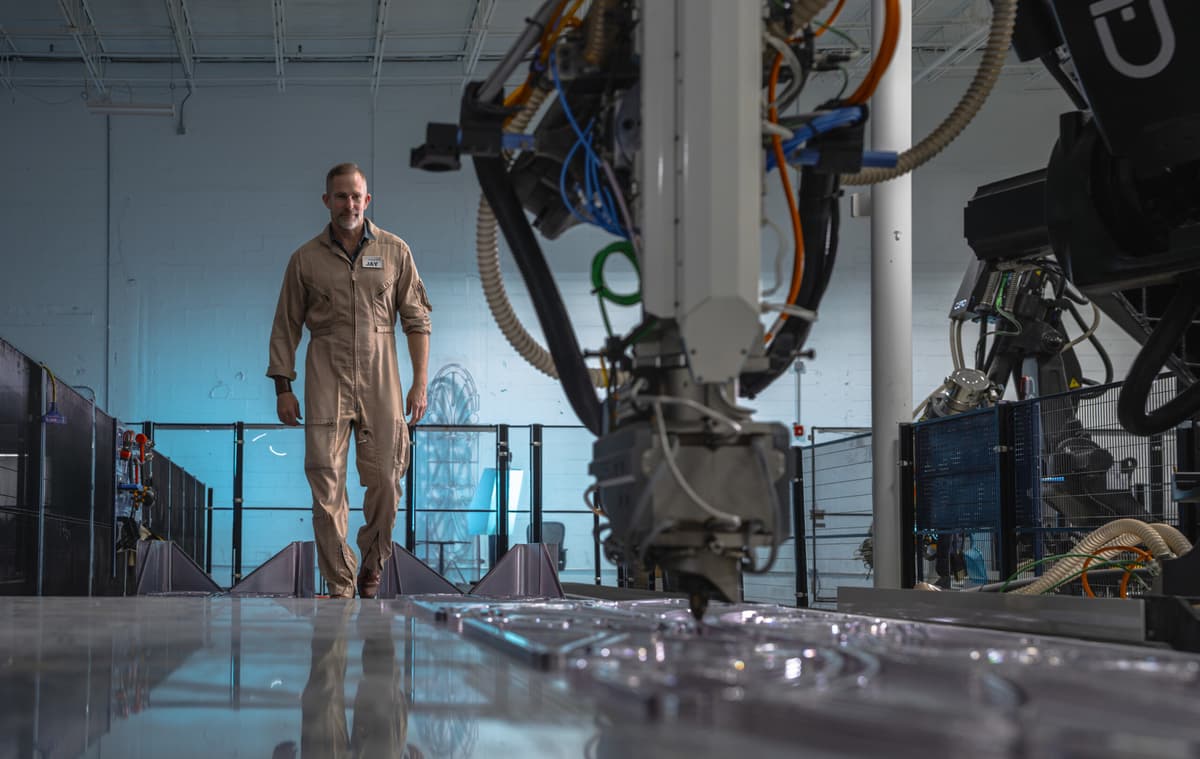
Haddy Adopts Siemens Xcelerator for Local Manufacturing
Companies Mentioned
Why It Matters
The move shows how digital twins and cloud software can accelerate localized, sustainable manufacturing, cutting supply‑chain complexity and material waste for high‑value sectors.
Key Takeaways
- •Haddy adopts Siemens Xcelerator to unify product design and production
- •Microfactory network uses AI to manage large-format robotic additive builds
- •Circular materials are reclaimed, processed, and reused as feedstock
- •Siemens SINUMERIK controls robot kinematics for CNC‑based extrusion
- •Cloud‑enabled NX X Manufacturing reduces IT overhead via token licensing
Pulse Analysis
Additive manufacturing is shifting from centralized factories to distributed micro‑factories that sit closer to end‑users. Haddy’s model leverages recyclable, biodegradable feedstock to create a closed‑loop supply chain, a strategy that resonates with manufacturers seeking to meet tightening environmental regulations and consumer demand for sustainable products. By sourcing materials domestically and producing on‑demand, the company reduces transportation emissions and shortens lead times, positioning itself as a pioneer in the circular economy for sectors ranging from furniture to naval construction.
The Siemens Xcelerator platform provides the digital backbone that makes Haddy’s distributed approach feasible. Designcenter and Teamcenter create a continuous digital thread from CAD to robot‑controlled extrusion, while SINUMERIK delivers CNC‑level precision for large‑format robotic arms. The addition of Simcenter Optistruct and cloud‑based NX X Manufacturing brings simulation, optimization, and token‑based licensing, allowing engineers to test structural performance and generate build strategies without heavy on‑premise IT investments. This integration not only streamlines workflow but also enables rapid scaling across multiple micro‑factory sites.
For the broader industry, Haddy’s partnership signals a viable path toward resilient, low‑waste manufacturing networks. The ability to reclaim and reprocess components into new feedstock reduces raw‑material dependency and mitigates supply‑chain disruptions—a lesson amplified by recent global logistics challenges. As more firms adopt similar digital ecosystems, we can expect a ripple effect: faster product iteration, lower capital expenditure, and a measurable reduction in carbon footprints across high‑value manufacturing domains.
Haddy adopts Siemens Xcelerator for local manufacturing
Comments
Want to join the conversation?
Loading comments...