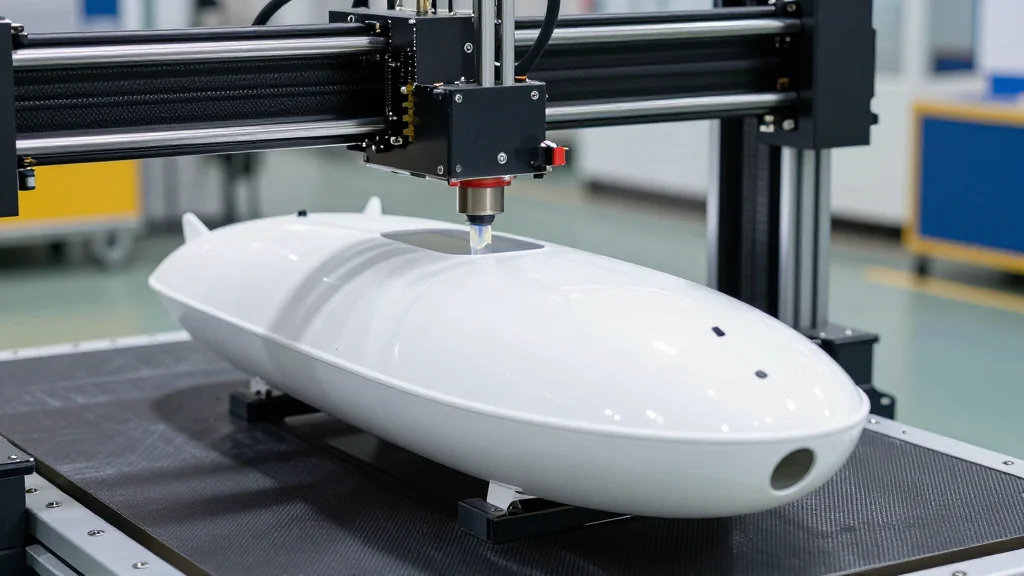
Haddy Demonstrates Agile LFAM Production with LPUSV Maritime Project
Why It Matters
Accelerating vessel development compresses design cycles, lowers capital outlay, and gives maritime operators rapid field validation—a strategic advantage in a fast‑evolving sector.
Key Takeaways
- •Haddy printed LPUSV hull in nine days
- •Carbon‑fiber reinforced polycarbonate used for hull
- •Microfactory enables global localized vessel production
- •Rapid iteration cuts development cycles from months to days
- •Recycled polymers lower environmental impact of maritime manufacturing
Pulse Analysis
Large‑format additive manufacturing is reshaping the maritime supply chain by collapsing the traditional timeline of shipbuilding. Conventional methods require tooling, molds, and lengthy assembly phases that can stretch over months. Haddy’s LFAM platform deposits continuous layers of reinforced polymer, allowing engineers to translate complex CAD geometries directly into a seaworthy hull. This eliminates intermediate steps, reduces material waste, and offers designers the freedom to optimize hydrodynamics without compromising structural integrity. The result is a production cadence measured in days rather than seasons, a game‑changer for time‑critical missions.
The LPUSV project illustrates the practical benefits of this technology. HavocAI’s autonomous semi‑submersible required a lightweight yet robust structure capable of withstanding harsh marine environments. By infusing carbon fiber into a recycled polycarbonate matrix, Haddy delivered a hull that meets strength specifications while maintaining a low weight profile. The rapid turnaround enabled HavocAI to conduct sea trials within nine days of design finalization, accelerating validation and allowing immediate design tweaks. Such speed is especially valuable for defense and logistics operators who need to field adaptable platforms in response to evolving threats or supply chain disruptions.
Beyond a single vessel, Haddy’s microfactory concept promises a decentralized production network that can be deployed near ports, offshore bases, or remote coastal facilities. Localized manufacturing reduces shipping costs, shortens lead times, and supports sustainability goals through the use of recycled polymers. As maritime stakeholders seek faster, greener, and more flexible solutions, the convergence of LFAM, carbon‑reinforced composites, and microfactory scalability positions Haddy as a pivotal player in the next wave of maritime innovation, potentially reshaping procurement strategies across the industry.
Haddy demonstrates agile LFAM production with LPUSV maritime project
Comments
Want to join the conversation?
Loading comments...