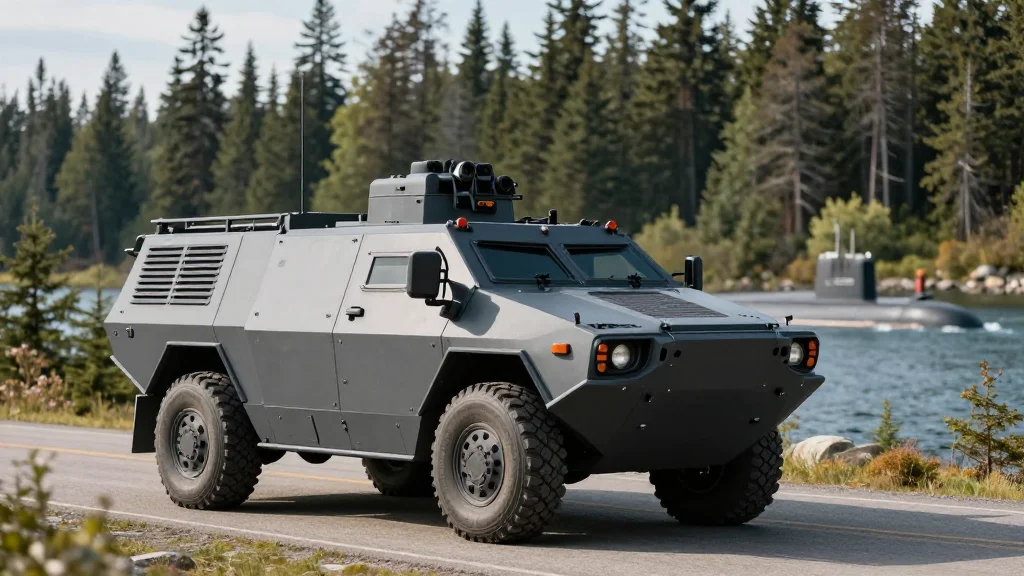
Hanwha Pledges Canadian Auto Partnerships in Submarine Bid
Companies Mentioned
Why It Matters
The proposal ties a major defense acquisition to a domestic industrial boost, potentially reshaping Canada’s defense supply chain and creating thousands of jobs. It also signals heightened competition among global shipbuilders to offer broader economic offsets.
Key Takeaways
- •Hanwha pledges Canadian‑made steel and aluminum for submarine program.
- •Joint venture aims to produce armored vehicles with Canadian auto‑parts firms.
- •Deal could create tens of thousands of jobs in Canada’s automotive sector.
- •Submarine contract valued at roughly $20 billion USD for up to 12 subs.
- •Competition includes Germany’s Thyssenkrupp Marine Systems, also offering industrial benefits.
Pulse Analysis
Canada’s decision to replace its aging submarine fleet has become a geopolitical litmus test, with the government earmarking up to 12 new vessels worth roughly $20 billion USD. The procurement is not just about underwater capability; it is a catalyst for domestic industrial policy, urging bidders to embed Canadian content and technology. While German shipbuilder Thyssenkrupp Marine Systems brings a legacy of proven platforms, Hanwha’s bid leans heavily on a broader economic narrative, promising to weave Canadian steel, aluminum, and automotive expertise into the program.
Hanwha’s offset strategy hinges on a joint venture with the Automotive Parts Manufacturers’ Association, targeting the design and production of heavy military and industrial vehicles. By committing to Canadian‑made components, the company aims to protect and generate tens of thousands of jobs in a sector still reeling from the 25% U.S. tariff on imported cars and trucks. The move also aligns with Prime Minister Mark Carney’s push for greater national defense spending to stay home, potentially encouraging future Korean automotive assembly plants in Canada, complementing the existing presence of Hyundai and Kia.
If Hanwha wins, the deal could reshape Canada’s defense industrial base, fostering a domestic supply chain that extends beyond shipbuilding into automotive and metal manufacturing. This would deepen Korea‑Canada economic ties and set a precedent for future defense contracts to include robust industrial benefits. Conversely, a Thyssenkrupp victory would reinforce European technology partnerships but may lack the same level of Canadian job creation, leaving policymakers to weigh pure capability against broader economic impact.
Hanwha Pledges Canadian Auto Partnerships in Submarine Bid
Comments
Want to join the conversation?
Loading comments...