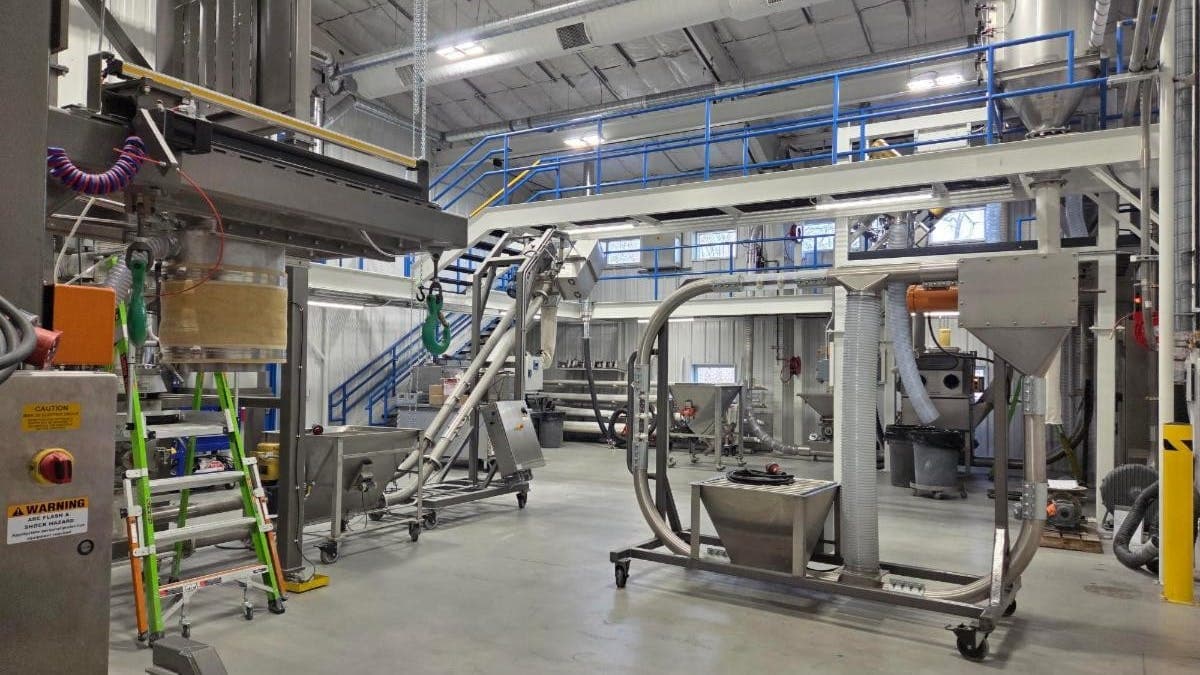
Hapman Expands Test Lab for Bulk Material Handling Trials
Why It Matters
By de‑risking equipment purchases, the lab shortens capital‑expenditure cycles and improves plant reliability, giving manufacturers a data‑driven path to optimal bulk‑handling solutions.
Key Takeaways
- •New Hapman lab enables full‑scale bulk‑bag unload/fill trials
- •Higher‑throughput conveyors and flexible screw lines test up to 36‑in units
- •Customers can validate material flow before capital equipment purchase
- •Integrated testing captures design tweaks for formal proposals
- •Existing users can assess new formulations without production downtime
Pulse Analysis
Bulk‑material handling represents a significant capital outlay for processors, with equipment costs often exceeding several million dollars. Mis‑aligned specifications can lead to costly downtime, material loss, and safety hazards. Hapman's new test lab directly addresses these risks by offering a controlled environment where customers can observe real‑world performance of their own materials on full‑scale conveyors, bag unloaders, and fillers. This hands‑on validation replaces speculative engineering with empirical data, enabling more accurate budgeting and faster decision‑making.
The laboratory’s capabilities span three core functions: bulk‑bag unloading, bulk‑bag filling, and high‑precision conveying. Upgraded load‑cell‑instrumented stations provide loss‑in‑weight and gain‑in‑weight measurements, while a suite of conveyors—including Helix flexible screws, 30‑ and 36‑inch pneumatic lines, and tubular drag systems—allows side‑by‑side comparison of competing technologies. Engineers collaborate with customers from RFQ review through trial execution, iterating on flow aids, valve configurations, and densification features. Detailed test reports feed directly into formal proposals, ensuring that any recommended system is already proven against the client’s specific material characteristics.
For the broader industry, Hapman's collaborative testing model signals a shift toward performance‑based procurement. Manufacturers can now prototype changes to formulations or raw‑material blends without halting production, reducing time‑to‑market for new products. The data generated also supports digital‑twin initiatives, feeding simulation models that further refine system design. As supply‑chain volatility persists, such proactive validation tools become essential for maintaining operational resilience and competitive advantage.
Hapman Expands Test Lab for Bulk Material Handling Trials
Comments
Want to join the conversation?
Loading comments...