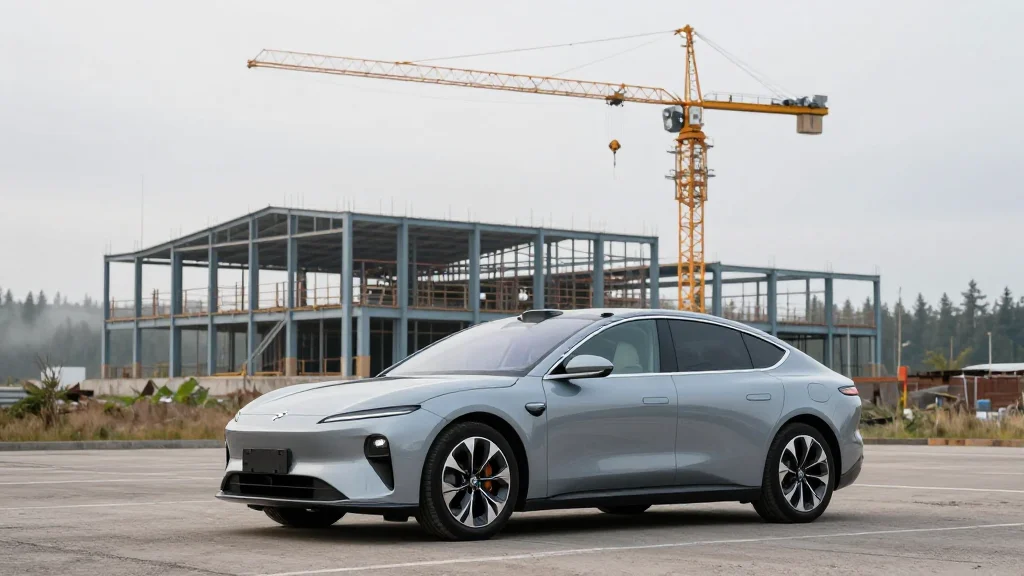
Honda Suspends $15 Billion Canadian EV Plant Amid US Tariff Dispute

Companies Mentioned
Why It Matters
The suspension of Honda’s $15 billion EV plant highlights the fragility of large‑scale automotive investments in the face of shifting trade policy. Tariff disputes not only affect the cost structure of imported components but also dampen consumer demand, creating a feedback loop that can stall entire supply chains. For Canada, the loss of a flagship EV project threatens job creation, regional economic diversification, and the country’s broader goal of becoming a North American hub for clean‑vehicle manufacturing. Beyond the immediate economic impact, the episode signals to other multinational automakers that policy certainty is a prerequisite for committing billions to new factories. As the United States continues to adjust its stance on EV incentives and import duties, the decision may set a precedent that influences where future EV capacity is built, potentially reshaping the competitive landscape between North America, Europe, and Asia.
Key Takeaways
- •Honda suspends development of its $15 billion EV factory in Canada, citing US tariffs and weak demand.
- •Prime Minister Mark Carney and Industry Minister Mélanie Joly’s spokesperson both blame US policy for the delay.
- •CBC reports that sluggish US EV sales have forced Honda to pivot to hybrids in North America.
- •The suspension adds to a wave of cancellations, including projects by GM/BrightDrop and Ford.
- •Canada risks losing up to 5,000 jobs and a strategic foothold in the North American EV supply chain.
Pulse Analysis
Honda’s decision is a textbook case of how macro‑policy can override corporate strategy in capital‑intensive sectors. The EV transition demands massive upfront investment, but the return horizon is highly sensitive to tariff structures and consumer incentives. By pulling back, Honda is preserving cash flow while the U.S. market remains volatile, a move that may protect short‑term earnings but could cede long‑term market share to rivals that secure more favorable policy environments.
Historically, North American auto manufacturing has thrived on predictable trade rules, exemplified by the integrated supply chains that emerged after NAFTA. The current tariff turbulence reintroduces a risk premium that can deter foreign direct investment, especially for projects that rely on cross‑border component flows. Canada’s attempt to attract EV projects through subsidies now competes with the reality that any tariff shock can quickly erode those incentives.
Looking ahead, the key variable is political will on both sides of the border. If Washington eases its tariff stance and reinstates robust EV incentives, Honda may revive the Canadian plant, restoring its projected job creation and supply‑chain benefits. Conversely, prolonged policy uncertainty could accelerate a shift toward regions with more stable regulatory frameworks, such as Mexico’s emerging EV ecosystem or Europe’s green‑industrial clusters. Stakeholders should monitor upcoming trade negotiations and U.S. policy announcements as leading indicators of where the next wave of EV manufacturing will locate.
Honda Suspends $15 Billion Canadian EV Plant Amid US Tariff Dispute
Comments
Want to join the conversation?
Loading comments...