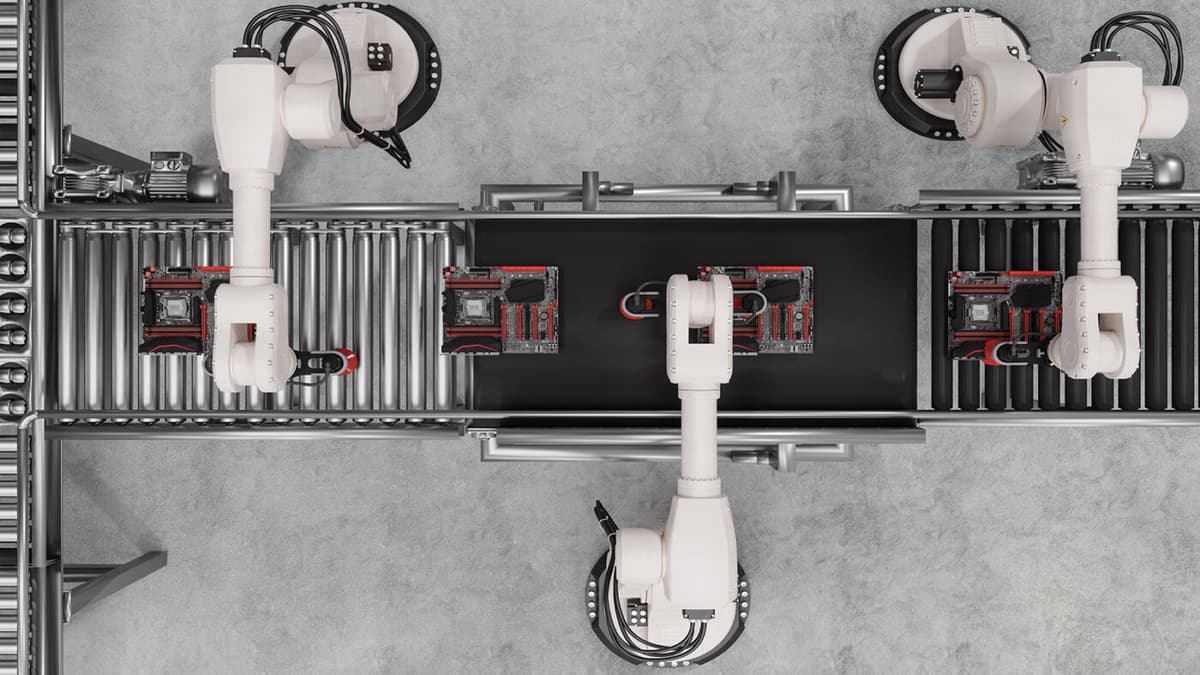
How AI at the Edge Is Reinventing Manufacturing Quality
•February 25, 2026
0
Why It Matters
Real‑time edge AI slashes defect rates and operational costs, making high‑quality, low‑margin production viable at scale.
Key Takeaways
- •Edge AI provides instant defect detection on factory floor
- •Armv9 platforms deliver energy‑efficient, secure AI processing
- •Siemens reports up to 90% defect reduction using edge AI
- •Real‑time analytics replace manual inspections, lowering labor costs
- •Continuous learning enables self‑optimizing manufacturing processes
Pulse Analysis
Manufacturers are increasingly turning to edge AI to overcome the latency and bandwidth constraints of cloud‑centric quality control. By processing sensor streams locally, factories achieve millisecond‑level response times, enabling immediate corrective actions that prevent defective batches from propagating. This architectural shift aligns with broader Industry 4.0 initiatives, where decentralized intelligence drives higher equipment utilization and tighter supply‑chain coordination, ultimately delivering a measurable boost to overall equipment effectiveness.
Arm’s low‑power, high‑performance cores are uniquely suited for these workloads. The Armv9 architecture offers built‑in security extensions, deterministic performance, and a scalable ecosystem that supports everything from compact vision cameras to rugged industrial gateways. Siemens’ deployment illustrates how these attributes translate into tangible outcomes: AI models run directly on the edge, forecasting component failures and dynamically adjusting process parameters without relying on constant cloud connectivity. The result is a secure, energy‑efficient platform that can be retrofitted into legacy lines or integrated into greenfield facilities.
Looking ahead, the economics of edge AI are becoming compelling for a wider range of manufacturers. ROI calculations now factor in reduced scrap, lower labor expenses, and fewer warranty claims, often delivering payback within a year. As AI models grow more sophisticated—incorporating generative design and digital twin simulations—the competitive advantage will shift from early adopters to those who embed continuous learning loops into their operations. Companies that invest in Arm‑based edge solutions today position themselves to meet rising quality expectations while maintaining cost discipline in an increasingly volatile market.
How AI at the Edge is Reinventing Manufacturing Quality
0
Comments
Want to join the conversation?
Loading comments...