How Goodyear Developed Tires For The Moon

Companies Mentioned

NASA
Why It Matters
The breakthrough demonstrated that conventional tire materials can be engineered for extraterrestrial use, reducing mission risk and enabling more capable lunar rovers as NASA ramps up its Artemis schedule.
Key Takeaways
- •Goodyear's XLT tires first gas‑filled rubber tires used on the Moon
- •MET cart carried up to 360 lb, traversed ~2‑mile lunar loop
- •Spring Tire uses 800 helical springs, offering puncture‑proof redundancy
- •Airless design enables heavier rovers to handle rough lunar terrain
- •Ongoing NASA‑Goodyear research targets universal tire compounds for space
Pulse Analysis
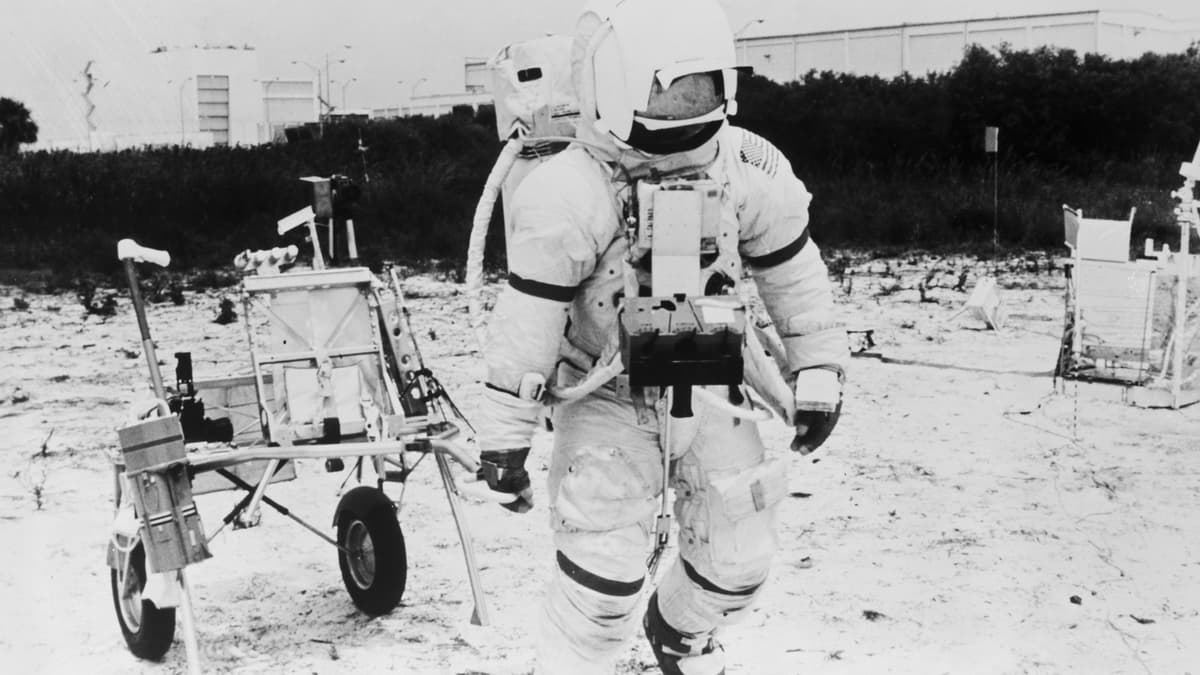
When Apollo 14 astronauts Alan Shepard and Edgar Mitchell rolled the two‑wheeled Modular Equipment Transporter across the Sea of Tranquility, they relied on Goodyear’s XLT tires— the first rubber wheels ever inflated in space. Filled with nitrogen to limit permeation, the smooth‑tread tires were engineered to carry 360 pounds without a spare, navigating a rocky surface where a single puncture would have ended the mission’s scientific haul. This early success proved that conventional tire chemistry could be adapted for the Moon’s low‑gravity, abrasive regolith, opening a new frontier for aerospace engineering.
Building on that legacy, Goodyear and NASA introduced the Spring Tire in the 2000s, an airless wheel composed of 800 interwoven helical springs. The design offers inherent redundancy: a hard impact damages only a single spring, leaving the tire functional. This stiffness‑flexibility balance allows heavier lunar rovers to travel faster over uneven terrain while minimizing vibration transfer to onboard instruments. The Spring Tire’s puncture‑proof nature reduces maintenance complexity, a critical advantage as Artemis plans for sustained surface operations and commercial payload deliveries.
Today, Goodyear’s partnership with NASA extends beyond hardware to material science. Experiments aboard the International Space Station explore silica‑based compounds that could yield tires capable of operating on any celestial body, from the Moon’s dust‑laden plains to Mars’ thin atmosphere. As NASA targets two lunar missions per year, reliable, lightweight tire technology will be essential for habitat construction, resource extraction, and mobility. The commercial sector is watching closely, anticipating that breakthroughs in airless, high‑durability tires will soon filter back to Earth’s off‑road and autonomous vehicle markets.
How Goodyear Developed Tires For The Moon
Comments
Want to join the conversation?
Loading comments...