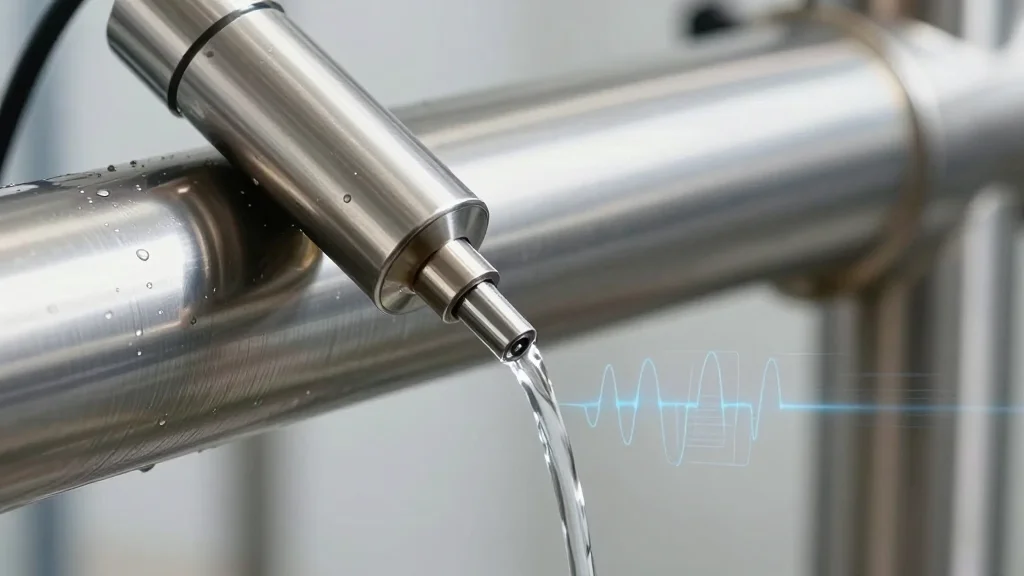
How Impedance Sensors Are Changing the Rules of Visibility
Why It Matters
Cutting excess CIP water reduces operating costs and meets sustainability targets while ensuring food‑safety standards. The technology also frees production time, boosting overall plant efficiency.
Key Takeaways
- •Impedance sensors measure conductivity, capacitance, temperature simultaneously.
- •They detect soil residues missed by turbidity or conductivity alone.
- •Real‑time data lets breweries stop rinses exactly when clean.
- •Water savings can reach up to 30% in CIP cycles.
- •Enables CIP automation and faster production turnaround.
Pulse Analysis
In food‑and‑beverage plants, clean‑in‑place systems consume vast volumes of water, often because operators err on the side of caution. Traditional turbidity sensors can mistake bubbles for particles, while conductivity gauges only ionic content, leaving protein‑based soils invisible. This blind spot forces longer rinse cycles, inflating utility bills and straining sustainability initiatives. Impedance technology bridges that gap by sending a low‑level electrical signal through the rinse stream and measuring how the fluid conducts, stores, and reacts to charge. The resulting fingerprint reveals the true soil load, offering a level of granularity previously unattainable.
The core of impedance sensing lies in three intertwined metrics: conductivity, capacitance and temperature. Conductivity tracks ion flow, capacitance reflects the fluid’s ability to hold charge—sensitive to organic residues—and temperature adjusts both readings for thermal variance. By installing a pair of sensors—one upstream of the equipment and one downstream—operators can compare the inbound clean water with the outbound rinse. When the two profiles align, the system knows cleaning is complete. Vendors like Ecolab have distilled these complex readings into a single “wash‑complete” indicator, integrating it with broader CIP monitoring platforms to trigger automatic cycle termination.
Beyond immediate water savings, impedance‑driven CIP reshapes operational strategy. Plants can achieve up to a 30% reduction in rinse water, translating into lower utility costs and a smaller environmental footprint—key metrics for ESG reporting. Faster cycle completion also increases throughput, allowing breweries to meet demand without expanding capacity. As digital twins and AI analytics mature, impedance data will feed predictive models, further optimizing cleaning schedules and pre‑empting fouling issues. The technology’s scalability suggests it will soon extend beyond brewing to dairy, pharma, and other high‑purity sectors, cementing its role as a cornerstone of next‑generation process automation.
How impedance sensors are changing the rules of visibility
Comments
Want to join the conversation?
Loading comments...