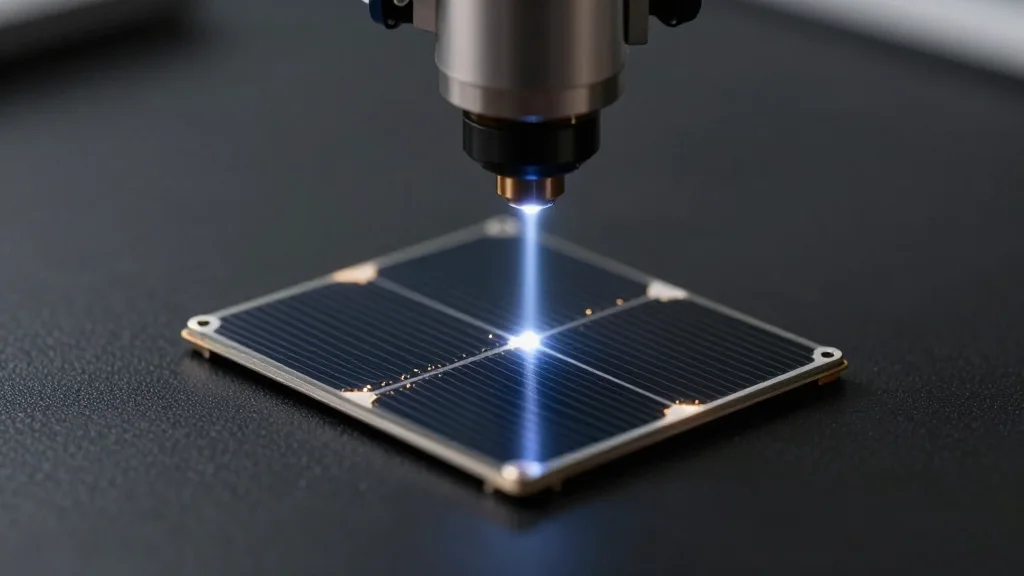
How LECO Process Could Push TOPCon Solar Cell Efficiency Beyond 26%
Why It Matters
The breakthrough provides a scalable method to push mainstream TOPCon modules past the 26% barrier, narrowing the performance gap with heterojunction and back‑contact technologies and strengthening TOPCon’s market position.
Key Takeaways
- •LECO reduces contact resistivity via laser‑induced repair.
- •Partial metal contacts cut recombination, boosting efficiency.
- •Optimized firing temperature lowers contact fraction to ~1%.
- •Simulated TOPCon cell efficiency rises from 25.5% to 26.07%.
- •Path enables TOPCon to rival HJT and back‑contact modules.
Pulse Analysis
Laser‑enhanced contact optimization (LECO) is reshaping how manufacturers address the long‑standing bottleneck of metal‑emitter recombination in n‑type TOPCon cells. By delivering a high‑intensity laser pulse under a reverse bias greater than 10 V, the process locally melts and re‑forms the silver‑silicon interface, slashing contact resistivity without the need for high‑temperature firing. This physics‑driven repair not only restores conductivity but also preserves the low‑recombination benefits of under‑fired contacts, delivering a dual advantage that traditional metallization techniques struggle to achieve.
The research highlights a delicate balance between recombination loss and series resistance. Lowering the peak firing temperature creates non‑uniform, partial metal contacts that reduce the effective recombination current density, but typically at the cost of higher resistance. LECO mitigates this trade‑off by selectively “healing” under‑fired regions, enabling a contact fraction drop from roughly 37% to near 1% while keeping resistivity low. Simulations of an industrial TOPCon cell show efficiency climbing from 25.5% to 26.07%, confirming that coordinated process tweaks and laser repair can unlock measurable gains.
From a market perspective, pushing TOPCon efficiency past the 26% threshold narrows the performance gap with heterojunction (HJT) and back‑contact (BC) modules, which have traditionally commanded premium pricing. As solar manufacturers seek cost‑effective pathways to higher yields, LECO offers a retrofit‑friendly upgrade that can be integrated into existing production lines. The technology’s ability to extend the relevance of mainstream TOPCon cells could accelerate adoption, drive down balance‑of‑system costs, and reinforce the competitive dynamics of the global photovoltaic market.
How LECO process could push TOPCon solar cell efficiency beyond 26%
Comments
Want to join the conversation?
Loading comments...