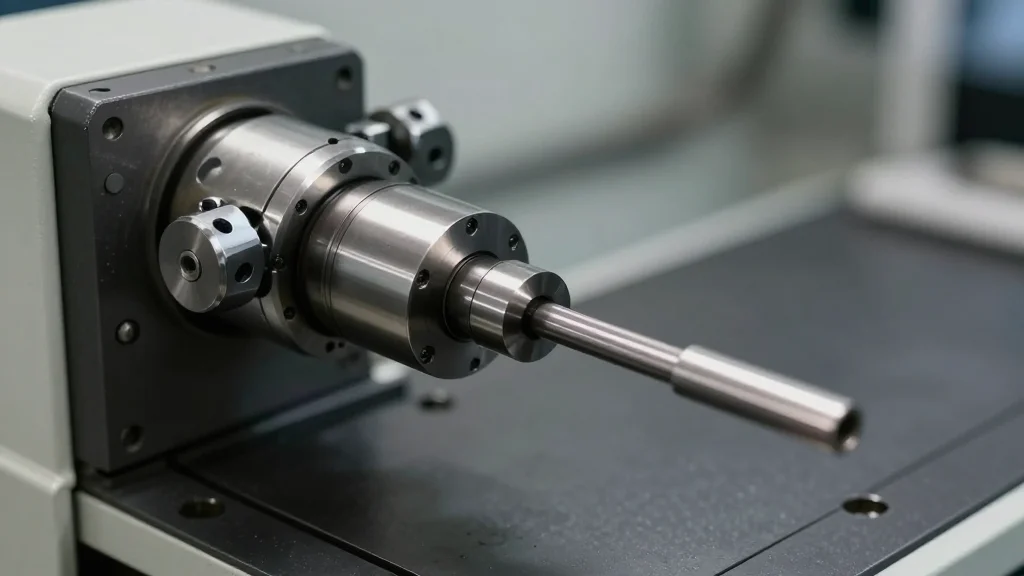
How Might You Use a Desktop CNC Swiss-Type?
Why It Matters
By shrinking Swiss‑type capability into a desktop form, APSX lowers the barrier for small shops and prototyping labs to access high‑precision turning, expanding flexibility and reducing material waste. This democratization could reshape how manufacturers approach low‑volume runs and workforce development.
Key Takeaways
- •13 tooling stations include two 500‑W live‑tool spindles.
- •Handles aluminum to titanium, plastics, up to 20‑inch bar length.
- •Footprint 14×31 in, weight 150 lb, runs on 120 V.
- •Supports Fusion 360, Mastercam, Esprit, Solidcam post‑processors.
- •Enables low‑volume production, prototyping, and shop‑floor training.
Pulse Analysis
The desktop CNC Swiss‑type market has long been dominated by large, expensive machines that demand dedicated floor space and significant capital outlay. APSX’s Nano disrupts that paradigm by delivering a full‑featured Swiss lathe in a benchtop package, echoing the broader trend of democratizing advanced manufacturing tools for small‑to‑mid‑size enterprises. Leveraging the company’s experience with its PIM injection‑molding system and Spyder mill, the Nano combines proven engineering with a compact design, positioning it as a versatile bridge between hobbyist mills and industrial Swiss‑type lathes.
Technically, the Nano packs a 1,800 rpm, 300‑W main spindle and two high‑speed live‑tool spindles capable of 10,000 rpm, delivering the precision needed for aerospace‑grade aluminum and even titanium. Its 13 tooling stations—six external, five internal, plus the live tools—support rapid changeover, while interchangeable guide bushings (0.25‑0.75 in) accommodate a range of bar diameters. Integrated LED lighting, a sliding cover for bar access, and optional mist coolant enhance usability. Compatibility with Fusion 360, Mastercam, Esprit and Solidcam via dedicated post‑processors ensures seamless workflow integration for engineers accustomed to mainstream CAD/CAM ecosystems.
For businesses, the Nano opens new pathways to cost‑effective low‑volume production, rapid prototyping, and in‑house training. Shops can repurpose barstock remnants from larger Swiss machines, reducing waste, while engineers can practice guide‑bushing adjustments without tying up high‑value equipment. The machine’s modest power and air requirements make it suitable for facilities lacking extensive utility infrastructure. As manufacturers seek agility amid supply‑chain volatility, the Nano’s blend of precision, portability, and affordability positions it as a strategic asset for the next generation of flexible production environments.
How Might You Use a Desktop CNC Swiss-Type?
Comments
Want to join the conversation?
Loading comments...