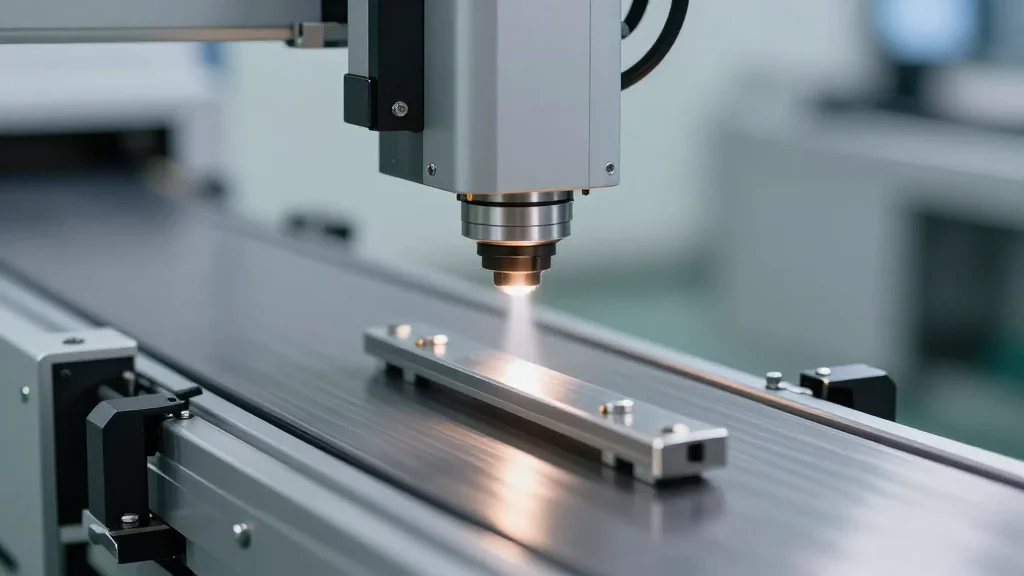
How to Prevent Waste With Ideal Metrology Placement
Why It Matters
Early, appropriate measurement reduces scrap costs and cycle time, directly boosting profitability in high‑mix, low‑tolerance manufacturing. Aligning metrology placement with decision speed also strengthens lean initiatives and competitive advantage.
Key Takeaways
- •Inline metrology provides immediate feedback, reducing scrap before downstream impact
- •Offline inspection offers highest accuracy for first‑article and root‑cause analysis
- •Near‑line balances speed and stability, enabling quicker corrective actions
- •Automation excels in repetitive checks; human expertise remains essential for interpretation
- •Placing measurements upstream transforms inspection from detection to waste prevention
Pulse Analysis
In today’s high‑mix, low‑tolerance manufacturing environment, the traditional view of inspection as a downstream gate is becoming a liability. Companies are adopting a process‑first mindset, embedding metrology directly into the production line (inline) or just outside it (near‑line) to capture deviations the moment they arise. Inline sensors, often integrated into CNC machines, flag tool‑wear, thermal drift, or fixturing errors within seconds, allowing corrective actions before any material is wasted. While this speed is invaluable, the harsh shop‑floor environment can introduce noise, demanding robust data validation to avoid over‑correction.
Near‑line stations strike a pragmatic balance, offering a controlled environment that still delivers rapid feedback. By relocating measurement away from the immediate machining zone, operators gain thermal stability and reduced vibration, which translates into higher data fidelity without sacrificing responsiveness. However, the proliferation of high‑resolution sensors generates massive data streams. Without clear control limits and response protocols, organizations risk data overload, turning valuable insights into operational noise. Effective strategies pair automated, rule‑based checks for stable features with human analysts who interpret anomalies and drive root‑cause investigations.
The business payoff of smarter metrology placement is tangible: earlier defect detection cuts rework and scrap, shortens cycle times, and lowers overall production costs. Companies that integrate inline or near‑line measurement into their lean initiatives report up to 30% reductions in waste and a measurable boost in first‑pass yield. Moreover, the ability to act on real‑time data strengthens supply‑chain reliability and enhances customer confidence. By treating measurement as a control mechanism rather than a mere verification step, manufacturers transform inspection from a cost center into a strategic advantage.
How to Prevent Waste With Ideal Metrology Placement
Comments
Want to join the conversation?
Loading comments...