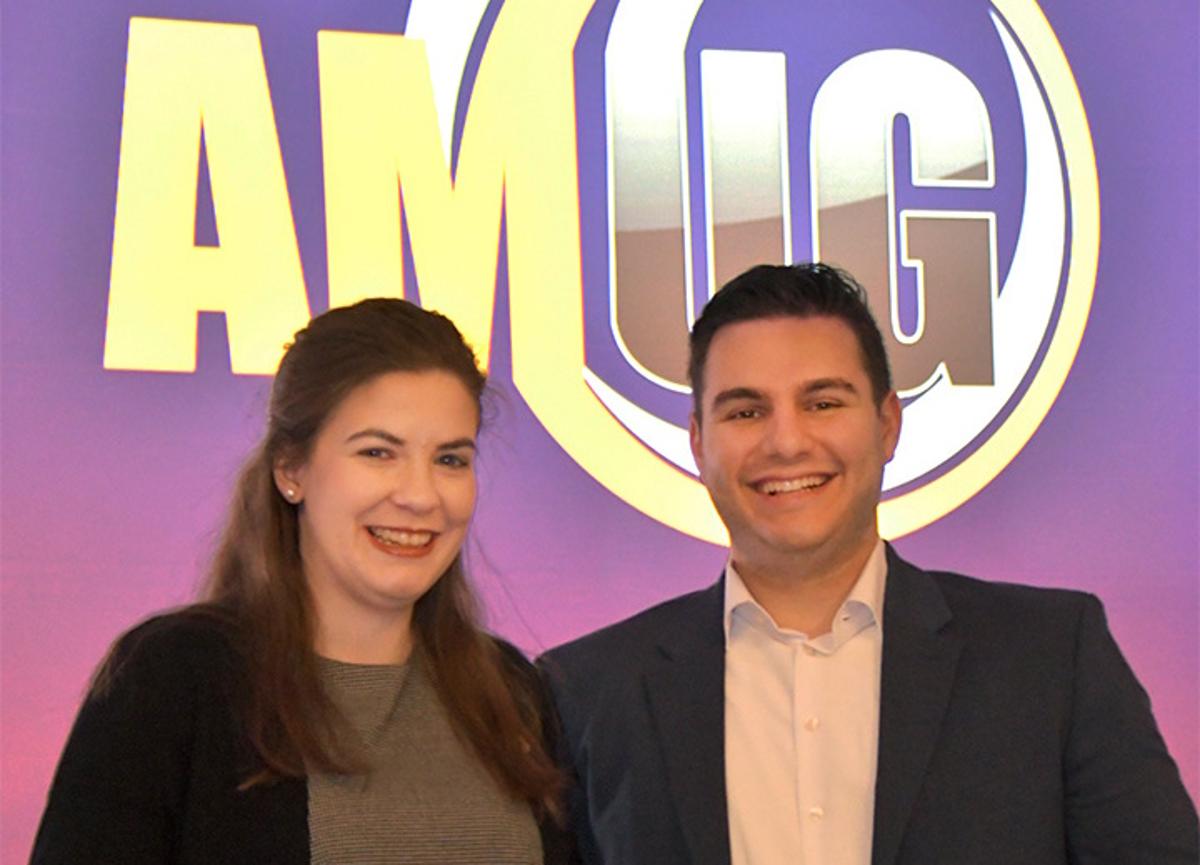
How Two AMUG Scholars Are Finding Their Place in Additive Manufacturing
•February 26, 2026
0
Why It Matters
The scholars illustrate how community‑driven events like AMUG accelerate talent development and drive practical innovations that address material, process, and workforce challenges in the rapidly growing additive manufacturing sector.
Key Takeaways
- •Levy shifts thesis to support removal optimization
- •Murray expands research into electroplating AM preforms
- •Both leverage AMUG networking for industry collaborations
- •Focus on laser advancements and material diversity
- •Qualification standards remain challenge for AM adoption
Pulse Analysis
The AMUG scholarship program has become a catalyst for emerging talent, offering students and early‑career educators a platform to engage directly with industry leaders. Justin Levy, who began printing PPE during the pandemic, leveraged the community’s hands‑on workshops to refocus his undergraduate thesis on support‑removal strategies for laser powder‑bed fusion. This pivot not only aligns his research with real‑world manufacturing bottlenecks but also positions Ohio State as a hub for post‑processing innovation. Meanwhile, Colleen Murray translated her polymer expertise into a hybrid electroplating approach, using stereolithography to create preforms that are later metalized, opening new pathways for ductile component production.
These individual breakthroughs reflect broader trends in additive manufacturing: the push for faster, more versatile laser systems and the integration of multi‑material processes. Levy’s excitement about ring‑laser technology underscores a market shift toward higher‑speed metal printing, while Murray’s focus on diverse applications—from aerospace to biomedical—demonstrates the technology’s expanding reach. Their collaborations with defense and commercial partners illustrate how academic research can quickly feed into supply‑chain solutions, reducing time‑to‑market for complex parts that were previously infeasible.
Beyond technical advances, the scholars highlight persistent industry challenges, notably the need for standardized qualification protocols that ensure part performance without stifling innovation. AMUG’s annual technical competition and workshops serve as crucibles for testing new materials, such as novel titanium alloys, and for sharing best practices across sectors. By fostering a close‑knit community, AMUG helps bridge the skills gap, preparing the next generation of engineers to navigate and shape the evolving additive manufacturing landscape.
How two AMUG scholars are finding their place in additive manufacturing
0
Comments
Want to join the conversation?
Loading comments...