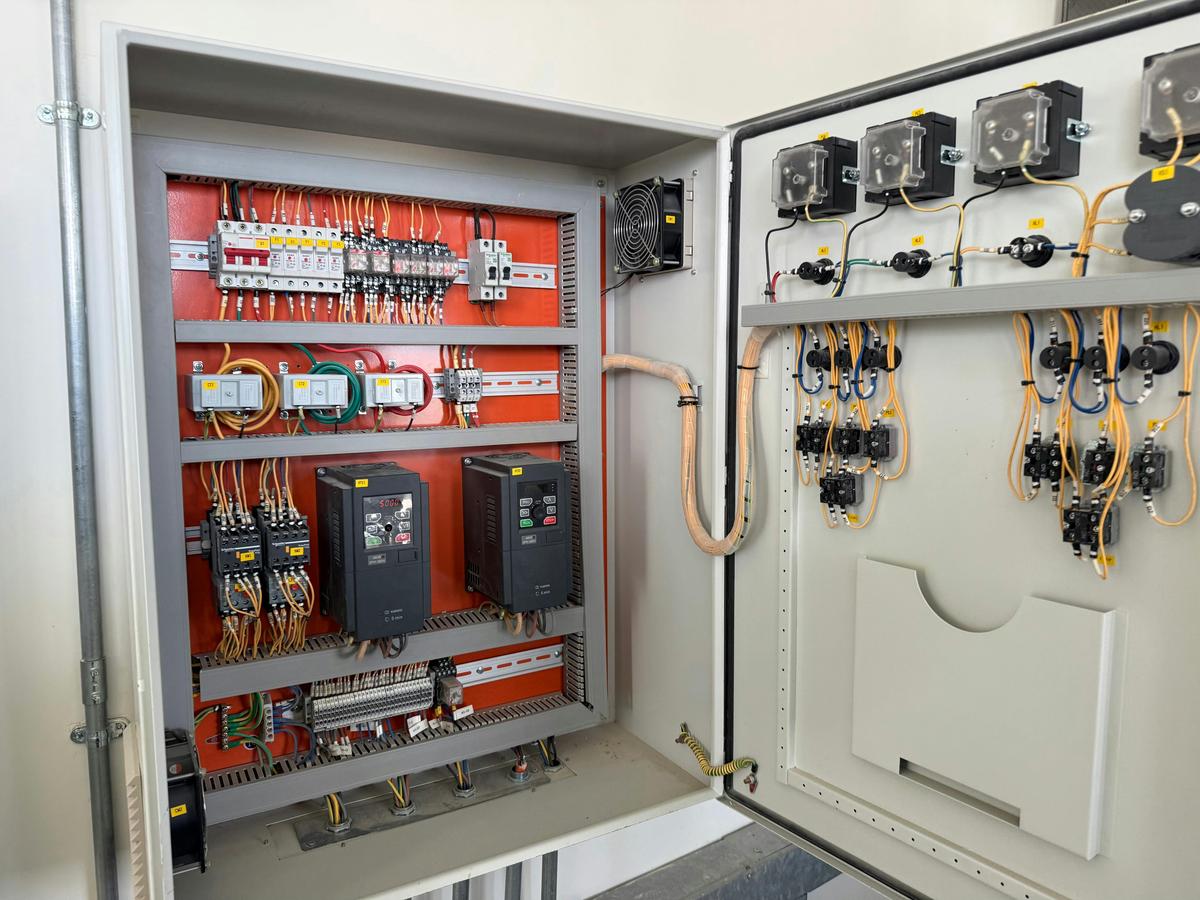
How VFDs Can Be Used as Predictive Maintenance Tools
Why It Matters
Drive‑based monitoring provides real‑time fault detection, reducing unplanned outages and maintenance costs while extending equipment life across diverse industrial assets.
Key Takeaways
- •VFDs translate electrical signatures into early warnings for bearing wear
- •Misalignment and gear damage generate detectable current fluctuations in modern drives
- •Drive monitoring offers remote, continuous insight for hard‑to‑reach equipment
- •Electrical signature analysis complements vibration tools, not replaces them
- •Early fault alerts cut downtime and lower overall maintenance expenses
Pulse Analysis
Over the past decade, variable frequency drives have moved beyond their original role as pure motor controllers to become integral parts of industrial IoT ecosystems. Advances in processor speed, embedded analytics, and open communication protocols now let a single drive act as a data acquisition hub, streaming motor current, voltage, and power metrics to cloud‑based platforms. This shift aligns with manufacturers’ broader push toward condition‑based maintenance, where every piece of equipment contributes to a continuous health‑monitoring network. As a result, VFDs are increasingly listed alongside dedicated vibration sensors in capital‑budget proposals.
The physics behind drive‑based monitoring is straightforward: mechanical anomalies alter torque demand, which in turn modulates the motor’s electrical load. Modern drives employ algorithms such as Motor Current Signature Analysis (MCSA) and Fast Fourier Transform (FFT) to isolate these variations from normal operating noise. By flagging patterns associated with bearing spalls, shaft misalignment, gear tooth wear, or pump cavitation, the drive can generate early‑warning alerts without a separate sensor suite. Because the hardware already exists on the motor, installation costs are minimal and retrofits can be completed in hours rather than weeks.
For plant managers, the value proposition is clear: continuous, remote diagnostics translate into fewer emergency shutdowns, lower spare‑part inventories, and extended asset lifespans. Studies from the U.S. Energy Information Administration suggest that predictive maintenance can shave 10‑15 % off overall maintenance budgets in process industries. Moreover, integrating drive data with enterprise asset management (EAM) systems enables automated work‑order generation and performance benchmarking across sites. As standards like IEC 61800‑5‑2 mature, we can expect VFD manufacturers to embed even richer analytics, cementing the drive’s role as a cornerstone of the next‑generation smart factory.
How VFDs can be used as predictive maintenance tools
Comments
Want to join the conversation?
Loading comments...