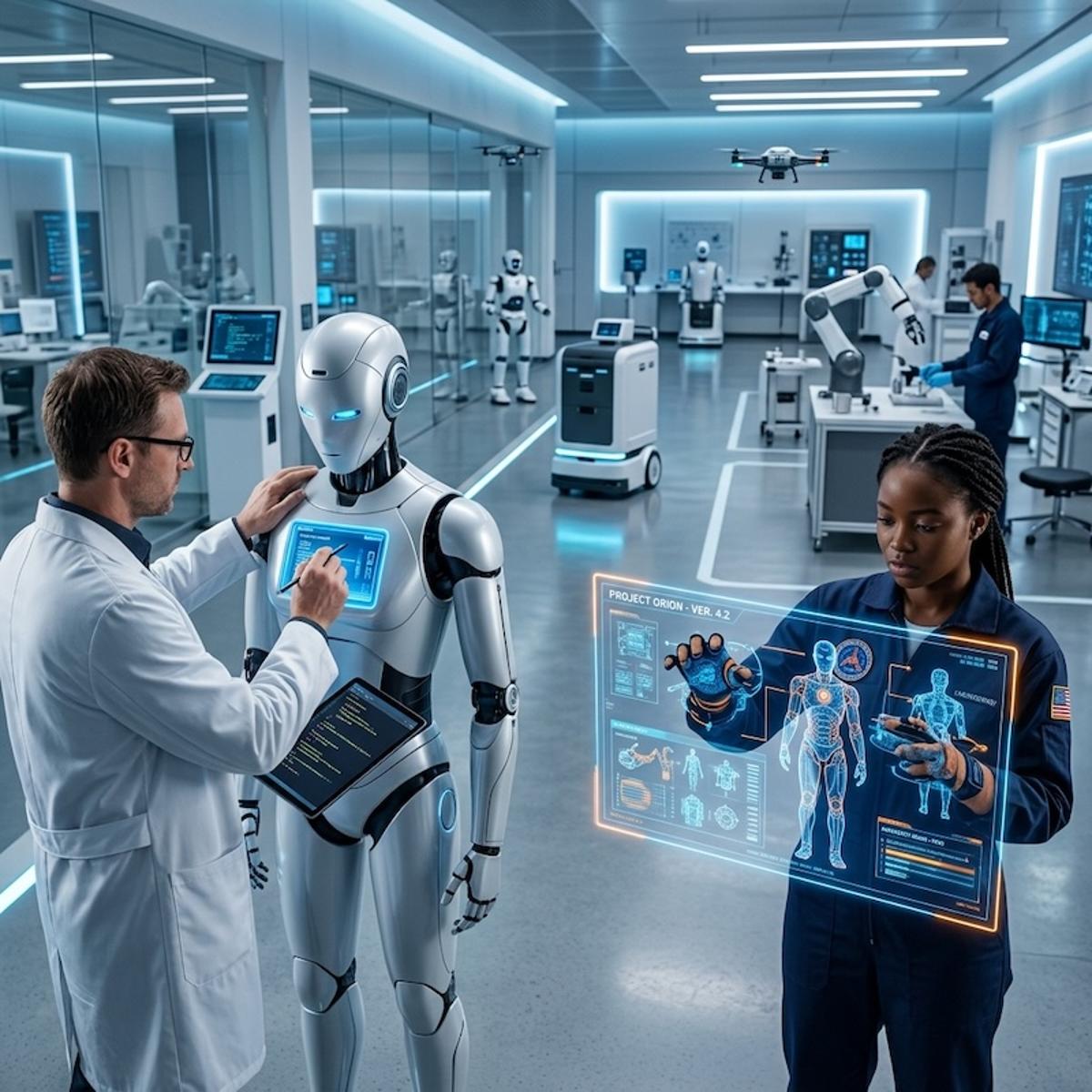
‘Humanoid Robots Show Clearer ROI, but Commercial Success Depends on Effective Output’
Why It Matters
The economics of humanoid robots are becoming attractive for high‑labour‑cost manufacturers, potentially reshaping automation strategies across automotive and logistics sectors.
Key Takeaways
- •Humanoid robot market projected to hit $25 billion by early 2030s
- •Annual shipments could reach 1.8 million units by 2036, led by automotive
- •Robot price to drop from $114,700 (2024) to $37,000 (2030)
- •High‑utilisation scenarios can achieve sub‑$5/hour operating cost and 6‑month payback
- •Success hinges on software capability, task generalisation, and integration quality
Pulse Analysis
Industry 5.0 is accelerating the shift from fixed automation to flexible, human‑like robots. Automotive plants, with their repetitive assembly lines and tight labor budgets, present the most fertile ground for early adoption, while logistics centers are poised to follow as they seek to automate parcel handling and warehouse sorting. The projected $25 billion market size reflects not only hardware demand but also the growing ecosystem of AI‑driven perception, safety, and collaborative software that makes humanoid platforms viable in structured settings.
Cost dynamics are a key catalyst. The steep decline in average selling price—from $114,700 in 2024 to an anticipated $37,000 by 2030—compresses capital expenditures and drives the cost‑per‑productive‑hour below $5 in optimal deployments. This price trajectory, combined with higher utilisation rates, shortens ROI horizons to roughly six months for high‑efficiency use cases, a stark contrast to the 15‑month horizon in medium‑efficiency scenarios. For manufacturers facing rising wage pressures in the United States and rapidly climbing labor costs in China, these economics make a compelling case for pilot projects that target repetitive, hazardous, or labor‑intensive tasks.
Nevertheless, hardware affordability alone won’t guarantee mass adoption. The decisive factor remains the robot’s ability to deliver consistent, value‑adding work across variable environments. Software maturity, task generalisation, and seamless system integration are the bottlenecks that investors and OEMs must address. Companies that can demonstrate robust AI control stacks, rapid re‑training for new tasks, and reliable uptime will unlock the broader market potential, turning the projected shipments into a sustainable revenue stream. The next decade will likely see a bifurcated landscape: niche high‑utilisation deployments thriving now, and a gradual expansion into more complex applications as the software layer catches up.
‘Humanoid robots show clearer ROI, but commercial success depends on effective output’
Comments
Want to join the conversation?
Loading comments...