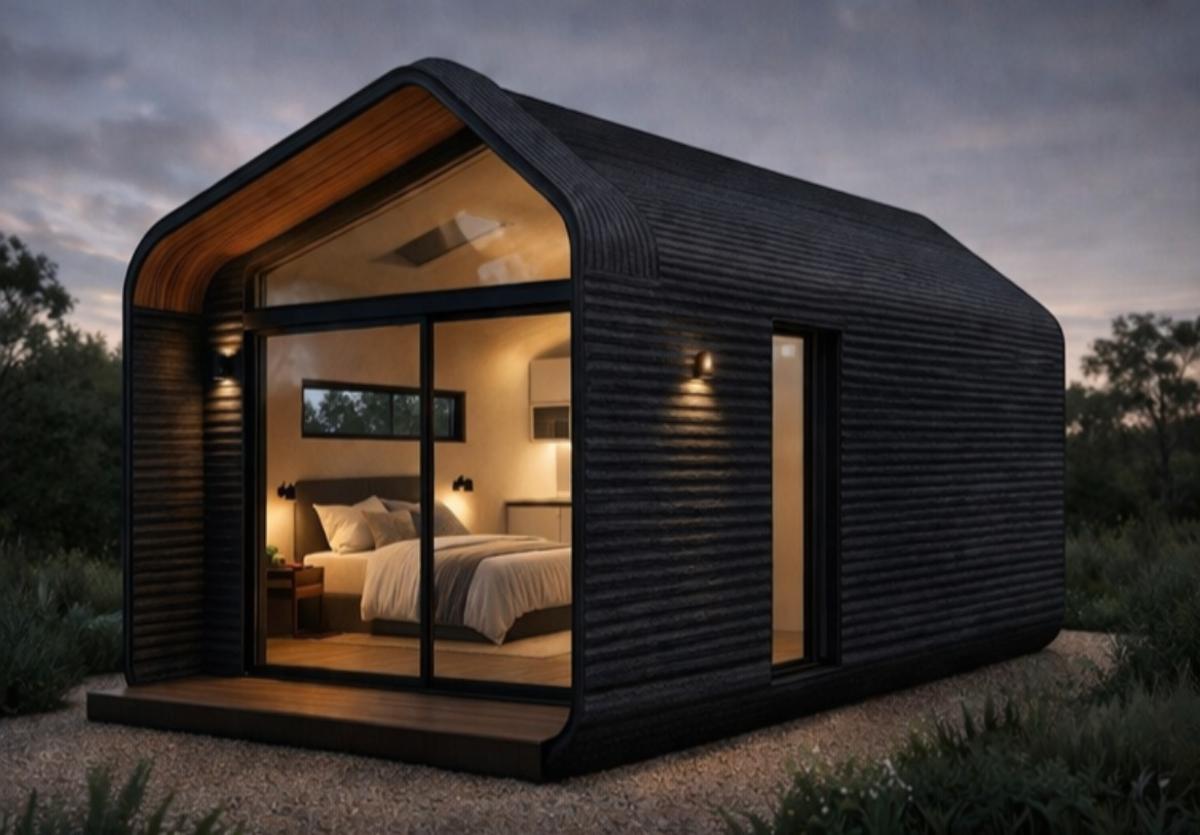
Hyperion Lands Manufacturing Contract for Modular 3D-Printed Tiny Home
Why It Matters
The initiative proves that recycled‑plastic 3D printing can accelerate housing delivery, addressing supply shortages and reducing reliance on traditional labor. It positions Western Australia as a leader in eco‑friendly, high‑tech residential construction.
Key Takeaways
- •Hyperion will 3D print core structure in 48 hours using recycled polymers.
- •Project creates Southern Hemisphere’s first polymer‑based 3D‑printed house.
- •Recycled polymer core provides termite resistance and superior thermal performance.
- •Modular sections built at Henderson facility, then finished by Little Castles.
- •Technology could speed housing delivery and free skilled labor for traditional builds.
Pulse Analysis
Additive manufacturing is reshaping the construction sector, with polymer‑based 3D printing emerging as a low‑carbon alternative to conventional materials. By converting post‑consumer plastic waste into high‑strength feedstock, firms can close material loops and lower embodied emissions. Australia’s abundant recycling infrastructure and supportive policy environment make it fertile ground for such circular‑economy projects, which also promise lighter, transport‑friendly components compared with traditional timber or concrete.
Hyperion Systems’ new contract leverages its in‑house intellectual property to fabricate the core of a tiny home in roughly two days. The recycled polymer lattice offers inherent termite resistance and favorable thermodynamic properties, reducing the need for additional insulation or chemical treatments. Production occurs in modular sections at the Henderson plant, streamlining logistics and enabling parallel fit‑out work by Little Castles Small Homes. This hybrid approach satisfies Australian building codes while delivering a demonstrable proof‑of‑concept for large‑scale, compliant 3D‑printed dwellings.
Beyond the prototype, the technology could alleviate Australia’s chronic housing affordability crisis by slashing construction timelines and freeing skilled tradespeople for more complex projects. Faster build cycles translate into lower labor costs and higher throughput, essential for meeting demand in regional markets. As Western Australia showcases this breakthrough, other jurisdictions are likely to follow, spurring investment in advanced manufacturing hubs and prompting regulators to adapt codes for printed structures. The ripple effect may accelerate global adoption of sustainable, modular housing solutions, positioning the region at the forefront of the next construction revolution.
Hyperion lands manufacturing contract for modular 3D-printed tiny home
Comments
Want to join the conversation?
Loading comments...