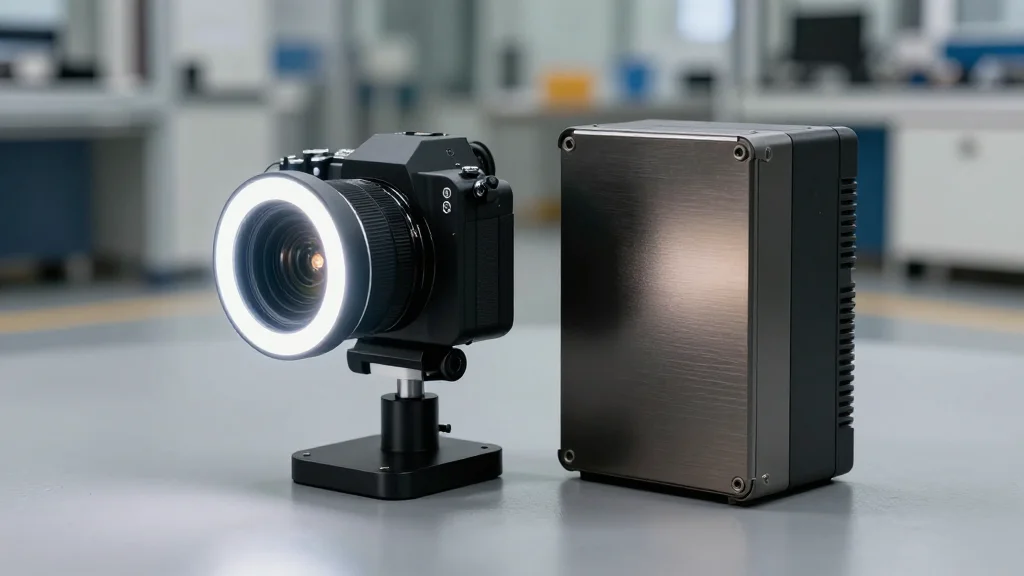
IDS Camera Technology Powers Flexible AI-Supported Visual Inspection System
Why It Matters
By democratizing AI‑driven inspection, the platform reduces reliance on specialist integrators and shortens time‑to‑value, giving manufacturers a scalable tool to meet rising quality and variant pressures.
Key Takeaways
- •preML Vision Lab offers no‑code AI inspection on edge device.
- •IDS uEye XC provides 13 MP autofocus imaging at 20 fps.
- •System integrates camera, lighting, edge computing in plug‑and‑play kit.
- •Up to four cameras enable multi‑sided, complex geometry inspections.
- •Users can train models in minutes without image‑processing expertise.
Pulse Analysis
The demand for agile, high‑precision quality control is reshaping manufacturing floors worldwide. Traditional vision systems often require deep expertise in optics and programming, creating bottlenecks when product lines shift or new variants emerge. AI‑enabled inspection promises faster defect detection, but many solutions remain locked behind costly integration services. preML’s approach—combining a powerful IDS uEye XC camera with edge‑based, no‑code software—addresses this gap by delivering a self‑contained, plug‑and‑play platform that can be reconfigured in minutes.
At the core of the system is the IDS uEye XC, a 13‑megapixel sensor with on‑chip autofocus that maintains sharp focus across varying object heights and distances. Operating at 20 frames per second, the camera captures high‑resolution images even under fluctuating lighting, thanks to BSI technology and auto‑white‑balance. The modular kit includes lighting, a compact edge‑computing unit, and pre‑installed Vision Lab software, eliminating the need for separate servers or cloud connectivity. Users can train AI models directly on the device via a web interface, leveraging drag‑and‑drop workflows that require no coding, which accelerates deployment across diverse parts such as plastic dowels, circuit boards, and intricate metal components.
For manufacturers, the business impact is immediate. The solution reduces integration costs, shortens time‑to‑value, and frees skilled personnel to focus on higher‑order tasks rather than camera tuning. Companies like TOP GmbH have already realized 100 percent inspection coverage without hiring image‑processing specialists. Looking ahead, the platform’s modularity positions it for integration with robotics and broader Industry 4.0 ecosystems, paving the way for fully autonomous, self‑learning quality control lines. This flexibility aligns with market trends favoring rapid reconfiguration and lower total cost of ownership.
IDS camera technology powers flexible AI-supported visual inspection system
Comments
Want to join the conversation?
Loading comments...