Inbolt Launches Vision-Enabled Robot Programming, Closing the Loop From CAD to Factory Floor
Companies Mentioned
Why It Matters
By collapsing the digital‑twin‑to‑factory gap, Inbolt can slash robot commissioning from weeks to a single run, accelerating flexible manufacturing and reducing engineering labor costs across automotive and consumer‑goods plants.
Key Takeaways
- •Inbolt Robot Programming builds robot paths directly from CAD models
- •Vision model locates real parts, eliminating manual teach pendant tuning
- •Supports FANUC, Universal Robots, Yaskawa; expands to six robot brands
- •Live demos at Automate 2026 showcase bin‑picking and dynamic dispensing
- •US footprint grows with Stellantis, GM, Toyota; team doubled this year
Pulse Analysis
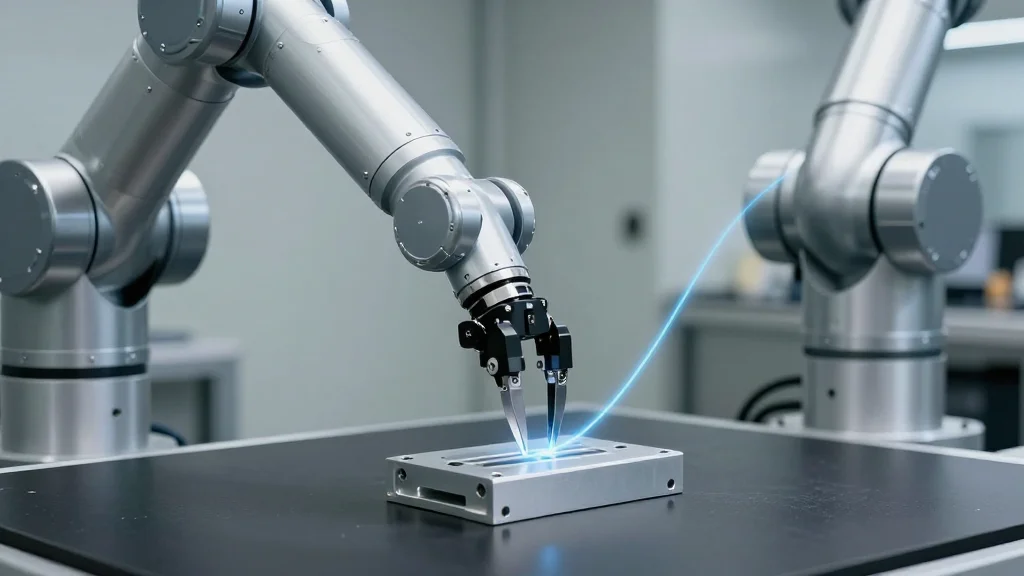
The traditional robot deployment workflow is plagued by a mismatch between virtual digital twins and the messy reality of factory floors. Engineers spend weeks fine‑tuning trajectories after a virtual commission, often re‑teaching paths for millimetre‑scale offsets or unpredictable part placement. Inbolt’s new Robot Programming flips this paradigm by allowing programmers to draft motion plans directly in the part’s CAD reference frame. At runtime, the company’s Vision Model instantly identifies the physical part, aligning the robot’s motion to the exact location and eliminating the need for teach‑pendant adjustments.
Integration with major robot manufacturers—FANUC, Universal Robots, Yaskawa, and others—means factories can overlay Inbolt’s intelligence on existing hardware without costly retrofits. The Vision Model’s enhanced part‑localization algorithms now handle a broader catalog of components, while the Robot Control module streams corrected joint commands at native servo frequencies, ensuring tight feedback loops. Early adopters such as Stellantis, GM and Toyota report commissioning cycles shrinking from weeks to a single shot, translating into faster time‑to‑market for new vehicle models and a measurable reduction in engineering overhead.
Inbolt’s aggressive US push, highlighted by a 20 × 20 ft booth at Automate 2026 and a doubled workforce, signals confidence in the North American market’s appetite for adaptive automation. As OEMs shift toward flexible, high‑mix production lines, platforms that combine perception, planning and execution on a single stack will become strategic differentiators. Competitors will need to match Inbolt’s seamless CAD‑to‑robot pipeline or risk losing relevance in an industry where speed, accuracy and scalability are paramount.
Inbolt Launches Vision-Enabled Robot Programming, Closing the Loop from CAD to Factory Floor
Comments
Want to join the conversation?
Loading comments...