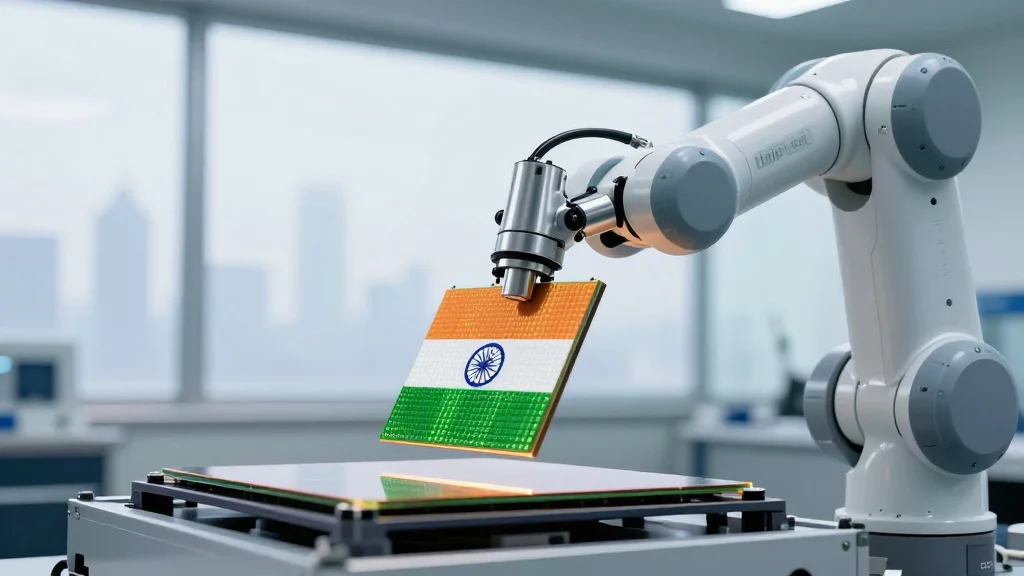
India Set to Play Leading Role in Domestic, Global Electronics Sector: Jitin Prasada
Why It Matters
The initiatives aim to secure a self‑sufficient electronics ecosystem, boosting India’s export potential and insulating the sector from geopolitical disruptions.
Key Takeaways
- •India approved 10 semiconductor projects, $19 bn investment across six states.
- •ECMS attracted $7.4 bn from 75 firms, targeting 65,000 jobs.
- •Government plans to raise ECMS outlay to $4.8 bn for supply chain.
- •Policy focus shifts electronics value chain from assembly to full manufacturing.
- •Officials aim to replace China‑sourced components with Indian production.
Pulse Analysis
India’s aggressive push into electronics comes at a time when global supply chains are under strain from geopolitical tensions and lingering semiconductor shortages. By coupling the India Semiconductor Mission with the Electronics Components Manufacturing Scheme, policymakers are creating a dual‑track strategy: attract foreign direct investment for high‑tech fabs while nurturing domestic firms that can produce essential components. This approach not only diversifies the source base but also aligns with broader Make-in-India objectives, offering a stable platform for multinational corporations seeking alternative production hubs.
The financial heft behind these schemes is notable. Roughly $19 billion is earmarked for ten semiconductor projects across six states, while ECMS has already secured $7.4 billion from 75 companies, promising employment for more than 65,000 workers. The planned increase of ECMS’s budget to $4.8 billion signals a commitment to building a full‑stack component ecosystem, from wafers to finished modules. Such depth reduces India’s dependence on Chinese imports, potentially reshaping regional trade flows and strengthening the country’s bargaining power in global tech negotiations.
Looking ahead, the success of India’s electronics ambition hinges on execution and talent development. While policy stability offers confidence, challenges remain in scaling advanced manufacturing capabilities, securing a skilled workforce, and ensuring reliable power and logistics infrastructure. Investors are watching closely, as a thriving domestic supply chain could unlock new export markets and position India as a credible alternative to traditional hubs like Taiwan and South Korea. If the momentum sustains, the country could emerge as a pivotal node in the worldwide electronics value chain.
India set to play leading role in domestic, global electronics sector: Jitin Prasada
Comments
Want to join the conversation?
Loading comments...