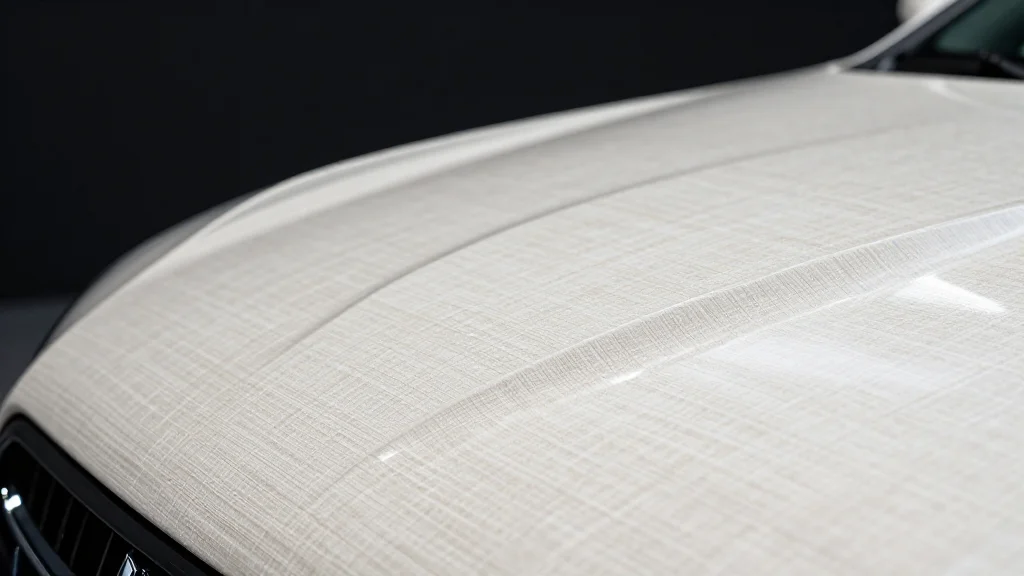
Industry Show Successful Integration of Flax-Linen, Hemp Fiber Into Advanced Composites Processes
Why It Matters
Natural‑fiber composites are gaining industrial credibility, offering sustainable performance that can replace petro‑based materials in high‑volume markets. This accelerates decarbonization goals while opening new design possibilities for manufacturers.
Key Takeaways
- •Thin‑ply flax prepregs enable lightweight, damage‑tolerant automotive parts
- •Coreless filament winding reduces waste while creating complex 3D composite geometries
- •3D‑printed continuous flax‑reinforced filaments match traditional composite strength
- •Adaptive acoustic panels from natural fibers absorb up to 95% low‑frequency noise
Pulse Analysis
European natural‑fiber innovators are redefining composite manufacturing by marrying bio‑based materials with high‑throughput automation. Thin‑ply prepreg technology, championed by Groupe Depestele, leverages the "thin ply effect" to produce ultra‑light, damage‑tolerant structures that can be processed on existing automotive lines. Simultaneously, coreless filament winding eliminates traditional molds, cutting material waste and enabling intricate 3D shapes, while projects like FIBRAS and DynaMill demonstrate that these methods scale from architectural prototypes to mechanically validated engine components.
Additive manufacturing further expands the horizon for flax‑linen and hemp composites. Continuous fiber‑reinforced 3D printing co‑extrudes flax yarn with thermoplastics such as PLA, delivering mechanical properties comparable to conventional prepreg lay‑up. This opens rapid‑prototyping pathways for customized, low‑volume parts and supports designers like Alyssa Cartaut, whose award‑winning footwear showcases bio‑based fashion accessories. Emerging 4D printing research adds stimulus‑responsive capabilities, promising structures that adapt to heat or moisture, a potential game‑changer for decarbonization applications.
The momentum extends into functional and acoustic solutions, with Composites Edge’s sub‑millimeter adaptive panels achieving up to 95% low‑frequency noise absorption while remaining recyclable and waterproof. Hemp pultrusion advances, exemplified by the 3.3‑meter Hemp Halo Canopy, illustrate waste‑free construction possibilities. Collectively, these breakthroughs signal that natural fibers are no longer niche; they are poised to compete in high‑performance sectors, delivering sustainability, design freedom, and cost‑effective scalability for the next generation of composite products.
Industry show successful integration of flax-linen, hemp fiber into advanced composites processes
Comments
Want to join the conversation?
Loading comments...