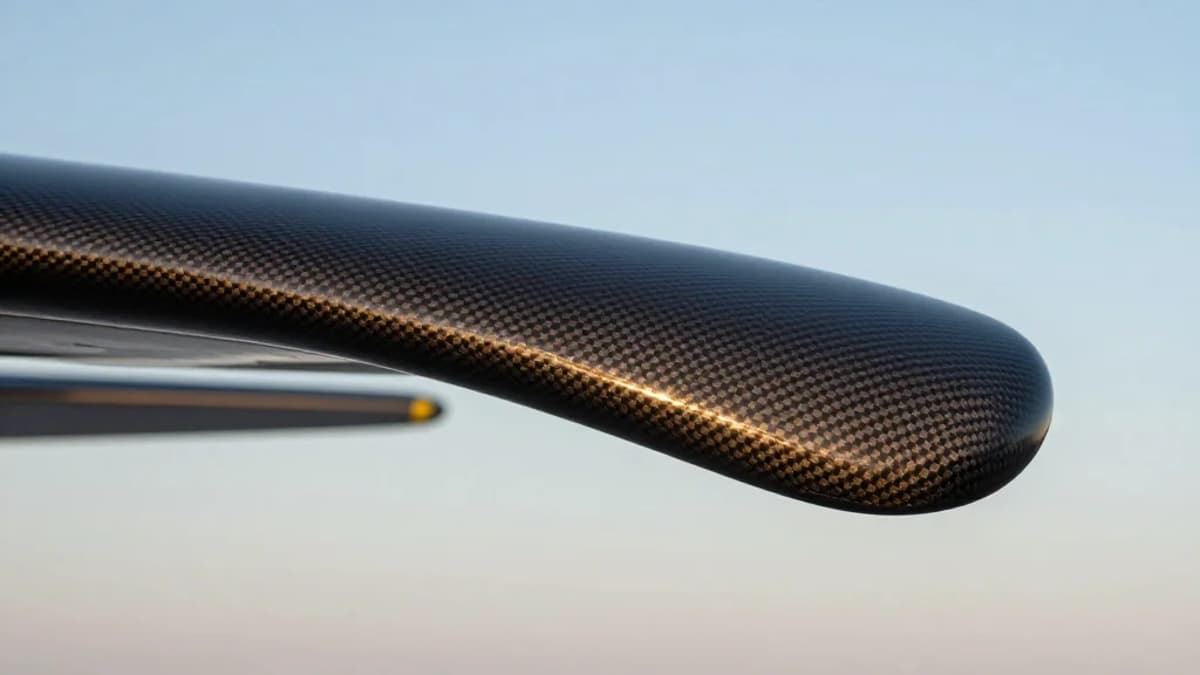
Innovation Awards: Toray’s Process for Reusing the Secondary Structure of the A380 for the A320 NEO Wins in the Circularity & Recycling Category
•February 26, 2026
0
Why It Matters
The solution cuts aerospace waste, lowers carbon footprints, and sets a replicable standard for high‑performance composite recycling across the sector.
Key Takeaways
- •A380 C/PPS parts repurposed for A320 NEO
- •Process preserves long fibers, retaining structural performance
- •Avoids landfill, supports circular economy in aerospace
- •Validates closed‑loop model for thermoplastic composites
- •Plans to extend recycling to thermoset composites industry‑wide
Pulse Analysis
Thermoplastic composites have surged in aerospace thanks to their lightweight strength and inherent recyclability, yet the industry faces a looming challenge: retiring aircraft leave behind hundreds of high‑value components. Traditional recycling methods grind fibres, sacrificing mechanical integrity and economic value. Toray’s award‑winning process flips this paradigm by carefully reshaping end‑of‑life A380 pylon covers, preserving the original long‑fiber architecture. Advanced inspection and tailored forming techniques ensure the reclaimed material meets the stringent structural demands of the A320 NEO, delivering a performance‑equivalent part without the typical loss of strength.
The technical edge lies in maintaining fibre continuity while applying industry‑familiar reshaping methods in a novel sequence. By avoiding fibre shortening, the process retains the high tensile and fatigue properties essential for critical aircraft structures. This contrasts sharply with conventional composite recycling, which often relegates recovered material to low‑grade applications. Toray’s approach also integrates rigorous quality‑control protocols—non‑destructive testing, fibre integrity assessments, and precise tooling—to certify that reused components satisfy certification standards, thereby bridging the gap between sustainability and safety.
Beyond the engineering feat, the initiative carries significant business implications. A closed‑loop supply chain reduces raw material procurement costs and delivers measurable carbon‑footprint savings, aligning with airlines’ and OEMs’ ESG targets. If scaled, the model could become an industry benchmark, encouraging OEMs, suppliers, and recyclers to collaborate on standardized reuse pathways. Toray’s roadmap to incorporate thermoset composites expands the potential impact, promising broader waste diversion across aircraft families and setting a precedent for circularity in the high‑performance materials market.
Innovation Awards: Toray’s process for reusing the secondary structure of the A380 for the A320 NEO wins in the Circularity & Recycling category
0
Comments
Want to join the conversation?
Loading comments...