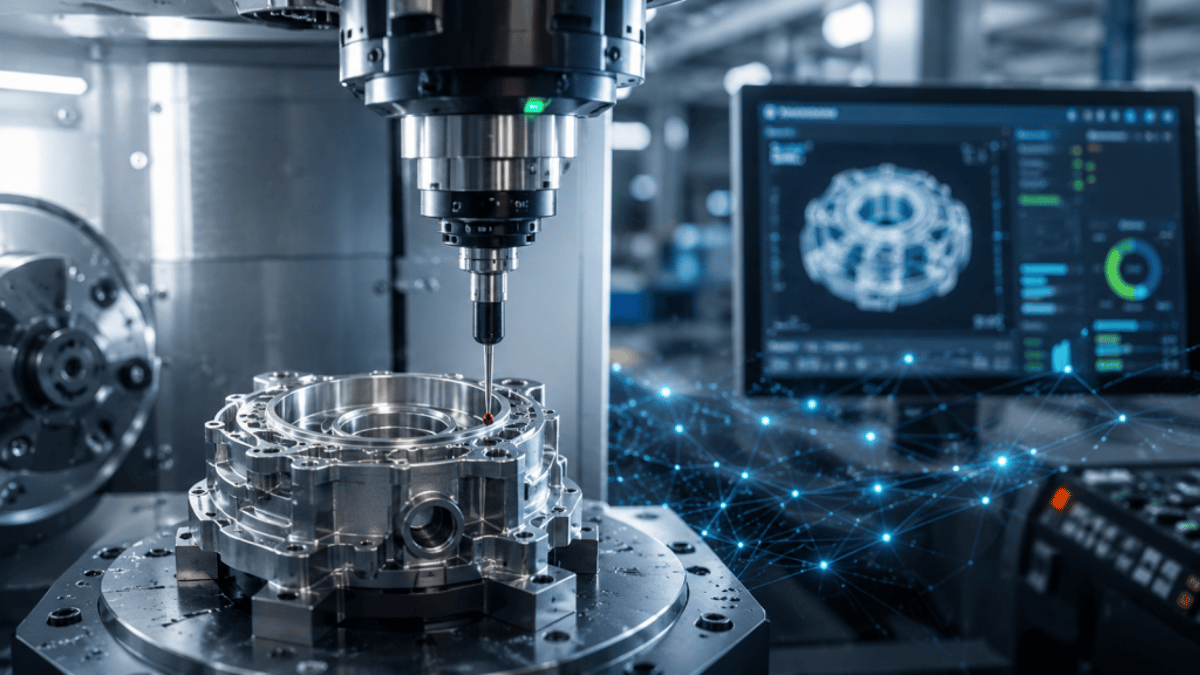
Integrated Inspection for Smarter Manufacturing
Why It Matters
Early defect detection slashes waste and downtime, directly boosting profitability and competitive positioning in precision‑driven sectors such as aerospace and medical devices.
Key Takeaways
- •On‑machine inspection enables real‑time defect detection during machining.
- •Early error detection cuts rework, scrap, and downtime costs.
- •Integrated systems boost consistency across high‑volume production runs.
- •Automation and data analytics drive smarter quality‑control in Industry 4.0.
- •Adopters gain competitive edge and lower product rejection rates.
Pulse Analysis
The pressure to meet ever‑tighter tolerances has forced manufacturers to rethink traditional quality‑control workflows. Conventional inspection often requires removing parts from the machine, transporting them to a separate metrology station, and waiting for results—steps that introduce delays and increase the chance of human error. On‑machine inspection embeds high‑resolution sensors and laser scanners directly onto CNC tools, feeding dimensional data to AI‑driven analytics in real time. This integration aligns with the broader Industry 4.0 push toward fully connected, data‑rich production lines.
By catching deviations the moment they occur, manufacturers can adjust cutting parameters on the fly, eliminating the need for costly re‑machining or scrapping entire batches. Studies show early detection can reduce scrap rates by up to 30 % and cut machine downtime by 20‑25 %, translating into significant labor and material savings. Automated measurement also standardizes data capture, removing subjective human judgment and enabling predictive maintenance models that anticipate tool wear before it impacts part quality. The cumulative effect is a more reliable, higher‑throughput operation that meets stringent regulatory standards without sacrificing speed.
Looking ahead, integrated inspection is poised to become a baseline capability in next‑generation smart factories. As digital twins and cloud‑based analytics mature, real‑time inspection data will feed into holistic process optimization platforms, driving continuous improvement across the entire value chain. Companies that invest now gain a strategic advantage, positioning themselves to meet future demands for ultra‑precise, low‑cost production while reinforcing brand reputation for quality and reliability.
Integrated Inspection for Smarter Manufacturing
Comments
Want to join the conversation?
Loading comments...