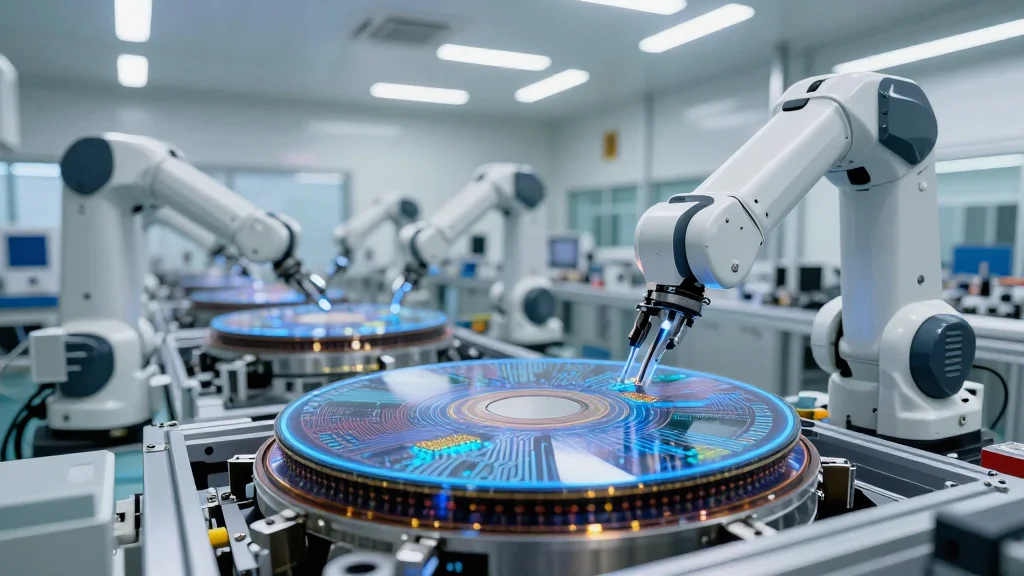
Intel Joins Elon Musk’s $25 B Terafab AI Chip Project, Accelerating US Semiconductor Manufacturing

Why It Matters
Intel’s entry into the Terafab project marks a decisive pivot toward AI‑centric manufacturing, a sector that now commands the majority of semiconductor investment. By co‑locating design, fabrication and packaging, the venture aims to cut lead times, lower costs and insulate the U.S. supply chain from geopolitical risks tied to Asian fabs. Success could accelerate the deployment of AI compute for autonomous vehicles, robotics and space‑based data centers, reshaping competitive dynamics between Intel, TSMC and Nvidia. The partnership also signals a broader policy shift: U.S. authorities have been encouraging domestic chip production to safeguard national security and maintain technological leadership. Terafab’s $20‑$25 billion spend, combined with Intel’s $18 billion annual R&D budget, could catalyze a new wave of private‑public collaboration, prompting further incentives for advanced‑node fabs and potentially spurring job growth in high‑skill manufacturing regions.
Key Takeaways
- •Intel joins Elon Musk’s Terafab AI chip megafactory on April 7, 2026, bringing its 18A process and fab expertise.
- •Terafab targets 1 terawatt of AI compute annually and aims to produce 100‑200 billion custom chips per year.
- •Project investment is estimated at $20‑$25 billion, with the pilot facility located at Giga Texas in Austin.
- •Intel shares have risen about 85% year‑to‑date following the announcement, outpacing the broader semiconductor market.
- •The venture could reduce U.S. reliance on TSMC, reshape the AI‑chip supply chain, and accelerate deployment of AI in robotics and space.
Pulse Analysis
Intel’s partnership with Terafab is more than a headline‑grabbing alliance; it is a strategic bet on the future of AI hardware that could redefine the company’s identity. Historically, Intel has struggled to keep pace with the rapid node shrinks achieved by TSMC and Samsung, losing ground in high‑performance compute. By anchoring its 18A node in a vertically integrated factory, Intel hopes to regain relevance not just as a chip designer but as a full‑stack silicon foundry for the AI era. The move also leverages Musk’s brand and capital, offering Intel a pipeline of high‑margin, volume‑driven orders that could offset its current foundry losses.
However, the partnership is fraught with execution risk. The 2‑nanometer process is unproven at scale, and any yield shortfall could inflate the $20‑$25 billion capital cost, eroding the projected economics. Moreover, Intel’s balance sheet is already strained by a $10.3 billion operating loss in its foundry division and negative free cash flow. Financing the Terafab build‑out will likely require additional debt or equity, potentially diluting shareholders and pressuring valuation metrics that already sit at 135× forward earnings.
If Intel can navigate these challenges, the payoff could be transformative. A successful Terafab ramp would give the United States a domestic source of terawatt‑scale AI compute, reducing strategic vulnerability and creating a new exportable technology platform. Competitors such as Nvidia, which relies on TSMC for its H100 and Blackwell GPUs, could see market share erosion as customers gravitate toward a vertically integrated, U.S.-based supply chain. In the longer term, the Terafab model may become a template for other AI‑focused fabs, accelerating the shift from general‑purpose silicon to application‑specific processors that dominate the next decade of computing.
Intel Joins Elon Musk’s $25 B Terafab AI Chip Project, Accelerating US Semiconductor Manufacturing
Comments
Want to join the conversation?
Loading comments...