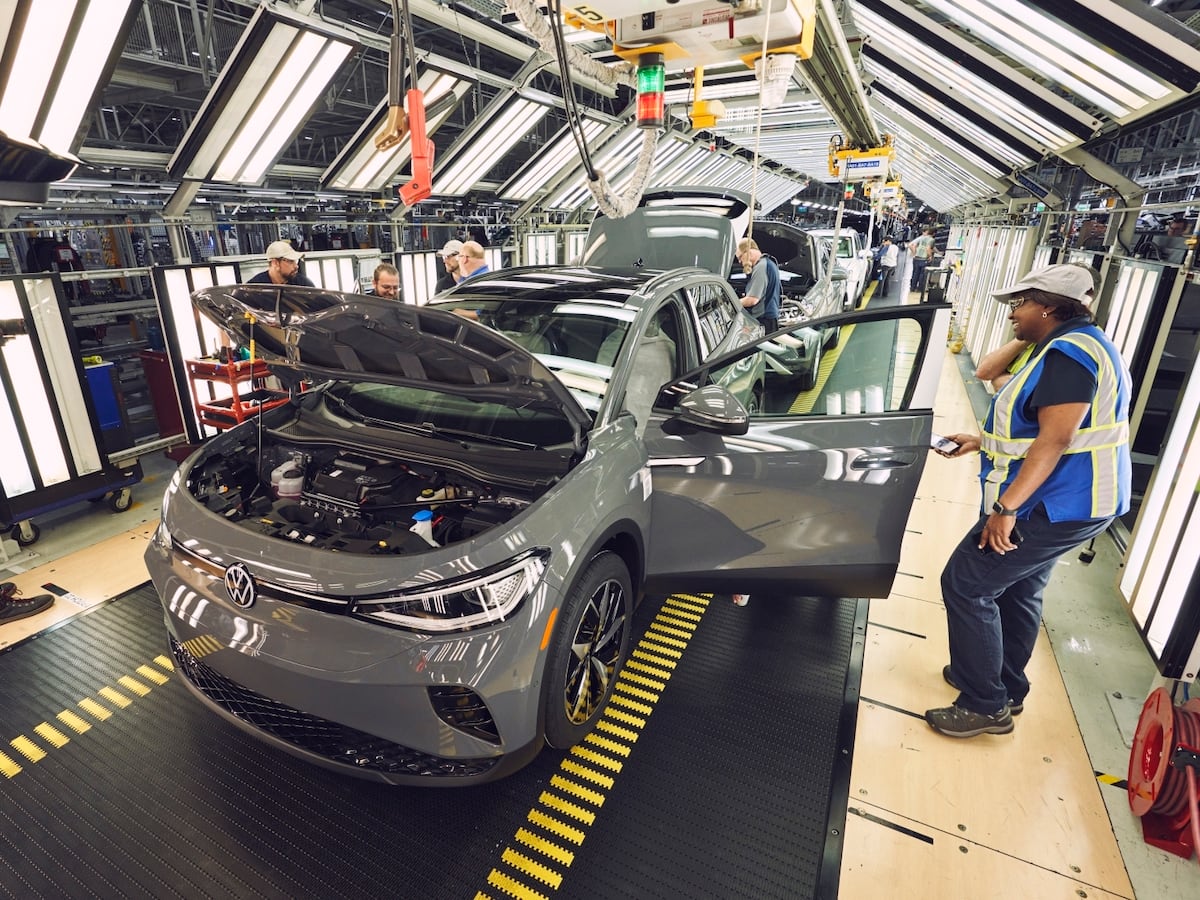
International Business Briefs | VW to Stop US Output of Top Electric Vehicle
Companies Mentioned
Why It Matters
VW’s pullback signals tougher demand for U.S. EVs, while Germany’s push for greater control of KNKS reflects strategic defense consolidation. The corporate moves at CoStar, IBM, Encore and Nexstar illustrate shifting governance, regulatory pressure, and media‑distribution strategies that could reshape their respective markets.
Key Takeaways
- •VW stops ID.4 output, refocuses Chattanooga plant on Atlas SUVs
- •Germany seeks >25% stake in $21.6 bn KNKS IPO to protect tech jobs
- •Third Point exits CoStar proxy fight, sells entire position
- •IBM pays $17 m to settle DOJ DEI fraud investigation
- •Encore posts $3.4 bn revenue, narrows loss ahead of U.S. IPO
Pulse Analysis
Volkswagen’s decision to cease ID.4 production at its Tennessee facility underscores the fragility of the U.S. electric‑vehicle market after the federal $7,500 tax credit was eliminated. By reallocating capacity to its higher‑volume Atlas and Atlas Cross Sport SUVs, VW aims to preserve plant utilization while it re‑engineers a next‑generation ID.4 for North America. The move highlights how automakers are balancing electrification ambitions with short‑term profitability in a market still grappling with consumer price sensitivity and charging infrastructure gaps.
Across the Atlantic, Germany’s labor federation is pressing the government to secure a controlling share in the upcoming Leopard tank maker KNKS IPO, valued at roughly $21.6 bn. Matching France’s stake is framed as essential to safeguard German defense technology and jobs, especially as Europe seeks greater strategic autonomy. The push reflects broader trends of state involvement in critical defense sectors, where ownership structures can influence export licensing, R&D funding, and long‑term industrial policy.
In the corporate arena, the fallout from regulatory and governance pressures is evident. IBM’s $17 m settlement with the DOJ marks the first enforcement action under the Civil Rights Fraud Initiative, signaling heightened scrutiny of DEI programs. Meanwhile, Third Point’s retreat from a CoStar proxy battle illustrates the challenges activist investors face when strategic pivots fail to gain board support. At the same time, Encore’s improved revenue trajectory and narrowed loss position it for a potentially successful U.S. IPO, while Nexstar’s directive to replace national network newscasts with NewsNation content reveals a growing emphasis on proprietary distribution channels in local broadcasting. These developments collectively illustrate how policy, market dynamics, and strategic realignments are reshaping industry landscapes.
International business briefs | VW to stop US output of top electric vehicle
Comments
Want to join the conversation?
Loading comments...