Japan Airlines Launches Humanoid Robot Baggage Trial at Tokyo’s Haneda Airport

Companies Mentioned
Why It Matters
The Haneda trial sits at the intersection of two macro trends reshaping manufacturing and logistics: the need to do more with fewer human hands and the push for flexible automation that can adapt to existing layouts. By proving that a compact, human‑shaped robot can safely handle baggage alongside crew members, Japan Airlines offers a template for factories and warehouses that cannot afford massive re‑engineering projects. Success could spur investment in similar platforms, driving down costs and encouraging standards for safety and human‑robot interaction. Moreover, the initiative highlights how AI‑driven simulation tools are becoming integral to hardware deployment. Nvidia’s Isaac Simulator and reinforcement‑learning pipelines enable rapid iteration, reducing the time and expense traditionally associated with field trials. As more manufacturers adopt these digital twins, the barrier to entry for advanced robotics will fall, potentially democratizing access for mid‑size firms that have previously been locked out of high‑tech automation.
Key Takeaways
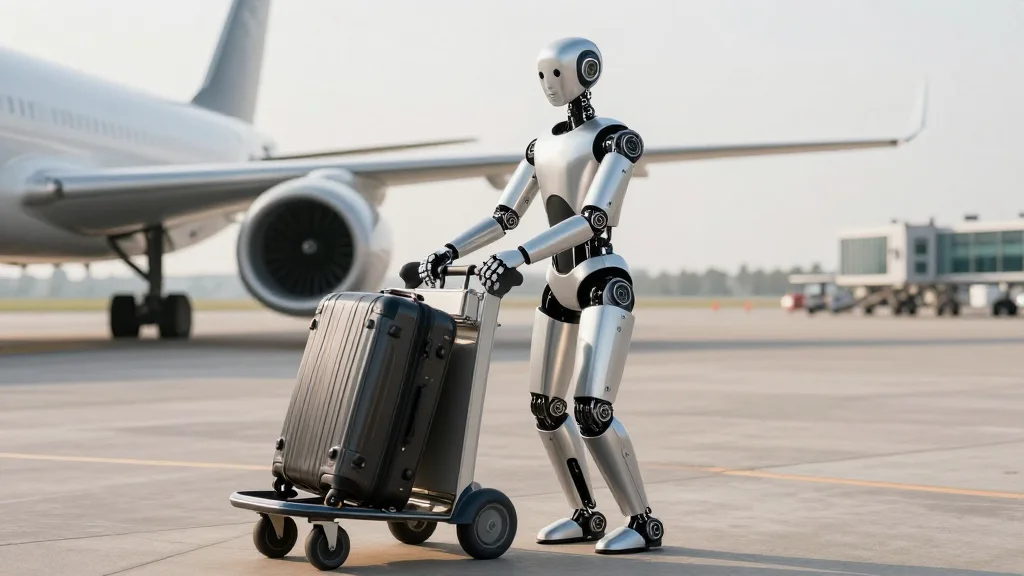
- •Japan Airlines and GMO AI & Robotics launched a pilot of Unitree’s G1 humanoid robot at Haneda Airport.
- •The G1 robot is 4 ft tall, 77 lb, and uses 3D LiDAR, depth cameras and voice input to handle baggage.
- •Training relies on Nvidia’s Isaac Simulator and Sim2Real techniques to transfer virtual learning to the physical robot.
- •The trial addresses Japan’s twin challenges of rising passenger traffic and a shrinking ground‑crew labor pool.
- •If successful, the program could expand to other Japanese hubs and inspire similar deployments in manufacturing and logistics.
Pulse Analysis
The Haneda pilot underscores a strategic pivot from fixed‑line automation to mobile, adaptable robots that can be deployed in legacy environments. Historically, manufacturing automation has favored purpose‑built machines that excel at a single task but demand extensive retooling. Humanoid platforms like Unitree’s G1 blur that line, offering a versatile workhorse that can be reprogrammed for multiple duties—from baggage handling to equipment transport—without major facility upgrades. This flexibility is especially valuable in sectors where floor plans evolve rapidly or where space constraints preclude large robotic cells.
From a competitive standpoint, Japan Airlines is positioning itself ahead of other carriers that are still experimenting with conveyor‑based or drone‑based solutions. By integrating AI‑trained humanoids, JAL can potentially reduce labor costs, improve safety metrics and differentiate its brand as a technology leader. The partnership with GMO AI & Robotics also signals a growing ecosystem of Japanese firms that combine deep robotics hardware expertise (Unitree) with AI simulation capabilities (Nvidia) and domain‑specific integration (GMO). This triad could become a template for other industries seeking to fast‑track robot adoption.
Looking forward, the trial’s data will be the decisive factor. If the robots achieve comparable or better cycle times than human crews while maintaining low error rates, the economics will tilt in favor of broader rollout. However, challenges remain: ensuring robust safety in unpredictable airport conditions, managing the cost of robot fleets versus wage savings, and navigating regulatory approvals for autonomous ground equipment. The outcome at Haneda will likely inform not only airline strategies but also the next wave of manufacturing automation, where the promise of flexible, AI‑driven humanoids could finally move from lab demos to shop‑floor reality.
Japan Airlines Launches Humanoid Robot Baggage Trial at Tokyo’s Haneda Airport
Comments
Want to join the conversation?
Loading comments...