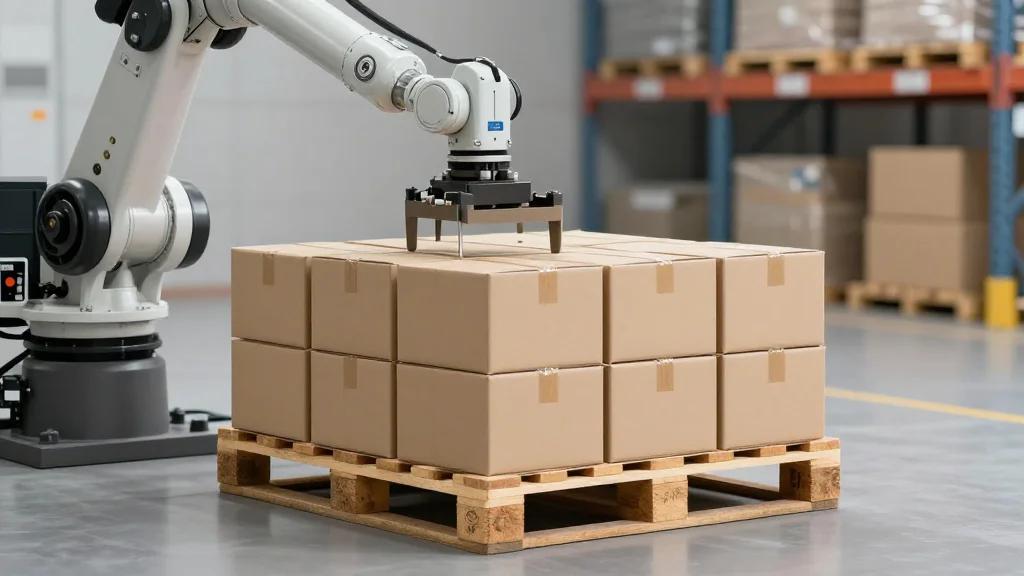
Kari-Out Boosted Output 25% without Adding Labor
Why It Matters
The results prove that outcome‑based automation can dramatically boost productivity and safety while removing labor‑intensive bottlenecks, a model other manufacturers can replicate to stay competitive.
Key Takeaways
- •25% output boost achieved with six palletizing robots
- •Zero turnover and injuries after automation deployment
- •100% equipment uptime eliminates production bottlenecks
- •Predictable, outcome‑based pricing removes capital expense
- •Reduced reliance on temp labor cuts labor costs
Pulse Analysis
Manufacturers face relentless pressure to increase throughput while curbing labor costs and safety incidents. High‑turnover roles such as palletizing strain both budgets and morale, prompting many firms to explore robotics. Yet the traditional path—purchasing equipment and building an internal maintenance team—often adds capital risk and diverts engineering talent from core product innovation. Outcome‑based automation providers are reshaping this calculus by offering turnkey solutions that align costs with performance, allowing plants to upgrade without upfront CAPEX.
At Kari-Out, Director of Manufacturing Peter Santo Rodriguez leveraged Formic’s robot‑as‑a‑service model to replace a 18‑person palletizing crew. The robots delivered a 25% lift in output, sustained 100% uptime, and eradicated turnover, workers’ comp claims, and shipping errors. Because the pricing is tied to measurable outcomes, Kari-Out enjoys a predictable cost structure and can reallocate staff to product development and process improvement. The rapid deployment—completed with minimal disruption—demonstrates how external expertise can accelerate automation adoption while keeping internal resources focused on strategic initiatives.
The broader implication for the industry is clear: outcome‑oriented automation lowers barriers to entry, delivering immediate ROI and operational resilience. Companies can scale capacity by simply adding more robots, as Kari-Out plans to do, without expanding their internal support footprint. This model also mitigates financial risk, turning capital‑intensive projects into operational expenses tied directly to performance metrics. As labor markets tighten and safety standards tighten, manufacturers that adopt such flexible, results‑driven automation are poised to outpace competitors and secure long‑term profitability.
Kari-Out boosted output 25% without adding labor
Comments
Want to join the conversation?
Loading comments...