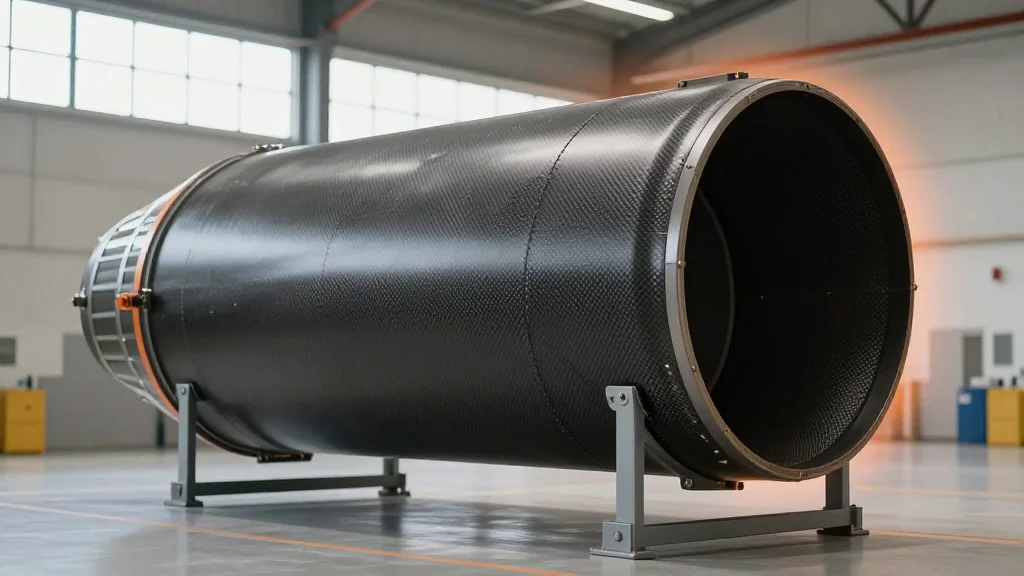
Largest Chinese Composite Module Developed for Reusable Launch Vehicles
Companies Mentioned
Why It Matters
These breakthroughs reduce vehicle weight and enable higher‑temperature engine components, accelerating cost‑effective, reusable launch capabilities and strengthening each region’s competitive position in the global space market.
Key Takeaways
- •CALT built 5‑m composite propulsion cabin, China’s largest single‑piece composite
- •Module is >60% composite, tolerates thousands of tons axial load
- •Development finished in 7 months via parallel, collaborative R&D approach
- •Petroceramics’ CMC panels endure 3,000 °C, fit launcher exhaust nozzles
- •Kilometro Rosso ecosystem accelerates CMC scale‑up for global space market
Pulse Analysis
The China Academy of Launch Vehicle Technology (CALT) has just delivered a 5‑meter‑diameter composite propulsion cabin, the largest monolithic composite structure ever built in the country for a reusable launch vehicle. Made of more than 60 % carbon‑fiber‑reinforced polymer, the module replaces traditional metal pressure vessels, shaving several hundred kilograms from the vehicle’s dry mass while still withstanding axial loads measured in thousands of tons. CALT’s team compressed the design‑to‑delivery cycle into seven months by running parallel engineering streams and leveraging high‑precision autoclave tooling, a feat that signals a rapid maturation of large‑scale aerospace composites in China.
In Europe, Italy’s Kilometro Rosso innovation district is showcasing the commercialisation of ceramic‑matrix‑composite (CMC) technology through Petroceramics. The company’s newly qualified panels can survive temperatures up to 3,000 °C, making them ideal for launcher exhaust nozzles that experience extreme thermal gradients. Backed by a portfolio of more than 30 patents and close collaboration with the Brembo Technical Center, Petroceramics has translated deep‑tech research into market‑ready components for both automotive braking and space propulsion. The district’s ecosystem, which couples university spin‑offs with mature manufacturers, accelerates scale‑up and positions Italy as a niche supplier in the growing space‑hardware market.
Together, these developments illustrate a global shift toward high‑performance composites as a cornerstone of next‑generation launch systems. For China, the ability to mass‑produce large composite pressure vessels could lower launch costs and improve turnaround times for reusable rockets, narrowing the gap with private U.S. providers. Europe’s focus on ultra‑high‑temperature CMCs complements this trend by addressing the thermal challenges of more powerful engines, offering a differentiated value proposition for satellite operators seeking reliability. As supply chains diversify, investors and policymakers will watch how these parallel paths influence standards, joint‑venture opportunities, and the overall economics of access to space.
Largest Chinese composite module developed for reusable launch vehicles
Comments
Want to join the conversation?
Loading comments...