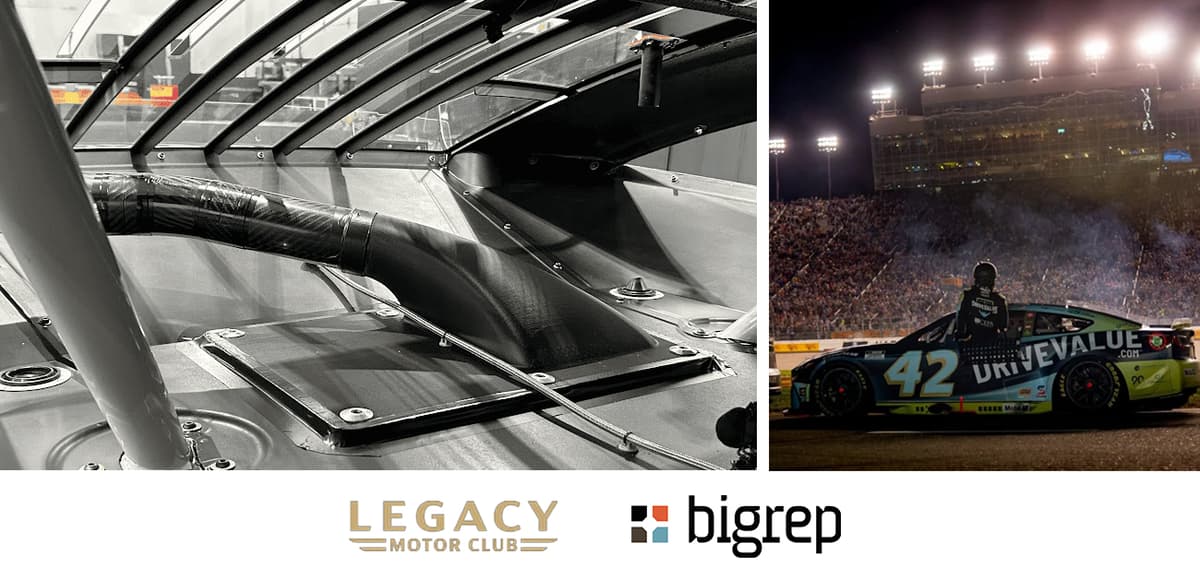
LEGACY MOTOR CLUB Adopts 3D Printing for NASCAR Race Car Parts
•March 2, 2026
0
Why It Matters
In‑house additive manufacturing accelerates development cycles and slashes parts costs, giving motorsport teams a decisive competitive edge and signaling wider industry adoption.
Key Takeaways
- •In‑house 3D printing cuts lead time from weeks to days
- •Material costs dropped over 75% for grille bezels
- •Team prints 10‑20 components weekly, including functional parts
- •High‑temp polymers enable heat‑resistant race car components
- •Regulatory changes spurred rapid design of safety skirts
Pulse Analysis
The Legacy Motor Club’s integration of BigRep’s STUDIO printers illustrates how additive manufacturing is reshaping high‑performance racing. By moving design, testing, and low‑volume production into the shop floor, the team can iterate on aerodynamic and power‑train components within a single workday. This rapid feedback loop shortens the traditional development timeline, allowing engineers to respond to track‑specific demands and regulatory updates without relying on external suppliers whose lead times can span weeks.
Cost efficiency is another decisive factor. The switch from outsourced grille bezels at $1,900 each to an in‑house print costing $471 represents a 75% reduction, while the gear‑cooler plenum’s material expense fell from roughly $2,000 per unit to $57. Such savings free budget for additional R&D, spare parts inventory, and talent acquisition. Moreover, the use of high‑temperature polymers like PA6/66 and TPU demonstrates that modern 3D‑printing materials can meet the extreme thermal and mechanical stresses of NASCAR competition.
Legacy’s experience mirrors a broader shift across motorsports, where teams increasingly view additive manufacturing as a strategic asset rather than a prototyping novelty. Regulatory changes, such as the 2024 rocker‑extension skirt mandate, underscore the need for agile design capabilities that can be deployed instantly. As material libraries expand and printer reliability improves, we can expect more teams to adopt in‑house printing for both functional and safety‑critical parts, accelerating innovation cycles and potentially redefining supply‑chain dynamics in the racing industry.
LEGACY MOTOR CLUB Adopts 3D Printing for NASCAR Race Car Parts
0
Comments
Want to join the conversation?
Loading comments...