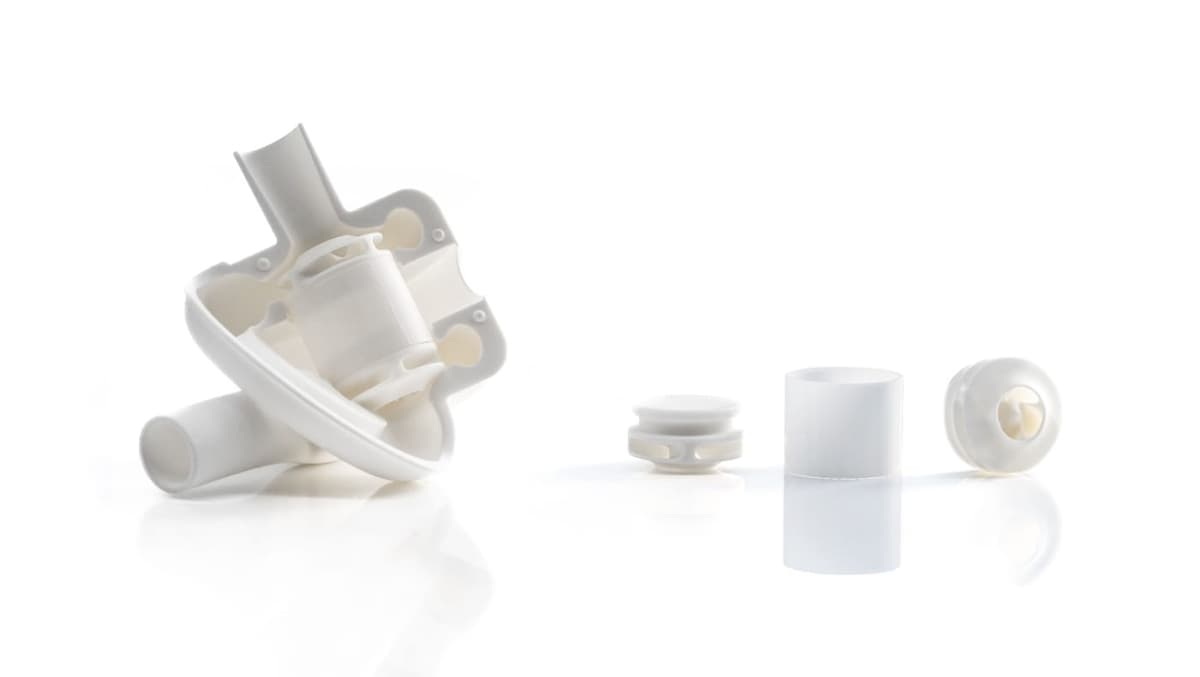
Lithoz Presents Three Ceramic 3D Printing Material Updates
•March 9, 2026
0
Why It Matters
These upgrades broaden ceramic 3D printing from prototyping to serial production, unlocking high‑performance parts for aerospace, medical and semiconductor sectors. By reducing variability and boosting mechanical properties, Lithoz accelerates industry adoption of additive ceramic manufacturing.
Key Takeaways
- •LithaLox prints 12 mm walls, 55% solid loading
- •LithaCon zirconia boosts fracture toughness, Weibull modulus
- •LithaCon ATZ reaches 993 MPa bending strength, 17 mm walls
- •New materials target aerospace, med‑tech, semiconductor applications
- •Aluminium nitride matches silicon CTE for precise cooling devices
Pulse Analysis
Ceramic additive manufacturing has moved beyond niche prototyping, driven by Lithography‑Based Ceramic Manufacturing (LCM) platforms that combine high‑resolution photopolymerisation with sintering. Lithoz’s latest material suite reflects this shift, offering formulations that balance printability with the demanding mechanical performance required for end‑use parts. By increasing solid loading to 55 vol % and enabling wall thicknesses up to 12 mm, LithaLox reduces post‑process shrinkage, a common barrier for large‑scale ceramic components, while preserving the high bend strength essential for structural applications.
The introduction of LithaCon zirconia and its ATZ variant targets two of the most regulated markets: medical devices and aerospace. Enhanced fracture toughness and a higher Weibull modulus translate into more reliable dental implant screws and other threaded components, where failure is not an option. Meanwhile, the ATZ formulation’s 993 MPa bending strength and 17 mm printable walls make it viable for single‑crystal turbine‑blade cores, supporting next‑generation aircraft engines that demand lightweight yet ultra‑strong parts. These material improvements also dovetail with Lithoz’s demonstrated capability in semiconductor‑grade aluminium nitride, which matches silicon’s coefficient of thermal expansion for precision cooling solutions.
Collectively, these developments signal a maturation of ceramic 3D printing toward volume production. Companies across aerospace, med‑tech, and semiconductor sectors can now source components that meet stringent performance specs without costly tooling changes. As the Ceramic 3D Factory network expands, Lithoz’s material roadmap may set industry benchmarks, prompting competitors to accelerate their own high‑performance ceramic formulations. The result is a faster feedback loop between material science breakthroughs and real‑world applications, reinforcing ceramics’ role in the future of advanced manufacturing.
Lithoz presents three ceramic 3D printing material updates
0
Comments
Want to join the conversation?
Loading comments...