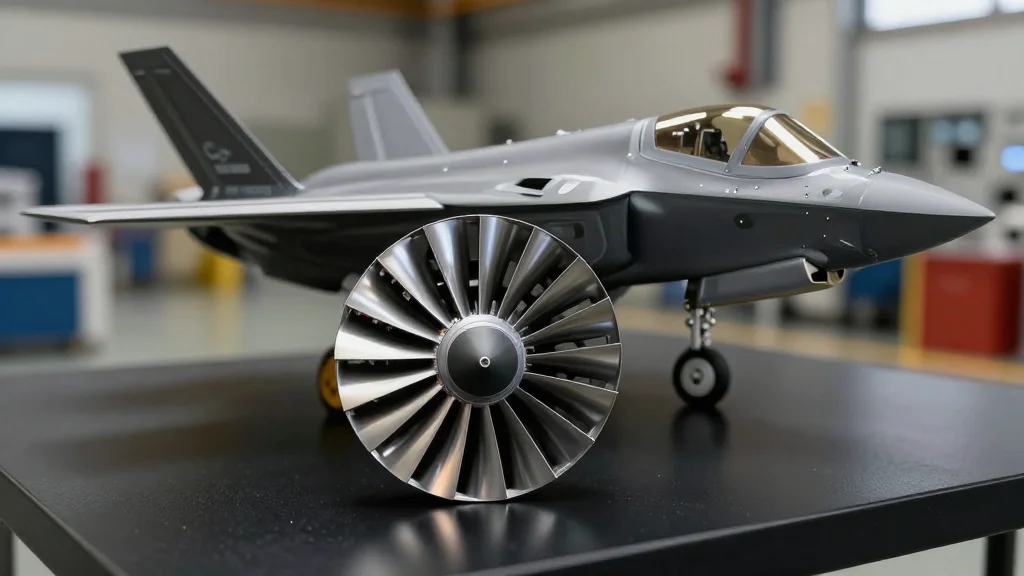
Lockheed Martin’s $2 Trillion F‑35 Program Exposes Rising Defense Manufacturing Costs

Companies Mentioned
Why It Matters
The $2.1 trillion price tag of the F‑35 program signals a tipping point for U.S. defense manufacturing, where the cost of maintaining cutting‑edge technology may outpace the benefits of new procurement. As sustainment dominates the budget, the defense industrial base faces pressure to innovate not just in performance but in cost‑efficient production, logistics and supply‑chain management. Failure to curb these expenses could force policymakers to reconsider fleet sizes, prioritize alternative platforms, or accelerate the shift toward unmanned systems that promise lower life‑cycle costs. Moreover, the program’s scale influences the broader economy: thousands of jobs, a sprawling network of subcontractors, and a massive backlog that anchors investor sentiment in the defense sector. Any shift in the program’s trajectory—whether through cost‑cutting reforms or accelerated procurement—will ripple through aerospace hubs, regional economies, and the strategic calculus of U.S. allies who depend on the F‑35’s capabilities.
Key Takeaways
- •Lockheed Martin’s F‑35 program projected to cost $2.1 trillion through 2088.
- •Sustainment accounts for roughly 75% of total program cost, now estimated at $1.58 trillion.
- •GAO reports sustainment costs rose from $1.1 trillion in 2018 to $1.58 trillion in 2023.
- •Lockheed’s backlog stands at $193.6 billion as of Dec. 31, 2025, securing future revenue.
- •General Michael Guetlein warned that unaffordable production could halt further development.
Pulse Analysis
Lockheed’s F‑35 saga illustrates a classic defense‑industry paradox: the pursuit of ever‑more capable platforms drives up both acquisition and sustainment costs, yet the same capabilities are deemed essential for maintaining strategic superiority. Historically, programs like the B‑2 bomber or the A‑10 demonstrated that life‑cycle expenses could eclipse initial procurement, prompting the Pentagon to adopt more rigorous cost‑control mechanisms. The F‑35, however, has outpaced those precedents, partly because its design consolidates three service‑specific variants into a single airframe, creating a massive, heterogeneous fleet that demands a complex, multi‑national supply chain.
From a market perspective, the program’s sheer size has turned Lockheed into a bellwether for defense manufacturing health. Investors watch the backlog as a proxy for future cash flow, while policymakers monitor sustainment trends as a barometer of fiscal sustainability. The recent comments from General Guetlein highlight a growing awareness within the defense establishment that cost‑effectiveness cannot be an afterthought. If the Department of Defense pushes for greater competition among parts suppliers or adopts modular design principles, it could force a shift toward leaner manufacturing practices, potentially lowering the long‑term cost curve.
Looking ahead, the F‑35’s fate will hinge on three variables: congressional budget allocations, the ability of Lockheed to deliver cost‑saving innovations, and the strategic calculus of U.S. allies who are co‑funders of the program. A successful reduction in sustainment spend could preserve the program’s relevance for decades, while continued cost escalation may accelerate the search for alternative platforms, such as next‑generation unmanned combat aerial vehicles, that promise lower life‑cycle expenses. In either scenario, the manufacturing sector will be forced to adapt, either by scaling up high‑precision, high‑cost production or by re‑tooling for more modular, cost‑efficient solutions.
Lockheed Martin’s $2 Trillion F‑35 Program Exposes Rising Defense Manufacturing Costs
Comments
Want to join the conversation?
Loading comments...