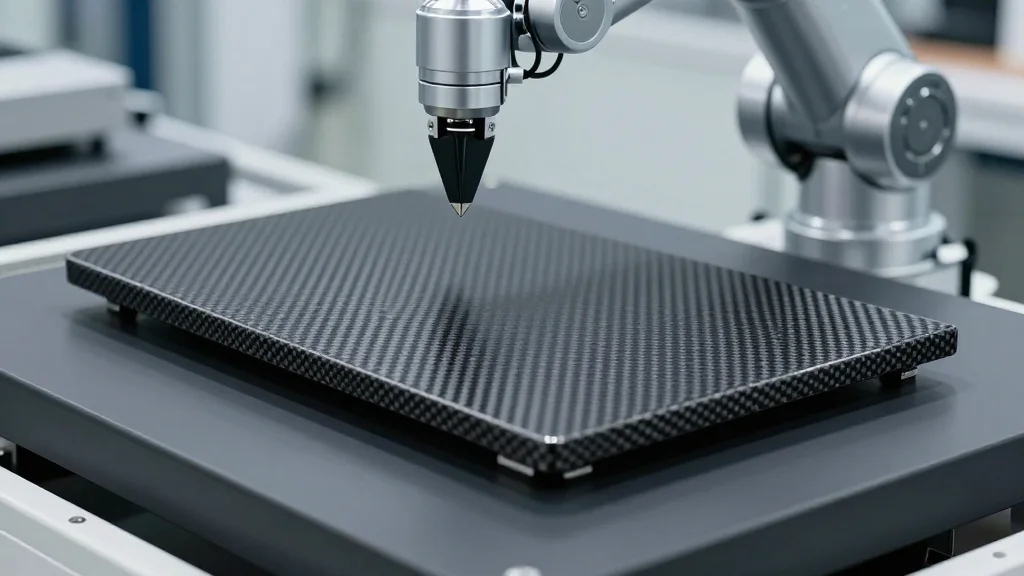
LOCO3 Project Advances Recycling of Long Carbon Fiber/Nylon Waste for Automotive
Why It Matters
Recycling carbon‑fiber/nylon waste cuts automotive carbon footprints and reduces reliance on costly virgin composites, aligning with stricter emissions regulations and OEM sustainability targets.
Key Takeaways
- •LOCO3 targets recycling carbon fiber/nylon waste for auto parts
- •TPAC will map material input to processing parameters and performance
- •Partners BaX Composites and Spiral RTC provide feedstock and automation
- •Life‑cycle assessment will quantify carbon reduction versus virgin composites
Pulse Analysis
Automotive manufacturers are accelerating the shift toward lightweight, high‑strength materials, and thermoplastic composites have emerged as a key enabler. Yet the rapid adoption of carbon‑fiber‑reinforced nylon has generated a growing waste stream, challenging both cost structures and environmental goals. Traditional disposal methods—landfilling or incineration—offer little value and contribute to greenhouse‑gas emissions, prompting the industry to explore circular solutions that retain performance while closing material loops.
The LOCO3 project, coordinated by TPAC in Enschede, Netherlands, builds on low‑shear extrusion advances to transform centimeter‑long fibers from recycled thermoplastic composites into plate‑based semi‑products. These plates serve as feedstock for an automated line capable of high‑rate, high‑volume automotive part production. Collaborators BaX Composites supplies the post‑consumer carbon‑fiber/nylon waste, while Spiral RTC contributes the robotics and process control needed for seamless integration. Over the 2025‑2027 timeline, TPAC will rigorously test how feedstock quality, extrusion temperature, and screw speed affect tensile strength, impact resistance, and dimensional stability of the final components.
If successful, LOCO3 could reshape the supply chain for automotive composites by delivering a cost‑competitive, low‑carbon alternative to virgin carbon‑fiber composites. OEMs would benefit from reduced material expenses, compliance with tightening EU and US emissions standards, and the ability to market truly circular vehicles. However, scaling the technology will require consistent waste collection, standardization of fiber lengths, and investment in retrofitting existing production lines. The project's life‑cycle analysis will be pivotal in quantifying real‑world CO₂ savings, providing the data needed for broader industry adoption and potential policy incentives.
LOCO3 project advances recycling of long carbon fiber/nylon waste for automotive
Comments
Want to join the conversation?
Loading comments...