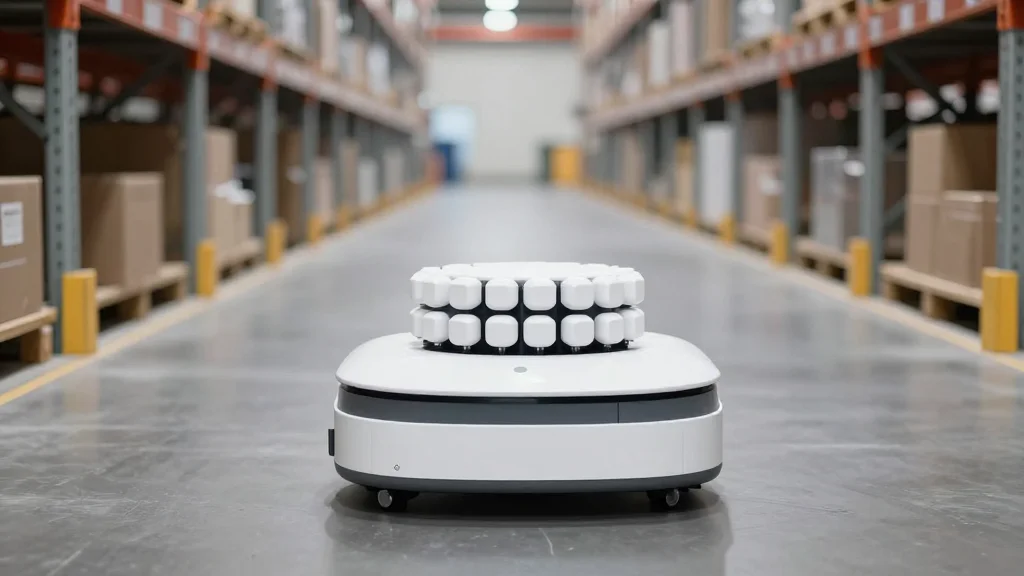
Locus Robotics Launches Locus Array, Teams with EPG to Accelerate Autonomous Warehousing

Companies Mentioned
Why It Matters
The Locus Array launch marks a concrete shift from experimental robotics to production‑grade, AI‑orchestrated fulfillment at scale. For manufacturers, the ability to automate the entire pick‑to‑ship cycle reduces reliance on a shrinking labor pool and lowers operating costs, directly impacting profit margins. Moreover, the partnership with EPG demonstrates that integration hurdles—once a major barrier to warehouse automation—are being solved through tightly coupled hardware and software ecosystems, accelerating the adoption curve across the supply chain. By enabling higher storage density and real‑time task allocation, the system also supports the trend toward smaller, faster fulfillment centers located closer to end customers. This could reshape distribution network design, prompting manufacturers to rethink inventory placement strategies and invest in more flexible, robot‑centric facilities.
Key Takeaways
- •Locus Robotics introduced the Locus Array autonomous fulfillment system on May 3 2026.
- •Early‑access deployment is live with DHL Supply Chain in North America.
- •EPG integrated Locus technology into its WMS, creating a ready‑to‑use automation offering.
- •The system uses a Robots‑to‑Goods (R2G) model, dynamically assigning tasks via the LocusONE AI platform.
- •Rollout plans target Europe and APAC in 2026‑27, aiming to address labor shortages and rising warehouse costs.
Pulse Analysis
Locus Robotics’ move to a system‑level R2G architecture reflects a maturation of warehouse robotics that mirrors the evolution of cloud computing from point solutions to platform services. By embedding AI orchestration directly into the robot fleet, Locus reduces the need for extensive retrofitting, a pain point that has slowed adoption among mid‑size manufacturers. The partnership with EPG is strategic: it leverages EPG’s established WMS footprint to bypass the lengthy integration cycles that have traditionally plagued robotics rollouts. This mirrors the broader trend of hardware vendors aligning with software platforms to create bundled value propositions, a play that could force larger incumbents like Dematic and Swisslog to accelerate their own platform strategies.
From a market dynamics perspective, the launch could intensify competition in the high‑density, autonomous fulfillment niche. Companies such as Geekplus, which reported 50 % YoY growth in the Americas, are also scaling aggressively. Locus’ emphasis on vertical space utilization and real‑time task allocation may set a new benchmark for performance metrics, pushing rivals to invest in similar AI‑driven orchestration layers. The absence of disclosed financial terms suggests that both firms are betting on volume and recurring software revenue rather than upfront hardware sales, a model that aligns with the subscription‑based economics now common in enterprise tech.
Looking ahead, the success of Locus Array will hinge on measurable outcomes—pick‑time reductions, labor cost savings, and throughput gains—that can be quantified across diverse warehouse layouts. If early deployments deliver on these promises, the solution could become a de‑facto standard for manufacturers seeking to future‑proof their logistics networks against ongoing labor volatility and the relentless push for faster order fulfillment.
Locus Robotics Launches Locus Array, Teams with EPG to Accelerate Autonomous Warehousing
Comments
Want to join the conversation?
Loading comments...