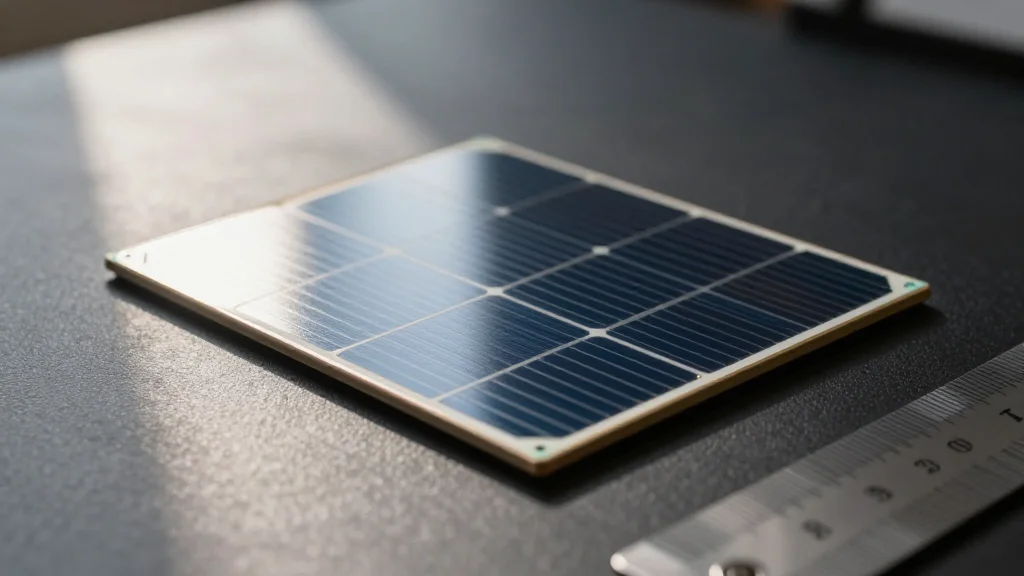
LONGi Sets New World Records: 28.13% Cell and 26.4% Module Efficiency

Companies Mentioned
Why It Matters
The efficiency gains announced by LONGi directly affect solar manufacturing economics. Higher cell and module efficiencies lower the cost per watt, enabling developers to achieve the same power output with fewer panels, reduced land use, and lower balance‑of‑system expenses. For manufacturers, the HIBC platform offers a scalable pathway to differentiate products in a crowded market, potentially capturing premium pricing for high‑yield modules. Beyond cost, the records tighten the race toward the theoretical efficiency ceiling, pressuring competitors to invest in similar passivation and crystallization technologies. As global renewable targets tighten, the ability to deliver more power from the same silicon footprint accelerates the transition to zero‑carbon electricity and supports downstream applications such as green hydrogen production, where higher solar output can improve electrolyzer utilization.
Key Takeaways
- •LONGi’s HIBC solar cell achieved a certified 28.13% conversion efficiency (record)
- •HIBC‑based modules reached a certified 26.4% efficiency, the highest for crystalline silicon
- •EcoLife series mass‑produced modules deliver 25% efficiency, topping global rankings
- •Key technologies: in‑situ Patterned Edge Passivation (iPET) and Laser‑Induced Crystallization (LIC)
- •LONGi aims to scale HIBC production and target >27% commercial module efficiency within two years
- •
Pulse Analysis
LONGi’s twin announcements underscore a strategic shift from incremental R&D to full‑scale manufacturing dominance. By coupling record‑setting cell performance with a proven mass‑production line, LONGi reduces the typical lag between laboratory breakthroughs and market adoption that has hampered many silicon innovators. The HIBC architecture, with its integrated passivation and crystallization steps, offers a manufacturable route to efficiencies that were previously confined to niche, low‑volume cells.
Historically, efficiency jumps of 0.1‑0.2 percentage points have translated into 1‑2% LCOE reductions for utility projects. LONGi’s 0.09‑point lift from 28.04% to 28.13% may appear modest, but when multiplied across gigawatt‑scale deployments, the cumulative cost savings become substantial. Moreover, the 26.4% module record narrows the gap between cell and module performance, suggesting that yield losses during up‑scaling are being minimized—a critical factor for manufacturers seeking to maintain margins while delivering higher‑output panels.
Competitors will need to respond either by accelerating their own Heterojunction or HIBC programs or by pursuing alternative technologies such as tandem perovskite‑silicon cells. However, the capital intensity of silicon fabs and the entrenched supply chain give LONGi a first‑mover advantage that could translate into market share gains, especially in regions where policy incentives reward higher‑efficiency installations. In the next 12‑18 months, the industry will watch whether LONGi can sustain its efficiency trajectory while scaling production volumes, a test that will determine if the record‑breaking numbers become a new baseline for the solar manufacturing sector.
LONGi Sets New World Records: 28.13% Cell and 26.4% Module Efficiency
Comments
Want to join the conversation?
Loading comments...