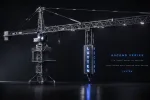
Luyten’s New Tower Crane-Mounted 3D Printer: Technical Specifications and Pricing
Why It Matters
By eliminating extensive formwork and labour‑intensive processes, the ASCEND A27 can slash construction timelines and material waste, lowering financing exposure for developers in dense urban markets where vertical building is essential.
Key Takeaways
- •ASCEND A27 prints up to 100 m, first crane‑mounted concrete printer
- •45 m working radius covers full building footprint from single crane
- •AI software automates path planning, workflow, and real‑time monitoring
- •Reduces formwork and material waste, shortening high‑rise project timelines
Pulse Analysis
The construction industry has long eyed additive manufacturing as a way to overcome the inefficiencies of traditional concrete work. Until now, most large‑scale printers have relied on gantry frames that travel along fixed rails, limiting them to low‑rise projects and requiring extensive site preparation. Luyden 3D’s ASCEND A27 breaks that paradigm by mounting the printer on a standard tower crane, giving it a 45 m working radius and the ability to follow a structure as it rises to 100 m. This mobile architecture eliminates the need for a permanent scaffolded gantry and opens the door to true high‑rise additive construction.
The machine’s specifications underscore its industrial focus: a 4‑ton crane load capacity, 400 mm/s Z‑axis speed, and 25 m/min R‑axis travel enable rapid layer deposition. Its proprietary Ultimatecrete mix is engineered for pumpability and consistent bonding, while an AI‑driven software suite generates print paths, optimises workflow, and monitors conditions in real time. Setup can be completed in one to two days, and the system operates on 400‑415 VAC, making it compatible with most construction sites. Together, these features promise a streamlined, low‑labor construction process.
Urban developers stand to gain the most from this capability. By removing the bulk of formwork, cutting material waste, and compressing schedules, the ASCEND A27 can reduce financing costs and improve project profitability in dense markets where land prices are premium. The technology is positioned for residential towers, office blocks, transport infrastructure, and logistics facilities, sectors where vertical growth is essential. While adoption will hinge on regulatory acceptance and integration with existing supply chains, the printer’s speed, height reach, and AI automation make it a compelling candidate for the next wave of high‑rise construction.
Luyten’s New Tower Crane-Mounted 3D Printer: Technical Specifications and Pricing
Comments
Want to join the conversation?
Loading comments...