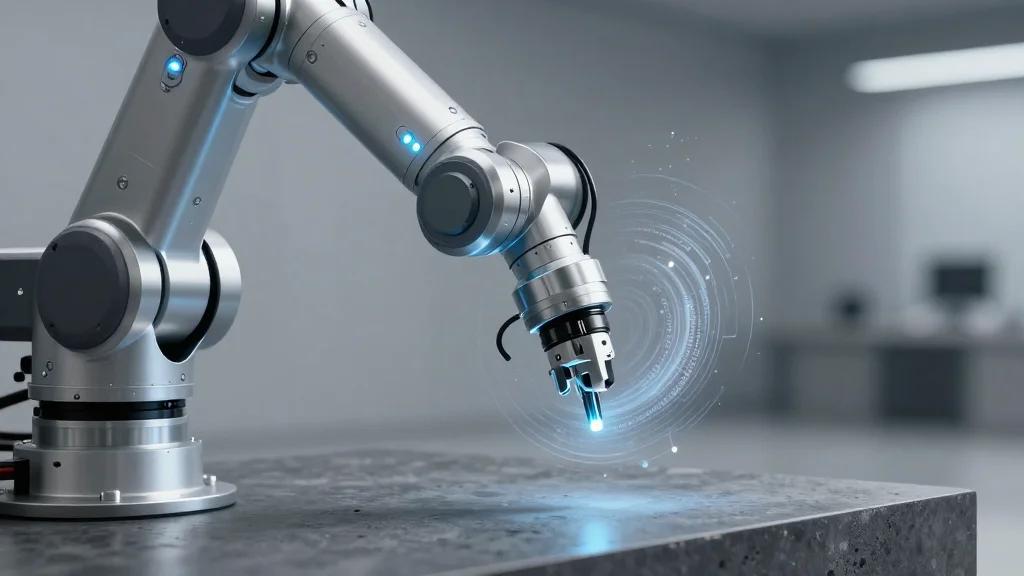
Manufacturers Use Dedicated AI Testbeds to Validate Automation Before Multi‑Million Investments

Companies Mentioned
Why It Matters
Physical AI testbeds are redefining how manufacturers approach automation risk. By providing a low‑stakes environment to validate hardware, software and data pipelines, these centers reduce the financial uncertainty that has slowed AI adoption in capital‑intensive industries. The ability to demonstrate ROI before large‑scale spend accelerates the shift toward smarter factories, improves workforce upskilling, and strengthens supply‑chain resilience. Moreover, the collaborative model—bringing together technology vendors, consulting firms and academic partners—creates a shared knowledge base that can standardize best practices across the sector. The broader impact extends to capital markets as well. Investors are watching the emergence of a service layer around AI hardware, signaling new revenue streams for consulting firms and cloud providers. Successful pilots can unlock multi‑year contracts for sensor manufacturers, robotics integrators and data‑ops platforms, potentially reshaping the competitive landscape of industrial automation.
Key Takeaways
- •Manufacturers are using testing centers like Deloitte Smart Factory, TCS Gemini Experience Centers, and Microsoft AI Co‑Innovation Lab to pilot physical AI.
- •Rohini Prasad of Deloitte emphasizes hands‑on integration and roadmap development for scaling AI.
- •John Harrington of HighByte warns that probabilistic AI systems need rigorous testing and safeguards.
- •Early validation helps avoid multi‑million‑dollar sunk‑costs and improves capital‑allocation decisions.
- •The ecosystem is expanding, with new labs planned in the Midwest, Southeast and through regional economic‑development partnerships.
Pulse Analysis
The rise of physical AI testbeds marks a maturation point for industrial AI, moving it from speculative software projects to concrete, hardware‑centric deployments. Historically, manufacturers have been wary of large automation bets because of the high upfront costs and the difficulty of quantifying benefits. By inserting a sandbox stage, firms can de‑risk the investment, align AI initiatives with existing MES/ERP systems, and generate data‑driven business cases that satisfy finance committees. This mirrors the software industry's earlier adoption of proof‑of‑concept environments before committing to enterprise licences.
From a competitive standpoint, the firms that operate these labs—Deloitte, TCS, Microsoft—are positioning themselves as indispensable intermediaries. They not only provide the technology stack but also the expertise to translate AI models into actionable shop‑floor controls. This creates a barrier to entry for pure‑play AI startups that lack the integration muscle. At the same time, vendors like HighByte that focus on data‑ops and safety layers become critical enablers, ensuring that probabilistic AI outputs are trustworthy enough for production use.
Looking ahead, the scalability of lab‑derived insights will be the next litmus test. If manufacturers can replicate pilot successes across diverse equipment fleets and legacy environments, the industry could see a wave of AI‑driven productivity gains comparable to the early 2000s ERP overhaul. Conversely, failure to bridge the lab‑to‑plant gap could reinforce the perception that AI remains a niche tool for only the most digitally mature firms. Stakeholders should watch for metrics on pilot conversion rates, total cost of ownership reductions, and the emergence of industry standards for AI safety in manufacturing.
Manufacturers Use Dedicated AI Testbeds to Validate Automation Before Multi‑Million Investments
Comments
Want to join the conversation?
Loading comments...