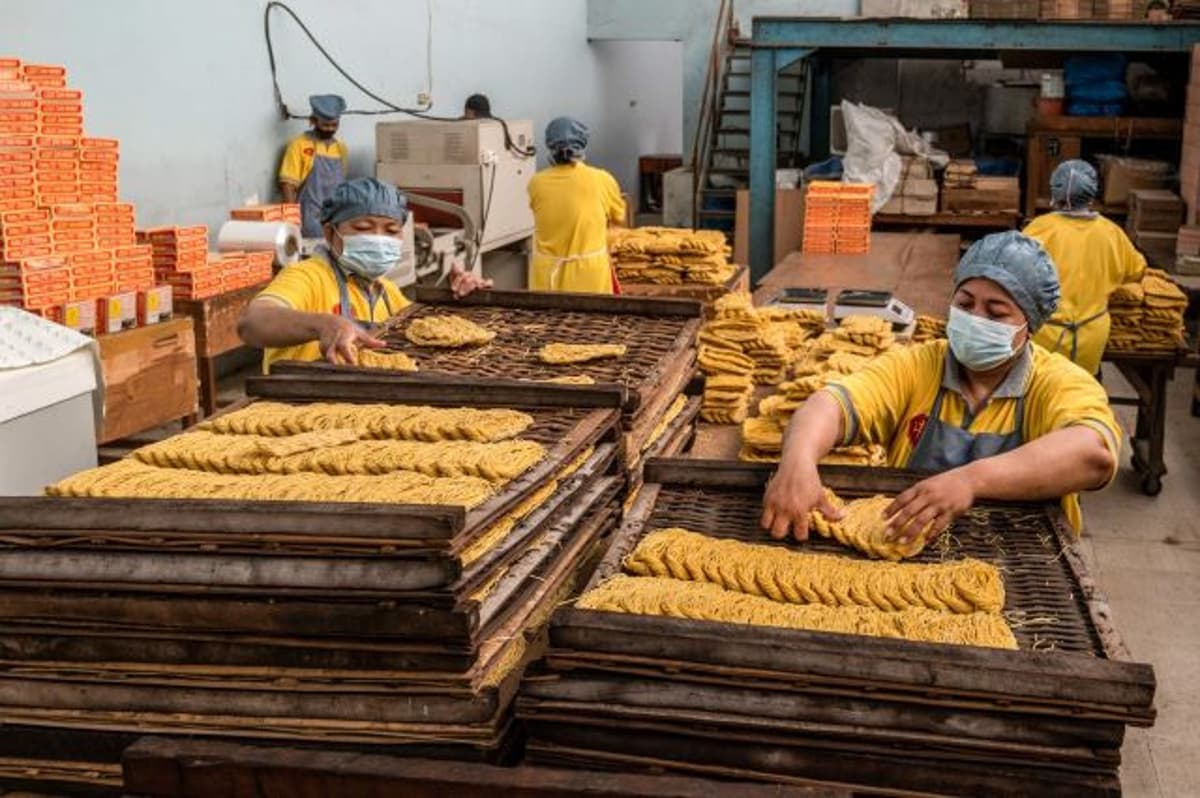
Manufacturing Shrinks in April as Costs Surge on Mideast War
Companies Mentioned

Why It Matters
The contraction signals rising inflationary pressure on Indonesia’s export‑driven economy and could dampen growth forecasts for the region, prompting policymakers to consider easing credit or stabilizing commodity imports.
Key Takeaways
- •PMI fell to 49.1, ending nine‑month expansion streak.
- •Output decline fastest since May 2025.
- •Raw‑material costs surged due to Middle‑East war.
- •New orders rose slightly, driven by advance purchases.
- •Consumer purchasing power weakened, hurting demand.
Pulse Analysis
Indonesia’s April manufacturing PMI of 49.1 marks the first contraction in nine months, underscoring how geopolitical shocks can quickly translate into domestic economic stress. The S&P Global survey attributes the slide to soaring raw‑material prices—particularly steel, aluminum and petrochemicals—whose supply chains have been rattled by the ongoing Middle‑East war. Firms report the steepest output drop since May 2025, even as a modest uptick in new orders reflects customers’ attempts to lock in prices ahead of further volatility.
The ripple effects extend beyond Indonesia’s factories. Regional supply networks that rely on Middle‑East‑origin commodities face tighter margins, feeding into higher consumer prices and eroding purchasing power across Southeast Asia. Inflationary pressure is already evident in retail and services, prompting the central bank to balance rate policy against growth concerns. Meanwhile, weaker demand signals a potential slowdown in export‑linked sectors, which could temper the broader ASEAN growth outlook for the remainder of 2026.
Policymakers are now weighing a mix of short‑term and structural measures. Short‑term options include targeted credit facilities for affected manufacturers and temporary tariff adjustments to ease input costs. Longer‑term strategies focus on diversifying supply sources, boosting domestic raw‑material production, and investing in logistics resilience. If these steps succeed, Indonesia could mitigate the war‑induced shock and restore confidence in its manufacturing engine, preserving its role as a growth catalyst for the region.
Manufacturing shrinks in April as costs surge on Mideast war
Comments
Want to join the conversation?
Loading comments...