Metrology in Motion – Bringing Autonomous Inspection to the Factory Floor
Why It Matters
Embedding metrology directly into production accelerates defect detection, reduces downtime, and enhances flexibility for customized manufacturing, giving adopters a competitive edge in the Industry 4.0 era.
Key Takeaways
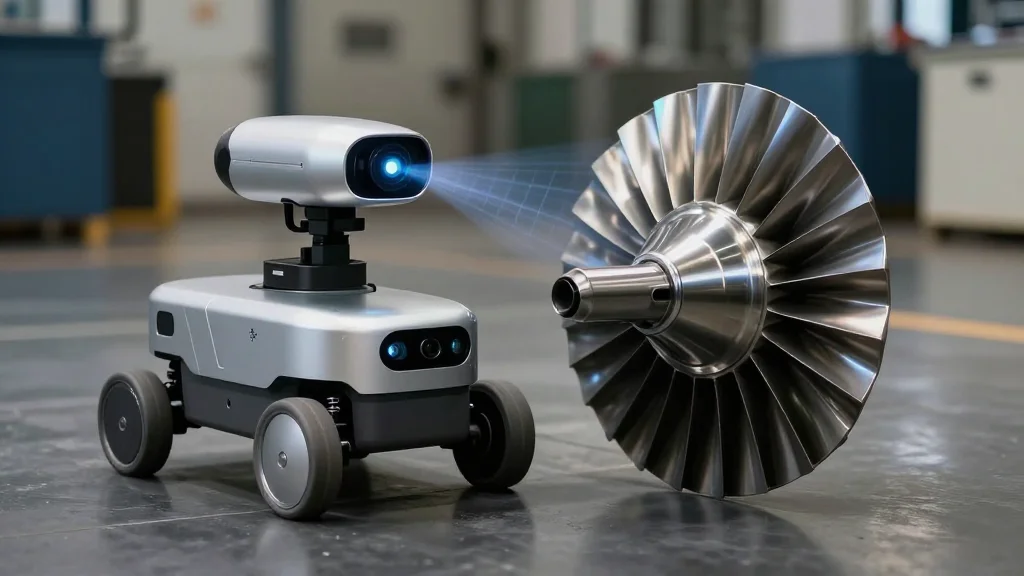
- •Autonomous robots now carry structured-light scanners for on‑floor dimensional checks
- •Drones equipped with LiDAR inspect large aerospace components in minutes
- •AI algorithms optimize inspection paths and trigger real‑time process adjustments
- •Mobile metrology reduces downtime and supports high‑mix, low‑volume production
- •Accuracy challenges persist due to vibration, temperature and data security concerns
Pulse Analysis
The migration of metrology from climate‑controlled labs to the shop floor reflects a broader Industry 4.0 momentum that prizes data velocity and operational agility. As factories integrate IoT sensors, digital twins and cloud analytics, the latency introduced by traditional batch inspection becomes a strategic liability. Mobile inspection units—ranging from autonomous mobile robots (AMRs) to tethered drone fleets—address this gap by delivering measurement data at the point of manufacture. Analysts estimate that the global market for autonomous inspection systems will grow at double‑digit rates through 2030, driven by aerospace, automotive and energy sectors seeking faster time‑to‑market.
Technologically, the breakthrough lies in compact, high‑resolution sensors coupled with real‑time calibration algorithms that compensate for temperature drift and vibration. Structured‑light scanners mounted on AMRs can capture sub‑millimeter geometry of engine blocks within seconds, while LiDAR‑equipped drones map aircraft fuselage panels in minutes, uncovering dents and fastener misalignments previously hidden from human eyes. Machine‑learning models further enhance value by dynamically prioritizing high‑risk features and suggesting corrective tool‑path adjustments to CNC machines, effectively turning inspection into a continuous feedback loop rather than a discrete checkpoint.
Despite the promise, several hurdles must be cleared before autonomous metrology becomes ubiquitous. Maintaining traceable measurement uncertainty in uncontrolled environments demands robust sensor fusion and frequent self‑validation, especially in regulated industries where certification is non‑negotiable. Data generated by fleets of inspection robots also raises storage, cybersecurity and integration challenges for legacy Manufacturing Execution Systems. Nevertheless, as standards evolve and cloud‑native analytics mature, manufacturers can expect fleets of collaborative inspection robots to operate alongside production lines, delivering real‑time dimensional intelligence that fuels adaptive scheduling, predictive maintenance and truly closed‑loop manufacturing.
Metrology in Motion – Bringing Autonomous Inspection to the Factory Floor
Comments
Want to join the conversation?
Loading comments...