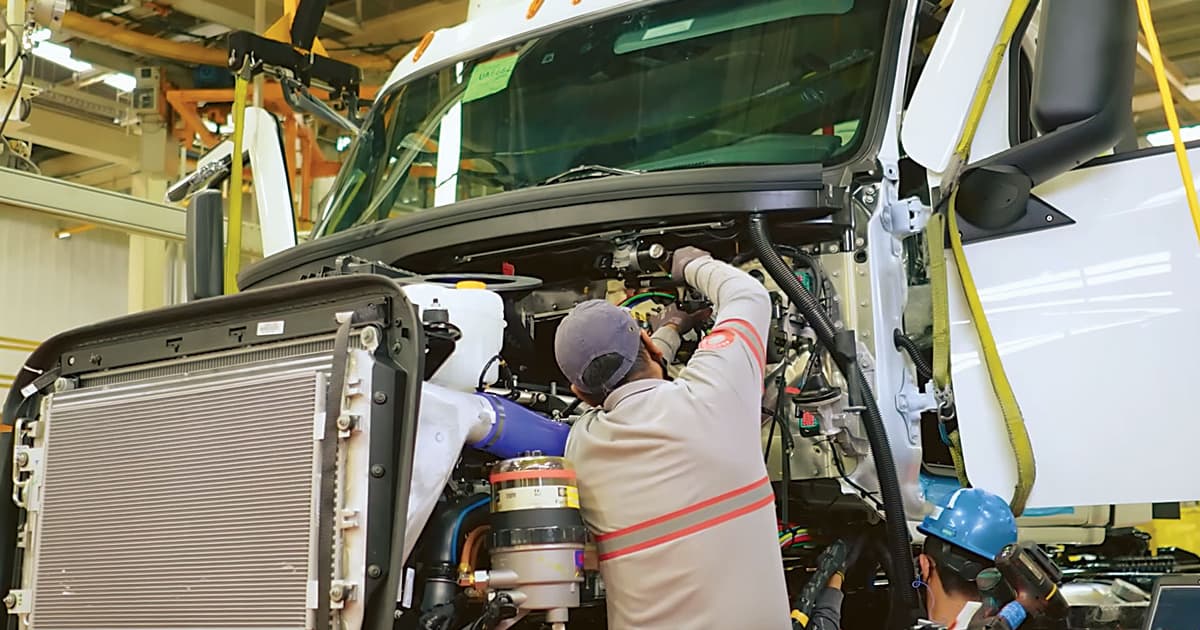
Mexican Truck Production, Exports to U.S. Continue to Rise
Companies Mentioned
Why It Matters
The rebound positions Mexico as a critical supply hub for U.S. freight operators, while highlighting the dependence of North American logistics on cross‑border manufacturing continuity.
Key Takeaways
- •Mexico built 14,543 heavy‑duty trucks in May, +18.2% MoM
- •Freightliner, International, Paccar account for 95% of Mexico output
- •Exports to U.S. reached 11,938 units, +18.9% MoM
- •Class 8 U.S. orders surged 103% YoY in May
- •First‑half 2026 production down 17% YoY despite May rebound
Pulse Analysis
The latest figures from Mexico’s National Institute of Statistics and Geography show a sharp rebound in heavy‑duty vehicle production, with 14,543 trucks built in May – an 18.2 % month‑over‑month increase. The surge is driven primarily by the three dominant OEMs – Daimler Truck North America’s Freightliner, Navistar International, and Paccar’s Kenworth – which together supplied 95.4 % of the output. This uptick mirrors a broader revival in the North American freight sector, where Class 8 truck orders jumped 103 % year‑over‑year, signaling renewed demand for long‑haul capacity.
Freightliner’s Saltillo and Santiago Tianguistenco facilities alone produced 9,348 units, a 14 % rise from the same month last year, while International’s Escobedo plant added 20.7 % month‑over‑month. The combined export flow to the United States reached 11,938 vehicles in May, up 18.9 % from April, reinforcing Mexico’s position as a key supply hub for U.S. fleets. However, the first five months of 2026 still show a 17 % YoY production decline, highlighting that the recovery is uneven and dependent on maintaining plant capacity and labor stability.
Analysts see the Mexican rebound as a bellwether for the continent’s logistics network. Continued growth in U.S. Class 8 orders could translate into sustained export volumes, encouraging OEMs to invest in additional shifts or new facilities. Yet, recent workforce cuts at International’s Escobedo plant and the lingering YoY production gap caution against over‑optimism. Companies that can align Mexican manufacturing flexibility with the accelerating demand for freight capacity are likely to capture market share, while those lagging may face inventory constraints as the North American supply chain tightens.
Mexican Truck Production, Exports to U.S. Continue to Rise
Comments
Want to join the conversation?
Loading comments...